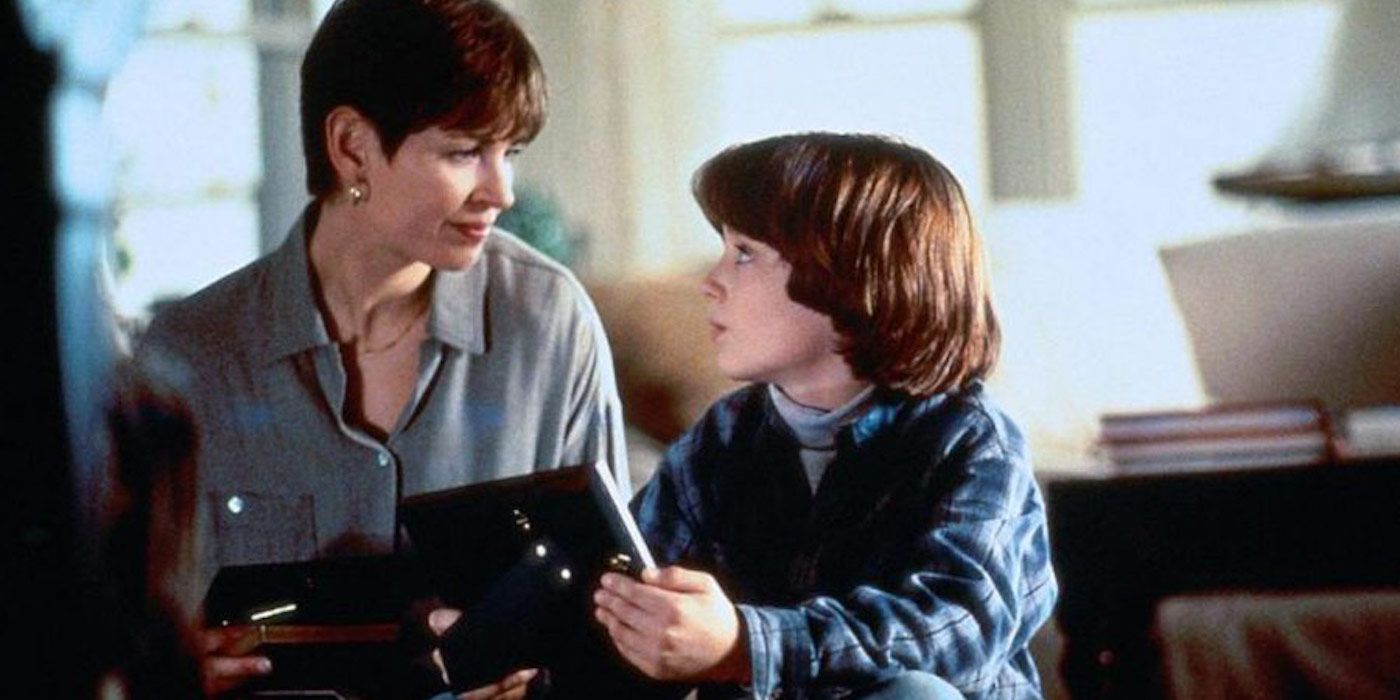
Movies usually give us a clean break. The bad guy falls, the hero walks away, and the credits roll while we finish our popcorn. But the 1993 psychological thriller The Good Son didn't do that. Even decades later, people are still arguing about The Good Son ending because it forces us to look at a mother's impossible choice in a way that feels dirty, raw, and deeply unsettling.
It wasn’t just a movie about a creepy kid. It was a cultural pivot point for Macaulay Culkin, who was the biggest child star on the planet at the time. Seeing the "Home Alone" kid try to murder his family was a massive shock to the system. But the finale? That's where the real trauma lives.
What Actually Happens at the End of The Good Son?
By the time we get to the final act, the mask has completely slipped off Henry Evans. Mark, played by a young Elijah Wood, has spent the whole movie trying to convince the adults that Henry is a literal psychopath. Nobody believes him. They think Mark is just grieving his dead mother and acting out. It’s a classic gaslighting scenario that makes the tension almost unbearable.
The climax happens on a massive, jagged cliff overlooking Lake Superior. Henry, realizing his mother, Susan (played by Wendy Crewson), finally knows the truth about him—specifically that he killed his younger brother, Richard—decides she has to go. He lures her out there, and everything dissolves into chaos.
There’s a frantic struggle. Mark rushes in to save Susan, and eventually, Susan finds herself dangling off the edge of the cliff. But here’s the kicker: she’s holding onto both boys. One hand has Mark, the nephew who has been trying to protect the family. The other hand has Henry, her own flesh and blood, the son who just tried to push her to her death.
The Split-Second Decision
Susan can’t hold both. The rock is crumbling, her grip is failing, and the physics of the situation are brutal. Henry is looking up at her, pleading, "I love you, Mom." It’s probably the only time in the movie he sounds like a real child, which makes what happens next even more jarring.
Susan lets go of Henry.
She chooses Mark. Henry falls to his death, hitting the rocks below before disappearing into the churning water. It’s a definitive, violent end for a character that the audience has grown to loathe, yet the emotional weight of a mother choosing to let her child die is something most films wouldn't dare touch.
Why Susan’s Choice Changes Everything
Most people focus on the shock value. However, the depth of The Good Son ending lies in the psychological destruction of Susan. She didn't just "lose" a son; she executed him. Throughout the film, Susan is portrayed as the moral center, the grieving mother trying to hold her family together after the "accidental" drowning of her toddler, Richard.
When she realizes Henry killed Richard, her entire reality collapses. The ending isn't just about survival; it's about justice and the realization that evil can exist in something you created. Screenwriter Ian McEwan—who is a serious literary heavy-hitter—originally wrote a much darker script, but even the polished Hollywood version keeps that bleak, European-style tragedy at its core.
Some critics at the time, and fans today, argue whether Susan actually "dropped" him or if he just slipped. If you watch the frame-by-frame, it’s pretty clear. She makes a conscious choice to tighten her grip on Mark and let Henry’s hand slide away. She chooses the "good" son over her biological one. It’s a rejection of the "blood is thicker than water" trope that defines most family dramas.
The Controversy and Macaulay Culkin’s Career
You can't talk about this ending without talking about the behind-the-scenes drama. Macaulay Culkin’s father, Kit Culkin, reportedly used his son's massive leverage from Home Alone to force 20th Century Fox to cast Mac in this role. He wanted to prove his son had range.
It worked, but it also alienated audiences. People weren't ready to see Kevin McCallister become a cold-blooded killer. The ending was so controversial that it almost didn't happen the way we see it. There were discussions about Henry surviving or Susan saving both, but the test audiences needed a resolution to the "evil" Henry represented.
The film also faced scrutiny regarding its depiction of "the bad seed" trope. Psychologists have often pointed out that the movie simplifies the concept of psychopathy in children, but as a piece of tension-filled cinema, the ending hits the marks it needs to. It plays on every parent's secret fear: what if my child is someone I can’t love?
The Symbolic Meaning of the Cliff
The setting isn't accidental. The height, the cold, the grey water—it all mirrors the emotional coldness Henry shows throughout the film. In the final voiceover, Mark wonders if Susan would have made the same choice if she had more time. He ponders if she’ll ever be okay.
Honestly? She probably won’t be. The movie ends with a shot of the water, leaving us with the feeling that while the immediate danger is gone, the trauma is permanent. Mark is safe, but he’s lost his mother and his cousin. Susan is alive, but she’s the mother of a murderer who she had to kill to save another. There are no winners.
Misconceptions About the Final Scene
- Did Henry survive? No. While we don't see a funeral, the fall and the impact on the rocks are framed as fatal. This isn't a slasher movie where the villain pops up for a sequel.
- Was Mark actually "good"? Some fan theories suggest Mark was more manipulative than he seemed, but the text of the film doesn't support this. Mark is the audience surrogate—he sees the truth when no one else will.
- The "Alternate" Ending: Rumors have circulated for years about an alternate ending where Henry lives. While different script drafts existed, the "cliff drop" was the primary ending filmed for the theatrical release because it provided the necessary emotional catharsis.
Final Takeaways for Fans of 90s Thrillers
If you’re revisiting the film or just saw it for the first time, keep these points in mind to truly appreciate what the filmmakers were doing:
- Analyze the "Duck" scene again. Earlier in the film, Henry kills a dog and causes a massive pile-up on the highway. These weren't just "mean" acts; they were rehearsals for the ending. He was testing his power over life and death.
- Look at Susan’s face in the final frames. The look isn't one of relief. It’s a look of total, irreparable breaking.
- Consider the "Ice Skating" scene as the midpoint. It’s the first time Henry actively tries to kill a family member (his sister Connie) in front of Mark. It sets the stakes for the cliffside finale by showing that Henry has no "off" switch.
To get a deeper sense of why this story resonates, look into the "Bad Seed" subgenre of horror. Films like The Bad Seed (1956) or even The Omen paved the way, but The Good Son brought it into a modern, suburban setting that felt uncomfortably real for 1993 audiences.
If you want to dive deeper into the history of this production, look up the New York Times archives from 1993 regarding the Culkin family’s involvement in the casting process. It adds a layer of real-world tension that makes Henry’s onscreen villainy feel even more calculated. For those interested in the psychological aspect, research "Conduct Disorder" in children, which is the clinical framework often used to discuss characters like Henry Evans.