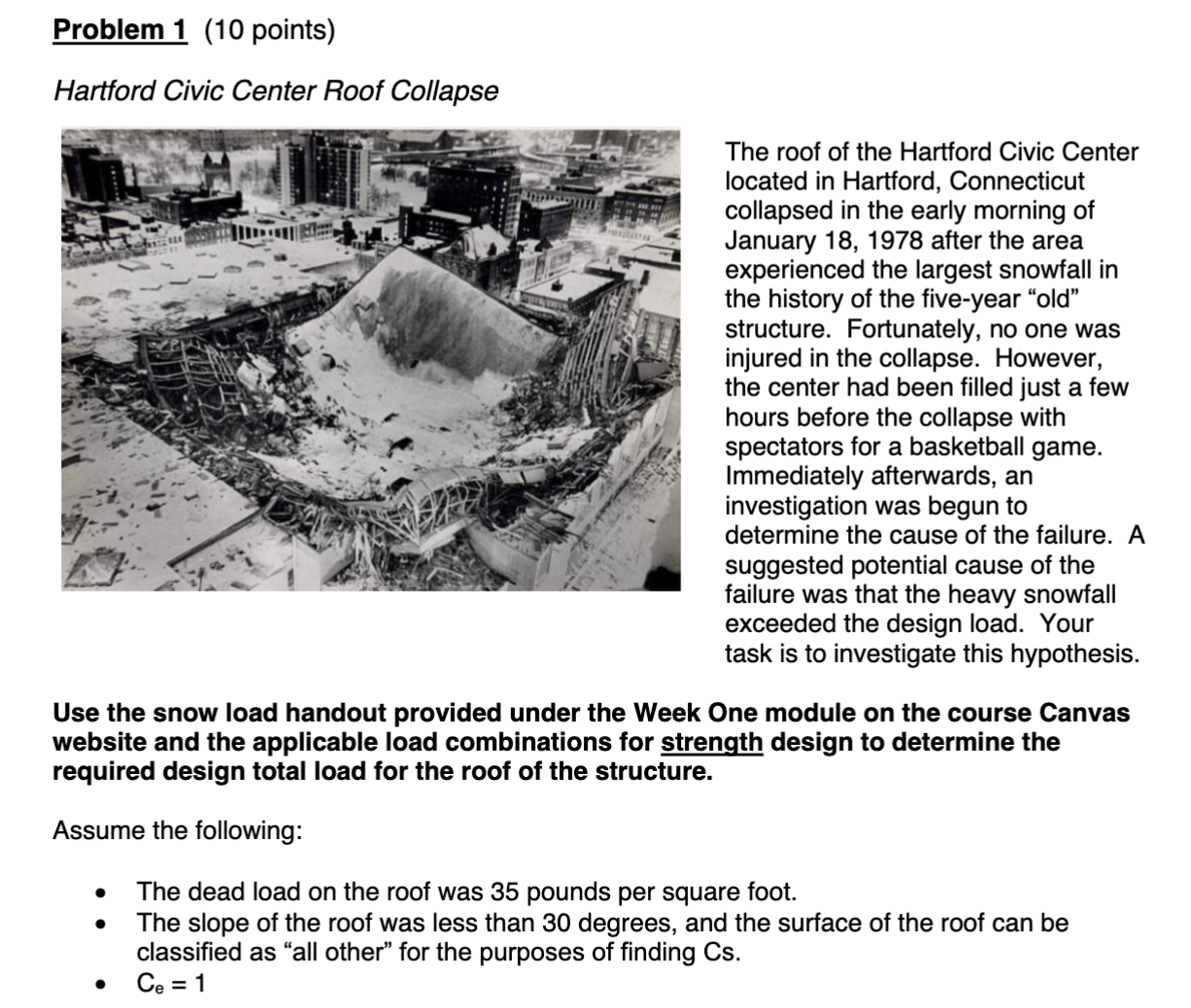
It was January 1978. A massive snowstorm—the kind that makes New Englanders stock up on milk and bread like the world is ending—was dumping inches of wet, heavy slush all over Connecticut. Inside the Hartford Civic Center, the lights were off. The building was empty. Just a few hours earlier, five thousand college basketball fans had been screaming their heads off as UConn played UMass. If that storm had hit a little earlier, or if the roof had held on for just six more hours, we’d be talking about a mass casualty event that would still haunt the national psyche today.
Instead, at roughly 4:19 AM on January 18, the whole thing just... gave up.
The steel space-frame roof, a massive structure weighing hundreds of tons, folded like a cheap lawn chair. It crashed into the arena floor, sending a shockwave through downtown Hartford that people blocks away felt in their sleep. No one died. It’s a miracle, honestly. But the Hartford Civic Center collapse isn't just some "oops" moment in engineering history. It’s a case study in what happens when we trust computers a little too much and ignore the reality of how steel actually behaves in the real world.
What actually happened that night?
The weather was nasty. We're talking about a mix of rain, sleet, and snow that added up to about 12 pounds per square foot of load on that roof. Now, the roof was technically rated to handle way more than that. On paper, it should have been fine. But "on paper" is where the trouble started.
The roof was a space-frame design. If you aren't an engineer, basically think of it as a giant 3D grid of steel struts and balls. The idea is that the load gets distributed across the whole web. It's supposed to be efficient, light, and strong. This specific roof was unique because it was assembled on the ground and then jacked up into place. It was a point of pride for the city.
When the collapse happened, the middle didn't just sag. The entire structure buckled. The steel beams, which were supposed to stay straight to handle the "compression" (the pushing force), started to bend. Once one bent, the one next to it had to take the extra weight. Then that one bent. It was a high-speed domino effect of structural failure.
The arrogance of early computer modeling
Here’s the thing that gets me. The engineers used a computer program to design the roof. Back in the early 70s, this was cutting-edge stuff. They felt confident. They felt so confident that when workers on the site noticed the steel beams were already bowing during construction, the engineers basically told them to pipe down.
"The computer says it's fine."
That’s a dangerous sentence.
The software used at the time assumed all those steel struts were perfectly straight and stayed that way. It didn't account for the fact that in the real world, steel has tiny imperfections. It didn't account for "buckling" in a sophisticated way. It assumed the members would only fail if the steel itself crushed or snapped. But long, thin pieces of metal don't usually snap; they bow out like a plastic ruler when you push on the ends.
A massive gap between theory and reality
The investigation after the Hartford Civic Center collapse found that the roof was actually failing from the day it was finished. It was already overstressed. The snow wasn't some "act of God" that caused an impossible load. It was just the final straw. The roof was essentially a ticking time bomb.
Research led by experts like Lev Zetlin (who was actually skeptical of the design before it fell) showed that the bracing was totally inadequate. Specifically, the top "chords"—the horizontal beams on the top layer—were way too long without enough support. They were susceptible to something called "sideways torsional buckling."
Imagine trying to stand on an empty soda can. If you stand perfectly straight, it holds you. But if there’s even a tiny dent in the side, the whole thing crunches instantly. That’s what happened to Hartford.
Why people still get the story wrong
A lot of folks think it was just a "bad snowstorm." You'll hear locals say, "Oh, the blizzard of '78 took out the Civic Center."
Not really.
The storm was significant, sure, but the engineering was the culprit. If the design had been sound, we wouldn't be talking about this. Another misconception is that the materials were cheap. Actually, the steel was fine. The geometry was the problem. The way those pieces were arranged meant they couldn't handle the physics of being pushed on from the top.
It's also worth noting that the "redundancy" people bragged about was a myth. In a good design, if one part fails, another takes over. In this space frame, the failure of a few key joints meant the entire system became unstable. It was "statically indeterminate" in the worst possible way.
The aftermath: A city in shock
Hartford woke up to a crater in the middle of its downtown. The Whalers—the city's beloved NHL team at the time—suddenly had no home ice. They had to play in Springfield, Massachusetts, for a couple of years while the city scrambled to rebuild.
The economic hit was massive. But the psychological hit was bigger. People lost faith in the "modern" look of the city. When they rebuilt it, they didn't go for another fancy space frame. They went with a much more traditional, heavy-duty steel girder system. You can see it today; it looks like it's built to hold up a mountain.
Lessons that changed engineering forever
The Hartford Civic Center collapse is now taught in almost every structural engineering program in the country. It changed the game. It forced the industry to realize that computers are tools, not gods.
- Peer Review is Mandatory: After this, major public structures started requiring independent peer reviews. You can't just have one firm check their own homework.
- Buckling Matters: Engineers started paying way more attention to how individual parts of a frame move laterally, not just vertically.
- Listen to the Boots on the Ground: If a guy with a hard hat says a beam looks crooked, you check the beam. You don't check the printout.
What you should take away from this
If you're ever in a large arena and you look up at a complex web of steel, you're looking at the descendants of the Hartford design—only much, much safer. We learned the hard way that "efficiency" in design can sometimes lead to "fragility" in reality.
The biggest takeaway? Trust but verify. Whether you're building a deck in your backyard or a multi-million dollar stadium, the laws of physics don't care about your digital model. They only care about gravity and the strength of the material.
Next Steps for the Curious:
- Check out the National Institute of Standards and Technology (NIST) archives if you want to see the original technical breakdown of the structural nodes.
- Look up the "Hyatt Regency walkway collapse" for another example of how small design changes during construction can lead to disaster.
- If you're ever in Hartford, visit the XL Center (the rebuilt arena). Look at the roof supports. You'll see a design that screams "never again."
The collapse remains a sobering reminder that in the battle between human ego and the elements, the elements have a very high win rate. Always respect the load. Always double-check the bracing. And never, ever assume the computer has thought of everything.