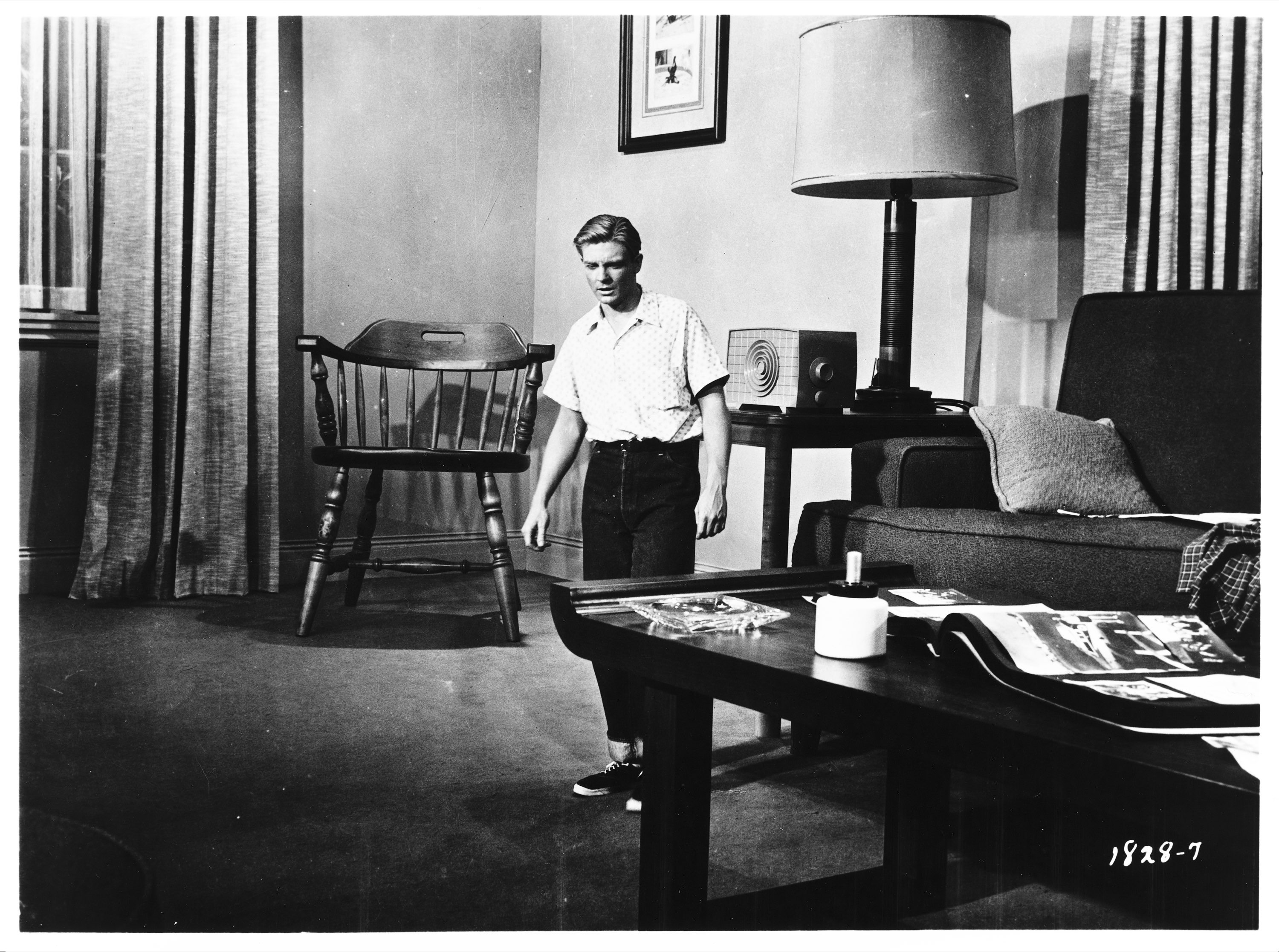
You know that feeling when the world just feels a bit too big? For Scott Carey, that wasn't just a metaphor. It was his literal, terrifying reality.
The Incredible Shrinking Man is easily one of the best movies from the 1950s. Honestly, calling it a "sci-fi movie" feels like an understatement. It's more of a survival horror mixed with a mid-life crisis and a dash of cosmic philosophy. If you haven't seen it, you've probably at least seen the posters of a tiny guy fighting a giant spider with a sewing needle.
It’s iconic. But the movie is way deeper than its special effects.
The Plot: A Radioactive Mist and a Bad Day at Sea
The whole mess starts on a boat. Scott (played by Grant Williams) is chilling with his wife, Louise, when this weird, shimmering radioactive mist rolls over him. A few months later, his clothes don't fit. At first, he thinks he's just losing weight. Then he realizes his height is dropping.
His doctors are baffled. Eventually, they figure out the mist reacted with a pesticide he’d been exposed to earlier. This "anti-cancer" effect causes his cells to just... get smaller.
Why the Movie Hits Different
Most 50s sci-fi is about giant monsters attacking cities. This is the opposite. It’s about a man becoming the prey in his own home.
When Scott gets down to about three feet tall, he meets Clarice, a carnival worker who is also short. For a minute, he thinks he’s found a community. He feels normal again. But then he notices he’s now shorter than her. That scene is heartbreaking. It’s the moment he realizes there’s no floor to this. He isn’t just becoming a "small person." He is disappearing.
The Basement: Where Things Get Real
The second half of the film is basically a survivalist thriller set in a cellar. Scott is now only a few inches tall. After a terrifying encounter with the family cat, Butch (who is played by a very famous movie cat named Orangey), Scott falls into the basement. His wife thinks the cat ate him. She leaves, and Scott is trapped.
The basement becomes a primordial jungle. A leaky water heater is a flood. A loaf of bread is a mountain of food. And then there’s the spider.
The Famous Spider Fight
The spider in the film was a real tarantula named Tamara. Director Jack Arnold used a metronome to help Grant Williams time his reactions so it looked like they were in the same room. It’s a brutal, exhausting fight. Scott isn't a superhero; he’s a desperate guy with a straight pin.
Fun fact: The crew had a nightmare trying to make giant water drops for the leaky heater scene. They eventually filled about 100 condoms with water and dropped them from a treadmill. It worked perfectly.
The Ending Everyone Argued About
The studio hated the ending. They wanted Scott to find a cure and grow back to normal. Universal executives basically begged for a "happily ever after."
But Richard Matheson, who wrote the original novel The Shrinking Man and the screenplay, stood his ground. He and Jack Arnold insisted on a philosophical finale.
Scott keeps shrinking until he can fit through the mesh of a window screen. He walks out into the garden, looking up at the stars. He realizes that as he gets smaller, he isn't becoming "nothing." He’s just entering a new scale of existence.
"To God, there is no zero. I still exist."
It’s one of the most poetic endings in cinema history. It turns a B-movie premise into a meditation on the infinite.
Behind the Scenes Drama
Making a movie like this in 1957 was a technical nightmare. There were no computers. Everything was practical.
- Injuries: Grant Williams was constantly getting hurt. He ended up in the hospital with eye irritations and deep scratches from the "giant" props.
- The Sets: They built massive versions of everyday items. The sewing needle Scott uses as a sword was huge. The matchbox he sleeps in was the size of a small shed.
- The Cat: Orangey the cat was a diva. He won two Patsy Awards (the animal version of an Oscar) and was also the cat in Breakfast at Tiffany's.
What the Film is Really Saying
If you look past the sci-fi, the movie is a total nightmare about the loss of 1950s masculinity. Scott starts as the provider, the head of the house. As he shrinks, he loses his job. He can’t drive. He has to live in a dollhouse.
His wife, Louise, stays the same size, which means she effectively becomes more powerful than him. Scott gets bitter and mean because he feels "less than" a man. It’s a pretty dark look at domestic life that most movies of that era wouldn't touch.
Why You Should Care Today
Even in 2026, the themes of The Incredible Shrinking Man hold up. We still deal with "unseen" threats—whether it's environmental toxins or the feeling of being swallowed by a world that's too big to control.
If you want to dive deeper into this classic, here is how to get the most out of it:
- Watch the Criterion Collection version. The restoration is beautiful, and it includes a documentary about the special effects that is mind-blowing when you realize they did it all with mirrors and big props.
- Read Richard Matheson's book. It’s actually told in a non-linear way, starting in the basement and using flashbacks. It's much darker and explores Scott’s psychology even more.
- Check out Jack Arnold’s other work. He also directed Creature from the Black Lagoon and Tarantula. The guy was a master of the genre.
- Compare it to the 80s remake. The Incredible Shrinking Woman with Lily Tomlin is a comedy, but it covers similar themes of consumerism and chemicals.
There is a reason we are still talking about this movie nearly 70 years later. It’s not just the spider. It’s the idea that no matter how small we feel, we still matter.
To fully appreciate the legacy of this film, start by comparing the theatrical ending to Matheson’s original vision in the novel; you'll find the book's structure offers a much bleaker, more visceral perspective on Scott’s isolation. From there, explore the "Big Science" documentaries of the late 50s to see how real-world atomic anxiety directly fueled the production's most terrifying moments.