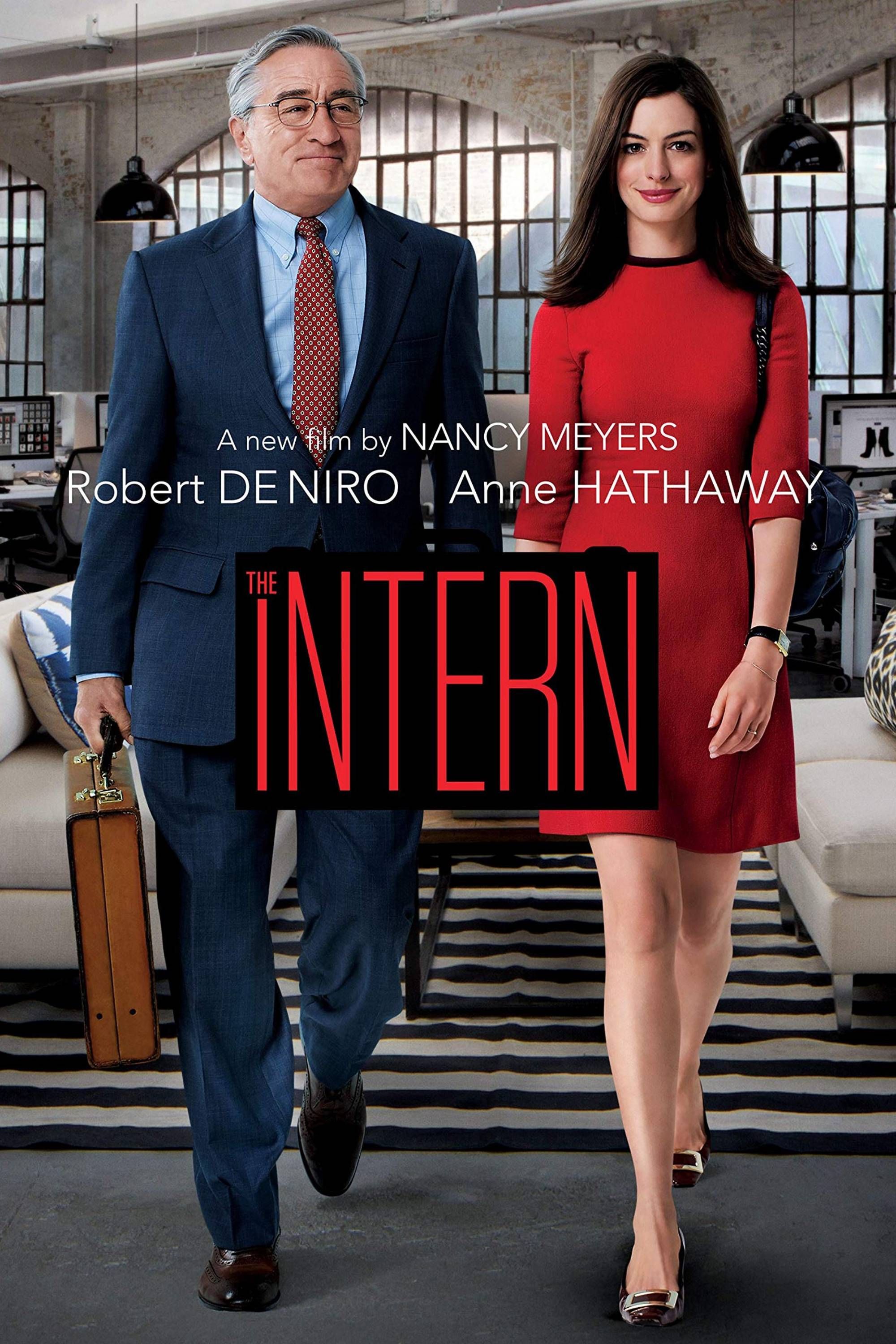
You know that feeling when a movie ends and you're just kinda sitting there thinking, "Wait, that's it?" Most modern comedies feel the need to wrap everything up with a giant wedding, a massive promotion, or some high-stakes airport chase. Nancy Meyers didn't do that with Ben and Jules. Instead, the ending of the intern movie gives us something way more quiet. It's just two people doing Tai Chi in a park.
Honestly, it’s one of the most misunderstood finales in recent cinema history.
Some people found it anticlimactic. They wanted a big speech about the future of About The Fit. They wanted to see Jules Ostin, played by Anne Hathaway, standing on a podium or Ben Whittaker (Robert De Niro) getting a lifetime achievement award for being the world's best 70-year-old intern. But if you look closer, the ending is actually the only way the story could have stayed true to itself. It isn't about the business. It’s about the breathing.
What Actually Happens at the Very End?
Let's recap the literal events first because things move fast in those final ten minutes. After a whole movie of agonizing over whether to hire a "professional" CEO to please her investors, Jules decides to stay in control of her company. She realizes that no one will ever care about the brand as much as she does. She rushes to tell Ben the news, expecting a big emotional moment.
She finds him in the park.
He’s practicing Tai Chi with a group of seniors. When she tries to launch into her big, breathless explanation about her marriage and her career choices, Ben just tells her to breathe. He makes her join the exercise. The camera pulls back, the music swells slightly, and we see them finding a moment of calm together.
That’s it. Fade to black.
It feels simple, but it’s heavy with subtext. The movie spends two hours showing Jules as a woman who is literally and figuratively "spinning out." She rides a bike through the office because she’s too busy to walk. She barely sleeps. She’s constantly reacting to fires. By ending on the Tai Chi, the film suggests that Ben’s biggest contribution to her life wasn’t organizing her desk or driving her car—it was teaching her how to slow down.
Why Jules Chose the Company Over the Marriage (Sorta)
A huge part of the ending of the intern movie revolves around Jules' husband, Matt, and his affair. This is where the movie gets surprisingly gritty for a "cozy" comedy. Throughout the film, Jules is willing to give up her CEO title—the thing she built from the ground up—just to save her marriage. She thinks if she’s home more, Matt won't feel so "emasculated" or lonely.
It’s a heartbreakingly real compromise that many successful women feel pressured to make.
But the breakthrough happens when Jules realizes that Matt’s infidelity isn't her fault. It’s not a "management" problem she can solve by stepping down. When Matt shows up at the office to confess and beg for another chance, Jules doesn't just forgive him immediately to have a happy ending. She accepts his apology, sure, but she keeps her job.
The ending tells us that a woman shouldn't have to shrink herself to make her partner feel bigger. Ben Whittaker, our 70-year-old protagonist, is the one who gives her the "permission" she didn't know she needed to stay at the helm. He tells her, "You should be able to have it all."
Ben Whittaker: The Intern Who Never Really Left
We should talk about Robert De Niro’s character for a second. Usually, movies about old people and young people end with the old person passing away or "passing the torch." Think about Finding Forrester or Tuesdays with Morrie.
The ending of the intern movie refuses to do that. Ben doesn't die. He doesn't even retire (again). He stays exactly where he is.
He’s found a new purpose. After his wife passed away and he spent years traveling and learning Mandarin, he found that he just wanted to be "needed" again. The ending shows that the internship wasn't just a temporary gig for him; it was a revival. He saved Jules, but Jules also saved him from the crushing boredom of a retirement that felt like a waiting room.
The fact that they are in the park at the end shows that Ben has finally achieved a balance. He’s working, but he’s not a slave to the work. He’s teaching Jules—the high-powered millennial—that the "Experience" mentioned in the movie's tagline isn't just about knowing how to format a letter. It's about knowing when to stop working.
The Critics' Take vs. The Audience Reality
If you look at Rotten Tomatoes or Metacritic, the reviews for The Intern are often a bit mixed. Some critics called it "too sugary" or "Nancy Meyers fluff." But the audience scores tell a different story.
Why do people keep coming back to this ending?
- It’s Stress-Relieving: Most movies about startups (The Social Network, Silicon Valley) are about backstabbing and ego. This one is about kindness. The ending reinforces that.
- The Gender Flip: Usually, it's the older man who is the "boss" and the young woman who is the "assistant." Flipping that dynamic and keeping it respectful until the very last frame is actually pretty revolutionary for a Hollywood film.
- Zero Romance: It would have been so easy to give Ben a romantic subplot that took over the ending. While he does start dating the office masseuse (played by Rene Russo), the movie wisely keeps the focus on the platonic, almost father-daughter bond between Ben and Jules.
The ending of the intern movie works because it doesn't try to solve all of Jules' problems. Matt is still a cheater who has a lot of work to do. The company is still growing at a rate that is probably unsustainable. But Jules has a "Ben" now. She has a foundation.
Actionable Insights from the Finale
You don't just watch a movie like this; you take notes. Here’s how the conclusion of this story actually applies to real life and career management:
- Experience is Never Obsolete: If you're an older worker feeling pushed out by tech, remember Ben. He didn't know how to turn on a MacBook, but he knew how to read people. That’s a skill that never goes out of style.
- The "Tai Chi" Rule: If you're a founder or a manager like Jules, the ending is a reminder that you are your company's most valuable asset. If you burn out, the company dies. Taking twenty minutes for "Tai Chi"—or whatever your version of that is—isn't a waste of time. It’s a business strategy.
- Don't Shrink for Others: If someone in your life requires you to be "less than" so they can feel "equal," that's a red flag. Jules almost gave up her dream to fix a broken relationship. The movie ends with her keeping both, but on her own terms.
- Mentorship is a Two-Way Street: Jules learned how to be a person from Ben; Ben learned how to be relevant from Jules. If you’re at a company with a wide age gap, look for the "Ben" or "Jules" in your office.
Final Thoughts on the Last Scene
When Jules finds Ben in the park, she’s wearing a bright red dress. It’s bold. It’s the color of a CEO. Ben is in his classic suit, even for Tai Chi. They are two different worlds that have finally learned how to rotate on the same axis.
The ending of the intern movie doesn't need a "The End" title card. The peacefulness of that final scene tells you everything you need to know about where these characters are going. They’re going to be okay. Jules is going to keep building her empire, and Ben is going to be right there, probably with a silk handkerchief ready in his pocket, just in case she needs it.
To apply this to your own life, look at your current "work-life balance." If you're more Jules than Ben right now—constantly checking Slack at 2 AM or feeling like your identity is tied 100% to your output—it might be time to find your own version of that park. The movie isn't telling you to quit your job. It's telling you to find the person, or the practice, that keeps you grounded while you do it.
Start by identifying one task this week that you can delegate, just like Jules eventually delegated to Ben. Then, use that saved time to actually go outside. It sounds simple, but as the movie proves, the simplest things are often the hardest to master.