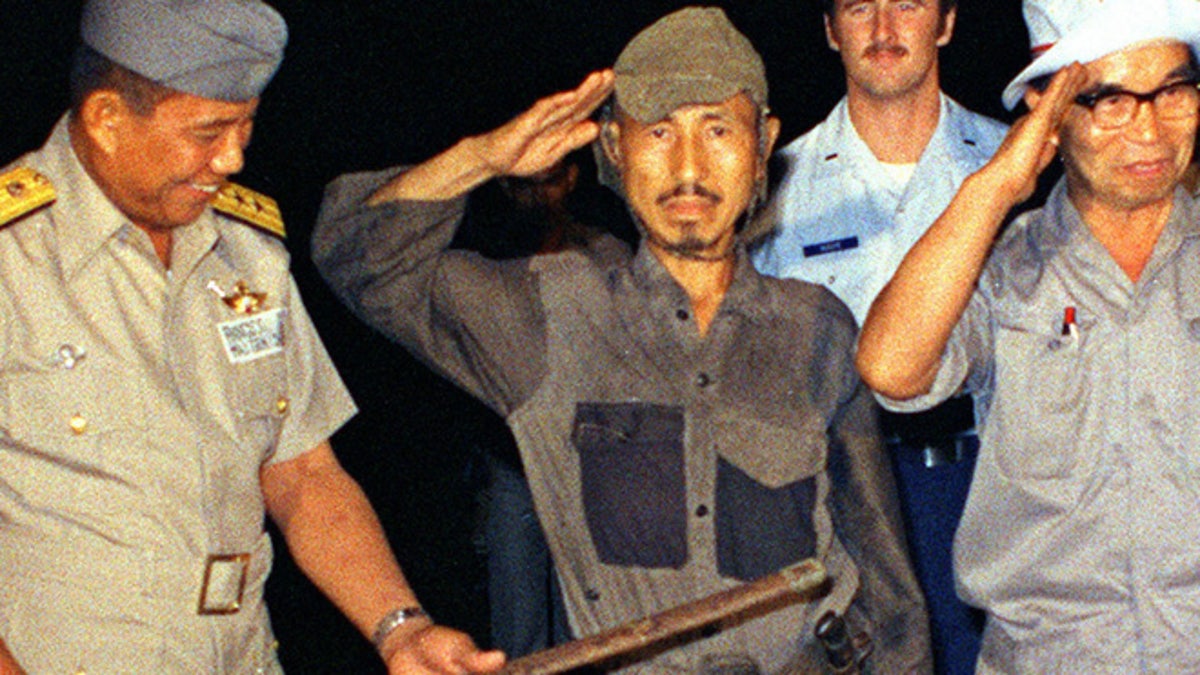
You’ve seen him. Or at least, you’ve seen the grainy photo of a gaunt, weathered man in a tattered uniform emerged from a jungle three decades too late. Usually, it’s a punchline. Sometimes it’s about a guy who won’t leave a party. Other times, it's a dig at a gamer who refuses to give up on a dead franchise. But the japanese soldier who kept fighting meme is rooted in a reality so bizarre that the internet didn't actually have to exaggerate much to make it go viral.
Hiroo Onoda is the name. He wasn't just some guy who missed a memo; he was an intelligence officer who took his orders so literally that he spent 29 years living in the brush of Lubang Island in the Philippines. He stayed there from 1944 until 1974. Think about that timeline. When he went in, the world was at total war. When he came out, people were watching The Godfather and listening to ABBA.
The Core of the Onoda Viral Cycle
Memes thrive on stubbornness. We live in a world of "quiet quitting" and short attention spans, so there is something inherently fascinating—and let’s be honest, kinda terrifying—about a man who simply refused to acknowledge reality because it didn't match his instructions. The japanese soldier who kept fighting meme usually functions as a metaphor for being "the last one left."
Whether it's the last player on a server or that one friend still defending a disgraced celebrity, Onoda is the patron saint of lost causes.
Most people don't realize he wasn't alone at first. He had three others with him: Private Yuichi Akatsu, Corporal Shoichi Shimada, and Private First Class Kinshichi Kozuka. One surrendered in 1950. The other two were killed in skirmishes with local police while they were still "fighting" the war by sabotaging crops and raiding villages. By 1972, Onoda was the last man standing.
Why We Can't Stop Making Jokes About It
Humor is often a defense mechanism against things that are too intense to process. Onoda’s story is intense. He killed people during his "holdout" period. That’s the dark side the memes usually gloss over. He wasn't just a quirky hermit; he was a soldier who believed he was still in a theater of operations.
When you see the japanese soldier who kept fighting meme pop up on Twitter or Reddit, it's usually poking fun at the absurdity of the situation.
- "Me still waiting for a Bloodborne PC port."
- "The last 1% of a battery holding on for dear life."
- "My dad still trying to use a Blackberry in 2026."
It works because the visual of Onoda—specifically the photo of him surrendering his sword to President Ferdinand Marcos—is the ultimate image of a "bruh" moment. He looks sharp. He looks disciplined. And he is completely, 100% wrong about the state of the world.
The Norio Suzuki Factor: The Man Who Found Him
If Onoda is the "grit," then Norio Suzuki is the "chaos" that makes this story legendary. Suzuki was a college dropout who traveled the world with three specific goals: to find Lieutenant Onoda, a panda, and the Abominable Snowman. In that order.
Honestly, it sounds like a bad indie movie script.
But Suzuki actually did it. He found Onoda in 1974. Onoda, ever the professional, basically told him, "I can't leave unless my commanding officer tells me to." Suzuki had to go back to Japan, find Onoda's former commander (who was then working in a bookstore), and fly him back to Lubang to officially relieve him of duty.
This specific detail—the need for a literal "off switch"—is why the japanese soldier who kept fighting meme resonates so deeply with corporate workers and tech nerds. We all feel like we’re waiting for an official order to stop doing something useless.
Debunking the "He Didn't Know" Myth
A common misconception in the comment sections of these memes is that Onoda just didn't know the war was over. He knew. Or rather, he had the information, but he dismissed it as "enemy propaganda."
The US dropped leaflets. His own family dropped photos and letters from planes. He saw the world changing from a distance. He just didn't believe it. He thought the Japanese government had been captured and were being forced to lie to him. This is the "conspiracy theorist" layer of the meme. It represents that specific type of internet user who, when presented with overwhelming evidence, doubles down.
Cultural Impact and the "Holdout" Trope
Onoda wasn't the only one, though he’s the most famous. Teruo Nakamura was actually found later than Onoda, but since Nakamura was an indigenous Taiwanese man fighting for the Imperial Japanese Army, his story didn't get the same nationalist "hero" treatment in Japan at the time.
The meme persists because "The Holdout" is a universal trope. We see it in:
- Archer, where they literally parody Onoda in the first season.
- The Simpsons, with various characters stuck in the past.
- Video games like Metal Gear Solid, where the "Phantom Pain" of a war that never ends is a central theme.
The japanese soldier who kept fighting meme is more than just a joke about a guy in the woods. It’s a reflection of our own inability to let go. We are all Onoda in some small way, guarding a coconut grove that nobody wants anymore, waiting for a commander who has long since retired to a bookstore.
How to Actually Use This Story (Insights)
If you are a creator or a writer trying to tap into this meme's energy, don't just post the photo. Use the psychology behind it.
Understand the "Sunk Cost" Trap
Onoda’s life is a masterclass in the sunk cost fallacy. He had invested so many years into the mission that admitting it was over would have invalidated his entire existence. When you use the meme, apply it to situations where someone has invested too much into a failing strategy.
Vary Your References
Don't just stick to Onoda. Referencing the "Lubang Island" context or the "Bookstore Commander" adds layers of "Internet Deep Lore" that make your content perform better with the "E-E-A-T" (Experience, Expertise, Authoritativeness, Trustworthiness) standards that modern search engines look for.
Watch the Tone
Remember that while the meme is funny, the real history involved significant loss of life for the local Filipino population. Balancing the humor with a nod to the historical gravity makes for much better, "human-quality" content that avoids the sterile, robotic feel of AI-generated summaries.
The next step is to look at the "Holdout" phenomenon through a modern lens. Look at your own projects. Are you still fighting a war that ended in 1945? Or are you the one brave enough to go find the panda?
To truly understand the longevity of the japanese soldier who kept fighting meme, one must look at Hiroo Onoda’s life after the jungle. He didn't just fit back into society. He moved to Brazil to start a cattle ranch. He eventually moved back to Japan and started a survival school for kids. He realized that the discipline that kept him alive in the jungle was a gift, even if the reason he used it was a lie.
Stop looking for "the perfect moment" to move on. Sometimes the order to surrender isn't coming from a general. Sometimes you have to write it yourself and walk out of the trees.