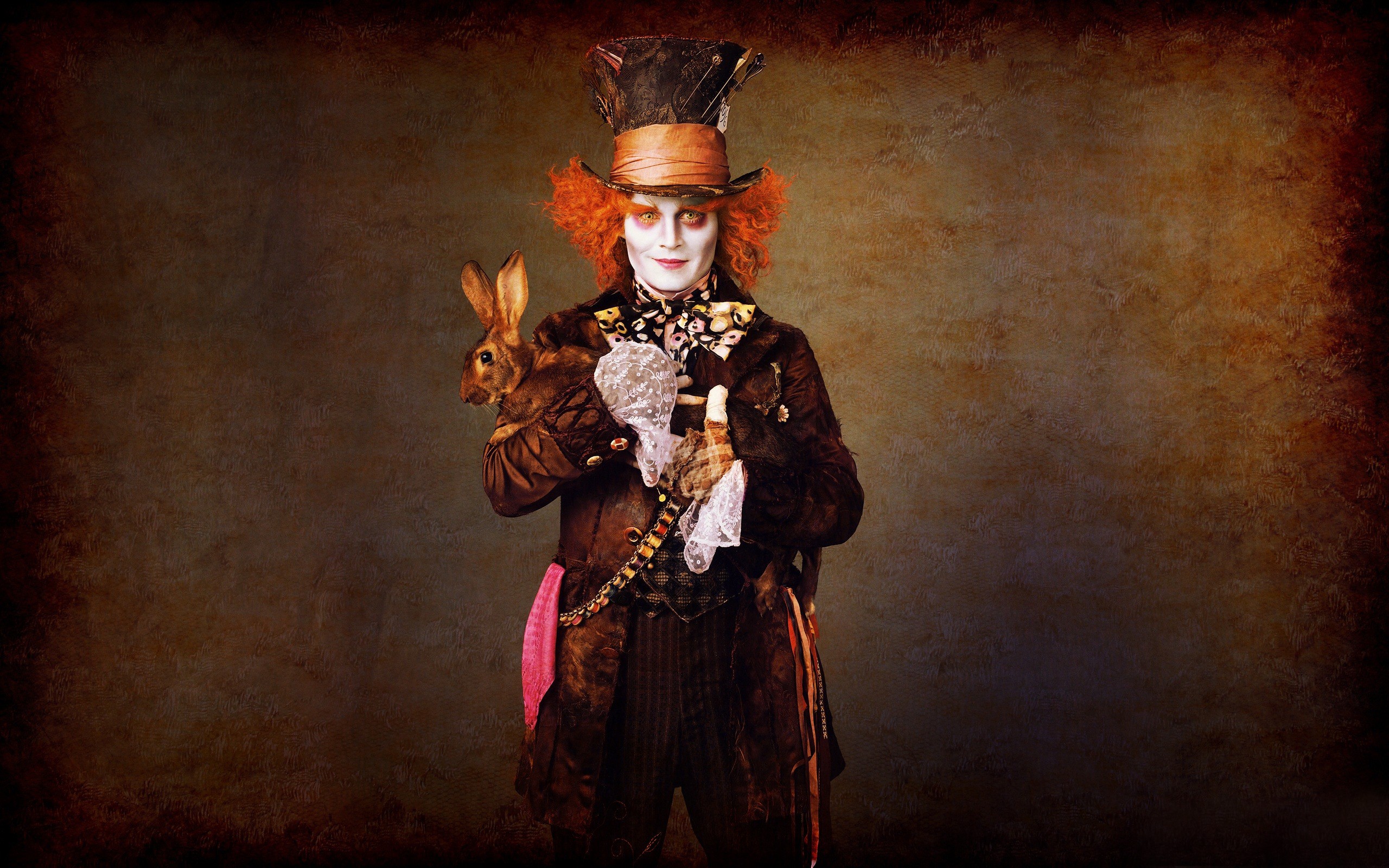
He doesn't have a name. You probably call him the Mad Hatter, but in Lewis Carroll’s actual 1865 text, he’s just "The Hatter." It's a small distinction that matters if you’re trying to understand the chaos of Wonderland. He is stuck at 6:00 PM forever. Tea time. No escape.
Lewis Carroll—or Charles Lutwidge Dodgson, if we’re being formal—didn’t just pull this character out of a hat. The Mad Hatter Alice in Wonderland archetype is rooted in a dark, physical reality of the Victorian era. It’s about mercury. It’s about social isolation. And honestly, it’s about a very specific guy in Oxford who sold furniture.
Where the Madness Actually Came From
Ever heard the phrase "mad as a hatter"? People used it long before Carroll sat down to write. In the 1800s, hat makers used mercuric nitrate to turn fur into felt. It’s a process called "carroting" because the chemical turned the fur orange.
The workers breathed in the fumes. Every day. For years.
The result was mercury poisoning, known back then as "the hatter’s shakes." It wasn't just physical tremors. It caused irritability, social phobia, and hallucinations. When the Hatter acts erratic and defensive with Alice, he’s basically a caricature of a Victorian industrial tragedy. But Carroll added a layer of whimsy to mask the grim reality of the trade.
Then there’s Theophilus Carter. He was an eccentric furniture dealer in Oxford. He wore a top hat. He stood in the doorway of his shop. He invented a "device" that was supposed to wake people up by tipping them out of bed. Most locals at the time, including Carroll, knew him as "The Mad Hatter." When John Tenniel drew the original illustrations, he reportedly based the Hatter’s face on Carter.
The Physics of a Never-Ending Tea Party
The Hatter is trapped. We often think he’s just having a fun, wacky party, but he’s actually being punished.
In the chapter "A Mad Tea-Party," the Hatter explains that he "murdered the time" while singing for the Queen of Hearts. Because he offended Time, Time won’t do a thing he asks. It’s always six o'clock. This is why the table is covered in dirty dishes. They don't have time to wash them; they just move to the next seat when they need a clean cup.
It’s a nightmare. Think about it.
Alice enters this loop and tries to apply logic. She fails. The Hatter asks a riddle: "Why is a raven like a writing-desk?" He doesn't have an answer. He tells Alice he hasn't "the slightest idea." This drives readers crazy because we expect a payoff. But the point of the Mad Hatter Alice in Wonderland appearance is the subversion of the Victorian obsession with "useful" education. Carroll was a mathematician. He loved logic, but he loved showing how logic breaks when you change the fundamental rules of reality.
The 10/6 Mystery
You see the slip of paper in his hat? The one that says "In this style 10/6"?
It’s not a secret code. It’s a price tag.
In pre-decimal British currency, that represents ten shillings and sixpence. It’s a literal demonstration that he is a merchant. He is wearing a hat that is for sale. He is a living advertisement for his own trade. It adds to the absurdity—he’s a professional who has completely lost the thread of professional behavior.
Why We Keep Changing Him
Pop culture has done a number on this guy. In the 1951 Disney film, he’s a colorful, bumbling uncle figure voiced by Ed Wynn. He’s joyful. He likes unbirthdays. He’s chaotic but generally harmless.
Then you get Tim Burton’s 2010 version with Johnny Depp. That version gives him a name (Tarrant Hightopp) and a tragic backstory involving a Jabberwocky attack on his village. It turns the madness into PTSD. It’s a massive departure from Carroll’s intent. Carroll’s Hatter didn't need a reason to be weird; he was just a manifestation of a world where language and social norms had dissolved.
Modern interpretations often try to "fix" him. They want to explain the madness. But the original Mad Hatter Alice in Wonderland version is scarier because his nonsense is impenetrable. He isn't trying to be mean to Alice; he just exists on a different cognitive plane.
The Linguistic Trap of the Hatter
Carroll used the Hatter to play with "Gricean Maxims" before they were even a thing. These are the unwritten rules of conversation—like being relevant and being clear. The Hatter breaks every single one.
When Alice says, "I breathe when I sleep" is the same thing as "I sleep when I breathe," the Hatter shuts her down. He points out that "I see what I eat" is not the same as "I eat what I see." He’s technically right. He’s the most frustrating kind of person to talk to: someone who is pedantically correct about language while being completely insane in context.
How to Apply "Hatter Logic" Today
There's actually a lot to learn from this chaos if you’re looking for a fresh perspective on creativity or problem-solving.
- Question the "Price Tag": Like the 10/6 on his hat, we often carry labels or "prices" that define us to others but have nothing to do with our inner reality.
- The Riddle Without an Answer: Sometimes, the search for the "why" is more important than the answer. Carroll later suggested some answers to the raven/writing-desk riddle (like "because it can produce a few notes"), but he regretted it. The mystery was better.
- Breaking the Loop: If you feel like you’re at a 6:00 PM tea party—stuck in a repetitive cycle—the only way out is to change the fundamental rules of your "Time." Alice eventually just leaves. She realizes she doesn't have to stay at a table where the conversation makes no sense.
The Mad Hatter Alice in Wonderland legacy isn't about being "crazy." It's about the friction between a rigid society and a mind that refuses to follow the script. Whether it’s mercury in his blood or a grudge held by Time itself, the Hatter remains the ultimate symbol of what happens when you stop trying to make sense to everyone else.
To truly understand the character, re-read the "Tea-Party" chapter without looking for a plot. Look for the wordplay. Look for the way he treats Alice not as a child, but as an intellectual equal he simply has no patience for. That is where the real magic—and the real madness—lives.
To explore this further, check out the original Macmillan editions of the text to see how Tenniel's illustrations provide visual clues that Carroll left out of the prose. You might also look into the history of the "Hatters' Guild" in the 19th century to see the real-world labor conditions that birthed the legend. Still, the best way to "get" the Hatter is to stop trying to solve him. Some riddles are just meant to be asked.