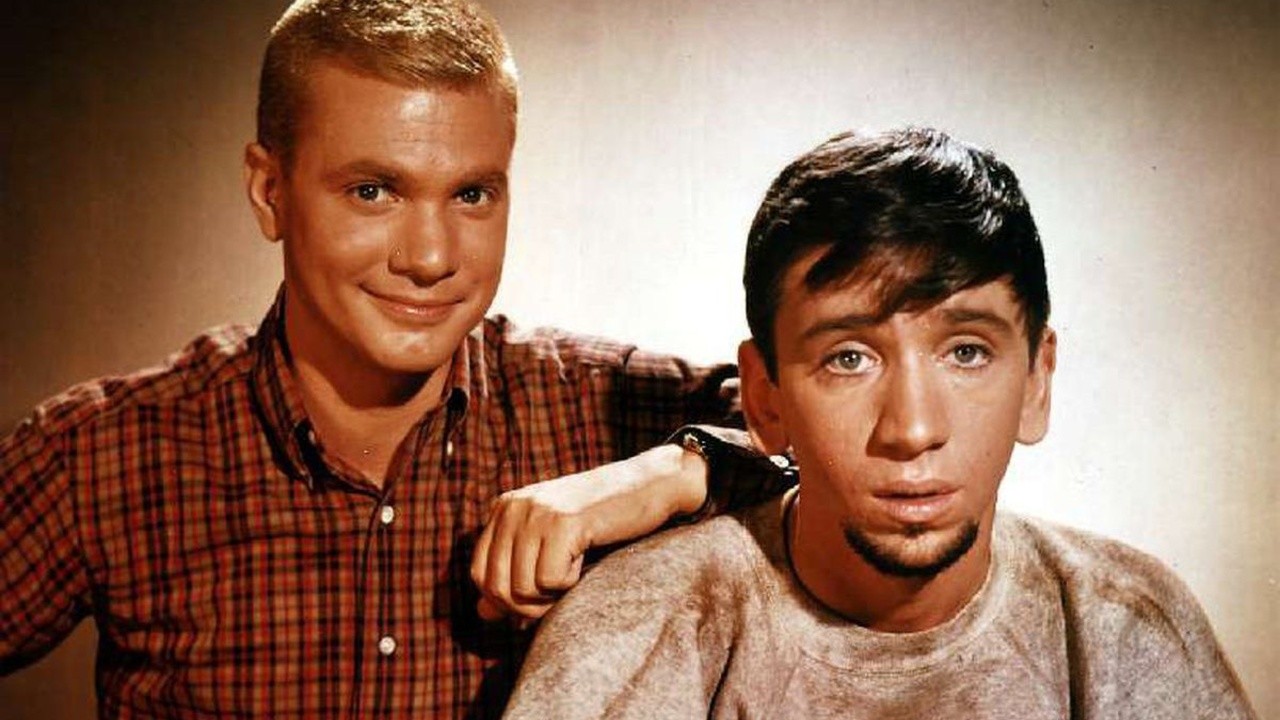
Believe it or not, before there was Scooby-Doo, there was Dobie Gillis. Most people remember the 1950s as a time of stiff collars and "Yes, Father" archetypes, but The Many Lives of Dobie Gillis—or more accurately, The Many Loves of Dobie Gillis—broke every rule in the book. It was weird. It was meta. It featured a teenager who sat next to a replica of Rodin’s The Thinker and complained about his lack of "propinquity" with girls.
Honestly, the show was a fever dream of mid-century cool.
While Leave It to Beaver was busy worrying about spilled milk, Dobie was navigating a world of beatniks, class warfare, and the crushing reality that being a "nice guy" doesn't actually pay for a date. It’s the show that gave us Bob Denver before he was Gilligan and Warren Beatty before he was... well, Warren Beatty.
The Many Lives of Dobie Gillis: From Short Stories to Screen
You've probably seen the black-and-white reruns, but the character didn't start on a soundstage. Max Shulman, a humorist with a razor-sharp wit, first penned the character in a series of short stories in the 1940s. These weren't your typical wholesome tales. The original Dobie was a college student at the University of Minnesota, and the stories were cynical, satirical, and surprisingly biting.
By the time the concept hit TV in 1959, CBS had softened the edges.
They moved Dobie back to high school to compete with the likes of Ricky Nelson. But they couldn't scrub away Shulman's DNA entirely. The show remained obsessed with the intersection of romance and money. To Dobie, love wasn't just a feeling—it was an economic hurdle. He wanted the girls, the girls wanted the money, and Dobie’s dad, Herbert T. Gillis, just wanted Dobie to pick up a broom and stop being a "worthless, aimless drifter."
The Cast That Launched a Thousand Careers
It is wild to look back at the pilot and see the sheer amount of talent packed into one small-town grocery store setting. Dwayne Hickman played Dobie with a permanent look of mild existential dread. He wasn't the "big man on campus." He was the guy trying to figure out how to become the big man on campus without doing any actual work.
And then there was the beatnik.
Maynard G. Krebs.
Bob Denver’s portrayal of the goatee-wearing, bongo-playing, work-phobic Maynard is arguably the most influential supporting character in sitcom history. When Maynard heard the word "work," he didn't just cringe; he yelped in a high-pitched panic that basically defined the counter-culture for a generation of kids who didn't even know what a beatnik was yet.
The show also featured:
- Tuesday Weld as Thalia Menninger, the beautiful, gold-digging dream girl who was brutally honest about her need for a wealthy husband.
- Warren Beatty as Milton Armitage, the rich rival. He only lasted five episodes before heading to movie stardom, but his presence established the show's class-conscious vibe.
- Sheila James Kuehl as Zelda Gilroy, the smartest girl in school who was biologically determined to marry Dobie. She'd wrinkle her nose, he'd wrinkle his back, and a piece of TV history was made.
Why It Was Secretly Groundbreaking
A lot of people get this wrong—they think Dobie Gillis was just another teen show. It wasn't. It was the first show to treat a teenager’s inner life as something worthy of philosophical inquiry.
Dobie’s fourth-wall-breaking monologues were revolutionary. He didn't just talk to the audience; he shared his anxieties about the future, the draft, and the "beast" of commerce. It felt like a stage play disguised as a sitcom.
The Scooby-Doo Connection
If the character archetypes sound familiar, there's a reason for that. When Hanna-Barbera was developing Scooby-Doo, Where Are You! in the late 60s, they used the Dobie Gillis cast as their blueprint.
- Fred was the clean-cut Dobie.
- Velma was the brainy Zelda.
- Daphne was the "pretty one" (Thalia).
- Shaggy was, quite literally, a cartoon version of Maynard G. Krebs.
It’s funny how a show about a frustrated teenager in a grocery store ended up defining the look and feel of the world's most famous mystery-solving gang.
The Evolution and the "Jump the Shark" Moments
The show didn't stay in high school forever. In an attempt to keep the narrative moving, the writers had the boys graduate, join the Army, and eventually land in junior college. This is where things got a bit... experimental.
By the fourth season, the show was titled Max Shulman's Dobie Gillis, and the plots became increasingly surreal. We’re talking about episodes involving South American expeditions and strange parodies of other TV shows. The grounded, relatable struggle of a boy wanting a date was replaced by "Rococo" silliness.
Even the catchphrases changed. Herbert T. Gillis stopped saying "I gotta kill that boy" (apparently the network thought it was too dark), and Maynard became more of a cartoonish oaf than a legitimate outsider.
What Really Happened With the Sequels?
The "many lives" of the title continued long after the 1963 cancellation. There was a 1977 pilot called Whatever Happened to Dobie Gillis? and a 1988 TV movie, Bring Me the Head of Dobie Gillis.
In these sequels, the writers finally gave the fans what they (maybe) wanted: Dobie and Zelda were married. They were running the grocery store. They had a son. It was a weirdly full-circle moment that felt both nostalgic and a little bit sad, seeing the "thinker" grown up and stuck in the very life he spent four seasons trying to avoid.
Actionable Takeaways for Classic TV Fans
If you're looking to revisit or discover The Many Lives of Dobie Gillis, here is how to appreciate the show through a modern lens:
- Watch for the Satire: Don't take the plots at face value. Look for Max Shulman’s commentary on 1950s consumerism and the "rat race." It’s much smarter than it looks.
- Study Bob Denver’s Physical Comedy: Before he was trapped on an island, Denver was doing some of the best physical and verbal character work on television. His "You rang?" entrances are a masterclass in timing.
- Observe the Language: The show used "hip" slang that was actually researched in coffee houses. It’s a time capsule of a very specific linguistic era.
- Compare it to Modern Teen Dramas: Note how Dobie’s internal monologue paved the way for shows like The Wonder Years or Malcolm in the Middle.
The show wasn't just a sitcom; it was an bridge between the "Father Knows Best" era and the "Counter-Culture" era. It recognized that being a teenager is a series of tiny, hilarious tragedies. And honestly? That’s still true today.
To get the most out of your viewing, start with Season 1. The chemistry between Hickman, Denver, and Tuesday Weld is lightning in a bottle that the show never quite recaptured in its later, weirder years.
Next Steps for You: Check out the first season on DVD or streaming to see the original Warren Beatty episodes. Pay close attention to the dialogue in the scenes with Mr. Pomfritt; the "intellectual" humor is where the show's true heart lies.