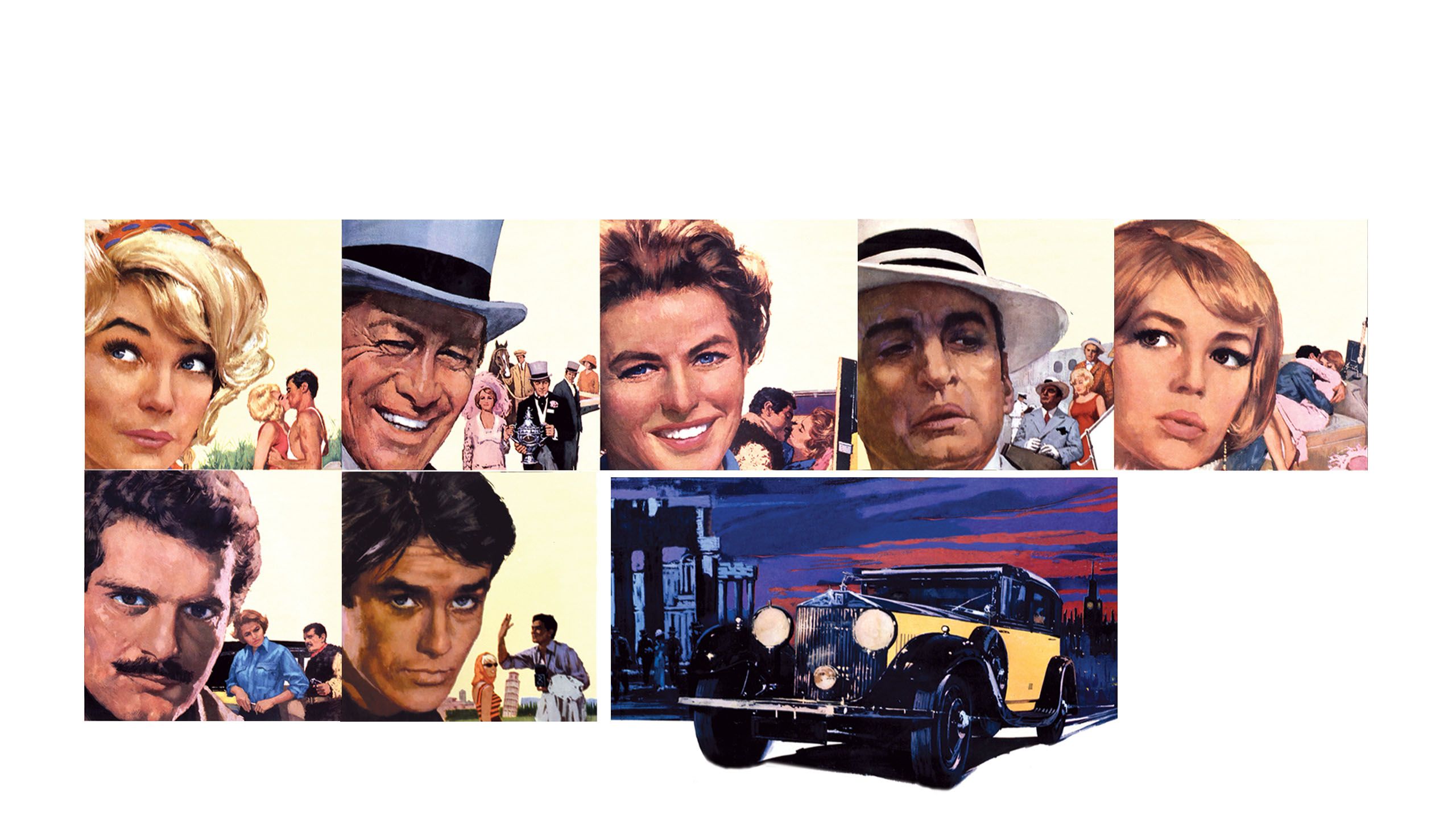
Ever looked at a car and felt like it had seen more than most people? Not just miles, but real, heavy history. That is exactly what you get when you talk about the movie yellow rolls royce. Most people think of it as just a prop, a shiny yellow thing from a 1964 flick with a star-studded cast. But honestly, it’s much more than that. It’s a 1930 Rolls-Royce Phantom II Sedanca de Ville with a Barker body, and it has lived a life more dramatic than the script written for it.
You’ve got to love the premise of the movie itself. It’s a triptych—three stories tied together by one car. It starts in the high-society circles of London, moves to a colorful but dangerous Italy, and ends up in the middle of World War II in Yugoslavia. It’s basically a biography of an object. But what makes it interesting is that the car wasn’t just a "car." It was a character.
What Most People Get Wrong About the Movie Yellow Rolls Royce
There is a huge misconception that the car was just some painted-up junker for Hollywood. Nope. This was the real deal. In fact, it was so well-made that it outlasted many of the stars on screen. While people focus on Rex Harrison or Ingrid Bergman, the actual 1930 Phantom II was the one doing the heavy lifting.
Kinda crazy when you think about it: the car used in the film, chassis 2JS, actually exists today. For a long time, car buffs thought it had vanished into some dusty private collection or, worse, a scrap heap. But a dedicated restorer named Neal Kirkham found it in Florida back in 1989. It wasn't in great shape. The interior had been botched, and the engine was tired.
- Model: 1930 Rolls-Royce Phantom II
- Body Style: Sedanca de Ville by Barker
- Engine: 7.7-liter straight-six (despite some weird rumors about it being underpowered)
- Top Speed: Around 65-70 mph (in its prime)
Kirkham spent years—basically his whole retirement—bringing it back to life. He even had to ship the rear axle all the way to England just to get the right parts. That’s the kind of obsession the movie yellow rolls royce inspires. It’s not just a movie car; it’s a piece of rolling sculpture.
The Mystery of the "Other" Yellow Rolls Royces
Here is where things get a bit confusing for casual fans. If you search for a "yellow Rolls-Royce in a movie," you might be thinking of The Great Gatsby. Or maybe you're thinking of Auric Goldfinger’s 1937 Phantom III.
It’s a common mix-up.
In the 1974 version of The Great Gatsby, Robert Redford drives a 1928 Rolls-Royce Ascot Dual Cowl Sport Phaeton. It’s yellow. It’s iconic. But it’s not the yellow Rolls-Royce from the movie of the same name. Then you have James Bond. In Goldfinger, the villain has a black-and-yellow Phantom III. That one is famous because the plot involved melting down the gold bodywork.
So, if you're looking for the original star of the 1964 film, you’re looking for the 1930 Phantom II. It’s the one with the "Sedanca de Ville" roof—where the driver is essentially sitting outside while the passengers are tucked away in luxury. Very classy. Very impractical for a rainstorm.
Why the 1930 Phantom II Was the Perfect Choice
Why did the director, Anthony Asquith, pick this specific car? It had to look expensive enough to be a lord's anniversary gift, flashy enough for a 1930s gangster, and rugged enough to survive a war.
The Phantom II was the last model designed under the technical supervision of Henry Royce himself. It was a beast. It had a massive 7.7-liter engine. While modern cars have way more horsepower, the "low-end grunt" of this thing was legendary. It could pull a heavy coach-built body over the mountains of Yugoslavia (or the movie sets meant to look like them) without breaking a sweat.
The color, though, is what really did it. That "primrose yellow" wasn't a standard Rolls-Royce factory color in 1930. It was a statement. It represented the vanity of the characters who owned it.
- Lord Frinton (Rex Harrison): He buys it to show off his status and his love for his wife, only to find her in the back seat with another man. The car becomes a symbol of his humiliation.
- Paolo Maltese (George C. Scott): A mobster who wants to "buy" class. He treats the car like a trophy, but it eventually leads to a messy romantic entanglement for his girlfriend.
- Gerda Millett (Ingrid Bergman): She uses the car to smuggle partisans during the war. Suddenly, the car goes from a symbol of vanity to a tool for survival.
The Real History Nobody Talks About
While the movie is fictional, the car’s real-life journey is just as wild. Before it was a movie star, it was just a high-end luxury vehicle. After the movie wrapped, it went through a "dark period."
It was used for promotions, parked in showrooms, and eventually sold off. By the time it reached the 1980s, it was a "clunker" in Florida. Imagine that. One of the most famous cars in cinema history sitting in the humidity of the South, its yellow paint fading.
Neal Kirkham’s restoration was a Herculean task. He didn't just paint it; he stripped it to the bare chassis. He dealt with fatigue cracks in the aluminum and cam lobes that had worn down to nothing. He even found "buckets of body filler" from previous, cheaper repairs.
Actionable Insights for Car Collectors and Movie Buffs
If you're fascinated by the movie yellow rolls royce, you aren't alone. But how do you actually engage with this piece of history?
- Check the Auctions: Genuine "star cars" like this don't come up often. The Great Gatsby Rolls-Royce sold for nearly a million dollars recently. Keep an eye on Sotheby’s or RM Auctions if you're in that tax bracket.
- Visit the Museums: While the 2JS car is often in private hands, similar Barker-bodied Phantoms are staples in museums like the Nethercutt Collection in California.
- Watch the Original: If you haven't seen the 1964 film, do it. Don't just watch it for the car; watch it for the way the car is shot. The cinematography treats the vehicle with more respect than some of the actors.
- Verify the Specs: If you’re ever looking to buy a vintage Rolls, check the chassis number. For this movie, the "hero car" is 2JS. Anything else is just a tribute or a lookalike.
The movie yellow rolls royce serves as a reminder that objects carry stories. Whether it’s sitting in a climate-controlled garage or being chased by German bombers on a film set, the car remains an icon of a time when "luxury" meant something you could feel in the weight of a door handle.
The best way to appreciate it today is to understand the nuance of its design. Look at the way the Barker body curves. Notice the "Spirit of Ecstasy" hood ornament, which had to be rotated just to open the hood. It’s those tiny, inconvenient details that make the car a masterpiece.
To dive deeper into this world, start by researching the specific coachbuilders of the 1930s. Companies like Barker and Park Ward didn't just build cars; they tailored them to the owner’s personality, much like how the car in the movie changed its "soul" with every new owner.