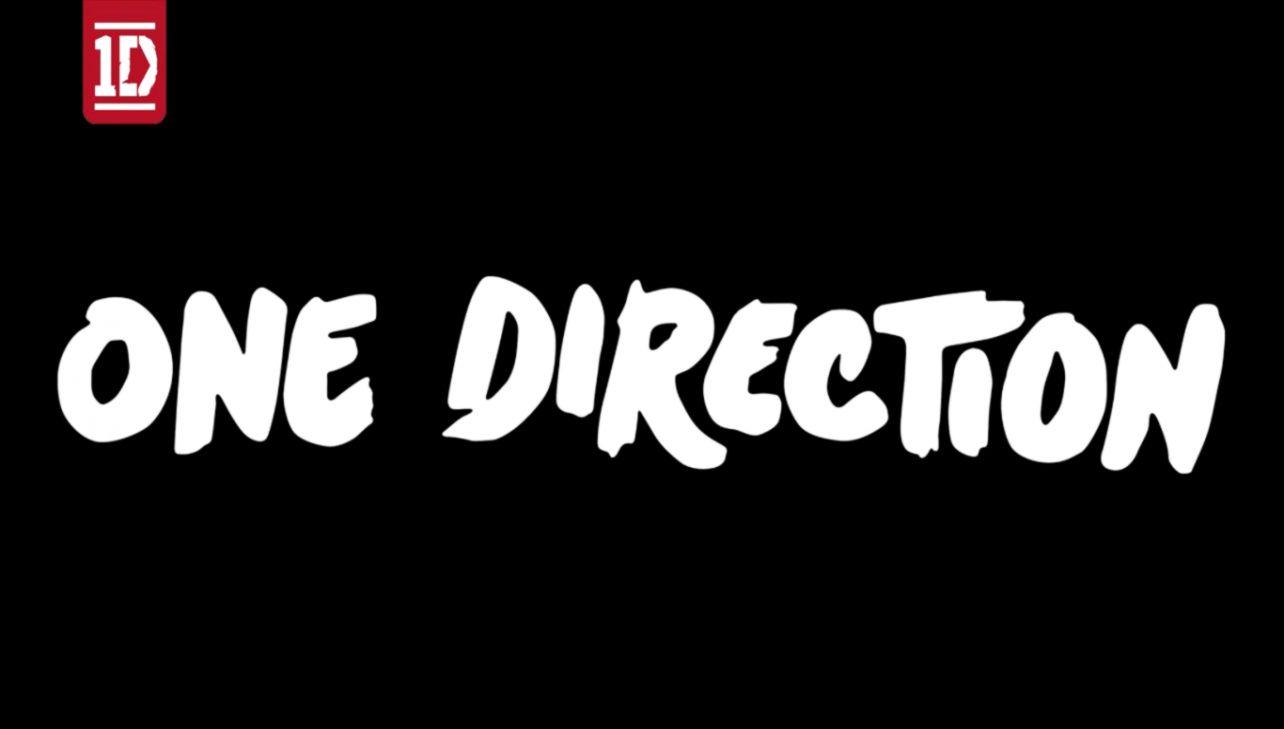
It was simple. Maybe even a little bit lazy, if you ask a high-end graphic designer working for a Fortune 500 company. But for millions of people between 2010 and 2016, those two characters—1D—were basically a religious icon. The one direction band logo didn't need to be complex. It didn't need a hidden meaning like the FedEx arrow or the Nike swoosh’s "movement." Honestly, it just needed to look good on a t-shirt, a notebook, and the back of a hoodie.
Look, we're talking about a band that was manufactured on a reality show. Simon Cowell and the Syco Music team knew exactly what they were doing. They weren't trying to create Pink Floyd. They were creating a brand that felt accessible. The logo reflects that perfectly. It’s bold. It’s blocky. It’s unpretentious.
The Anatomy of the 1D Icon
When you actually sit down and look at the one direction band logo, you realize it’s all about the "1D" abbreviation. Using the full name "One Direction" in a logo is fine for an album cover, but for branding? You need something punchy. The iconic version features a heavy, sans-serif "1" and "D" tucked inside a rounded square or sometimes just standing alone.
The font choice is usually cited as a modified version of Boiled or something very similar to Impact. It’s thick. It’s loud. It says "we are here" without needing a lot of flourishes. Interestingly, the "1D" is often slanted or has those distinctive "cuts" in the letters. Specifically, the "1" often has a horizontal line through it, or the "D" is slightly offset. This creates a sense of "action." Even though it’s just two characters, they feel like they’re moving. That’s branding 101 for a boy band that spent five years straight on a world tour.
Color-wise, we usually saw it in red, white, or black. Red is the color of passion and energy. Black is "rock and roll" (or at least as rock and roll as a group singing "What Makes You Beautiful" can be). By keeping the palette limited, the management team made it incredibly easy for fans to replicate. You could draw the one direction band logo on your Converse with a Sharpie in about ten seconds. That’s how you build a cult following.
Why Minimalism Worked for the Boys
In the early 2010s, we were moving away from the overly glossy, 3D-rendered logos of the 2000s. Everything was getting "flat." The 1D logo accidentally—or maybe geniusly—hit that trend right on the head.
Harry, Niall, Liam, Louis, and Zayn weren't just singers. They were individual brands. If the band logo had been too specific—say, a silhouette of five guys—it would have become outdated the second someone changed their hair. By sticking to the alphanumeric "1D," the logo remained constant even as the boys grew from teenagers in purple hoodies to men with tattoos and Chelsea boots.
The "Arrow" Variations
You probably remember the arrows. In several iterations of the one direction band logo, specifically around the Midnight Memories era, the logo started incorporating right-facing arrows.
- They literally point "in one direction." It’s a bit on the nose, sure.
- It suggests progress. Moving forward.
- It fits the "road trip" aesthetic of their later albums.
Think about the Four album cover. The branding shifted slightly. It became more mature. But that core "1D" stayed. It was the anchor. Even when Zayn left in 2015—a day most fans remember like a national tragedy—the logo didn't change. It couldn't. The brand was bigger than any one member.
The Business of the Brand
Let's talk money. Branding is about merchandising. The one direction band logo has been printed on everything from toothpaste to duct tape. I'm not kidding—there was actual 1D branded duct tape.
Because the logo was so simple, it was cheap to print. It worked in one color. It worked as a cutout. It worked as a watermark on concert tickets. From a business perspective, Syco and Modest! Management created a visual asset that required zero maintenance. It didn't need to be updated for different markets. Whether you were in Tokyo or Toledo, you knew what that "1D" meant.
Some critics argued it was "soulless." They’d point to the logos of bands like The Rolling Stones (the tongue) or The Grateful Dead (the Steal Your Face skull) and say 1D lacked "artistic merit." But those critics missed the point. 1D wasn't trying to be an underground indie act. They were the biggest pop phenomenon since the Beatles. Their logo needed to be a stamp of quality—or at least a stamp of "this is the thing you love."
Evolution Across the Albums
While the core logo stayed mostly the same, the typography used for the full band name changed to match the "vibe" of each era.
- Up All Night / Take Me Home: Very clean, very "pop." Lots of bright colors.
- Midnight Memories: Grittier. Use of hand-drawn styles or distressed textures. This was when they were trying to pivot to a more "stadium rock" sound.
- Made in the A.M.: Sophisticated. The branding felt like a legacy act.
If you look at the Made in the A.M. merch, the one direction band logo is often smaller, more subtle. It’s for the fans who had grown up with them. They didn't need a giant red "1D" on their chest anymore; a small, sleek tag would do.
The Emotional Connection
Symbols get their power from the people who use them. To a casual observer, the 1D logo is just a number and a letter. To a "Directioner," it represents a specific era of their life. It represents the "Video Diaries" on the stairs. It represents waiting up until 3 AM for a music video drop.
There's a reason why, even now in 2026, you still see that logo on social media profiles. It’s a badge of membership. When the band went on "hiatus" (the longest eighteen months in history), the logo became a memorial. It represents a "what if."
How to Use the 1D Aesthetic Today
If you're a designer or a creator looking at the one direction band logo for inspiration, the takeaway is "bold simplicity." In a world of high-definition screens and complex gradients, a high-contrast, two-character logo still cuts through the noise.
To recreate that "1D" feel in your own projects:
- Use a Heavy Sans-Serif Font. Think Impact, Arial Black, or Helvetica Bold.
- Tight Kerning. The letters should almost touch. It creates a sense of unity.
- High Contrast. Stick to black and white or a single bright primary color.
- The "Tilt." A 5-10 degree slant to the right adds energy and makes the text feel less "static."
Actionable Insights for Fans and Collectors
If you're looking for authentic 1D memorabilia, pay close attention to the logo's execution. Bootleg merchandise often gets the proportions of the "1" and the "D" wrong.
- Check the Serif: The "1" in the official logo has a very specific top flag and a flat base. Many fakes use a standard "1" font that looks too thin.
- Look at the Spacing: The gap between the "1" and the "D" is intentional. In the classic "box" logo, the characters are perfectly centered with equal padding on all sides.
- Texture Matters: Authentic vintage tour shirts from 2012-2014 often have a slightly distressed print on the logo, whereas modern reprints might look "too perfect" or plasticky.
The one direction band logo remains a masterclass in "less is more." It didn't need to win design awards to become one of the most recognizable symbols in 21st-century music. It just needed to be there, solid and unchanging, while five boys from the UK took over the world.
Next Steps for Your Collection:
- Verify the authenticity of any "vintage" 1D gear by comparing the font thickness to official album art from the 2011-2015 period.
- If you're designing fan art, prioritize the "1D" abbreviation over the full name to maintain that iconic "streetwear" look that the band eventually adopted.
- Archive any original 2010-era physical media; the branding from the early years is becoming increasingly rare as the "hiatus" continues.