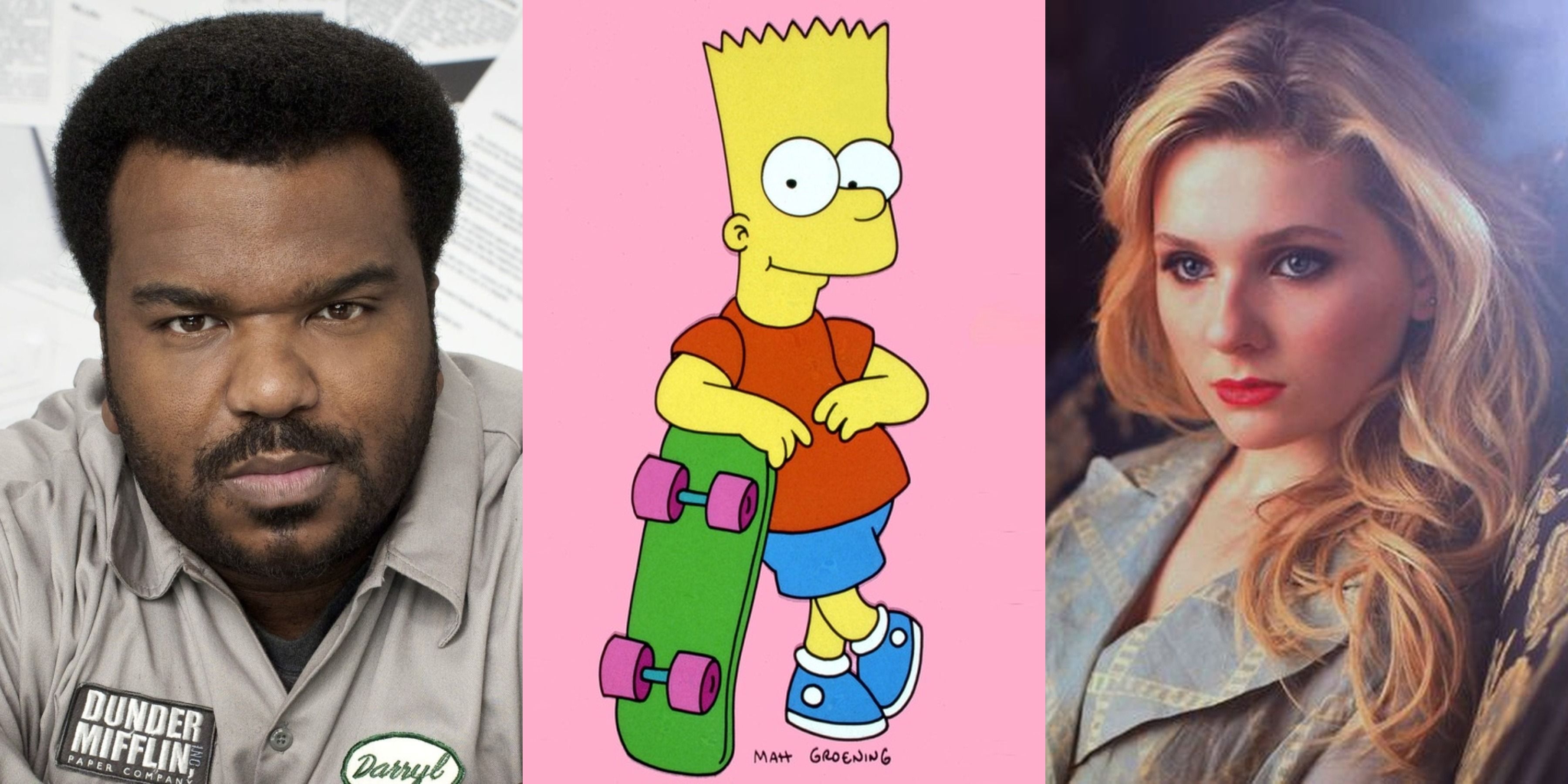
You’ve seen the yellow skin, the spiky hair, and that slingshot tucked into the back pocket. For over thirty years, he's been the poster child for underachievement. But when people search for the real life Bart Simpson, they’re usually looking for a single person—a flesh-and-blood kid who caused enough chaos in the 1980s to inspire a global phenomenon.
Honestly? It's not that simple. There isn't just one "Bart."
If you were expecting to find a photo of a kid in Portland who looked exactly like the cartoon, you might be a little disappointed. But the truth is actually cooler. Bart is a cocktail. He’s a mix of Matt Groening’s own childhood, a very specific older brother, and a total rejection of the "perfect" TV kids we were all forced to watch in the mid-20th century.
The Man Behind the Brat: Matt Groening’s Secret
Most people know that Matt Groening named the Simpsons after his own family. His dad was Homer. His mom was Margaret (Marge). His sisters? Lisa and Maggie. It’s almost a little weird how literal he was with it.
But he hit a wall when it came to the son. He didn’t want to name the "brat" after himself. It felt a bit too on the nose. So, he took the word "brat" and jumbled the letters. Boom. Bart.
The Mark Groening Factor
While Matt’s name isn't on the character, his older brother’s spirit is. Mark Groening is arguably the closest thing to a real life Bart Simpson that exists. Matt has admitted in numerous interviews, including chats with The Smithsonian and The Oregonian, that Mark was the one who really brought that rebellious edge to the family dynamic.
Mark was the guy who introduced Matt to the stuff that "respectable" kids weren't supposed to like: MAD magazine (back when it was a real comic), Tales from the Crypt, and the kind of underground energy that defines Bart’s worldview. Mark wasn't necessarily a "bad" kid, but he was the catalyst. He was the one who showed Matt that you could be a smart-aleck and still be the hero of your own story.
Why Dennis the Menace is Actually to Blame
There’s a funny bit of history here. Matt Groening grew up watching the 1950s live-action version of Dennis the Menace. He hated it. Well, maybe "hated" is a strong word, but he was definitely annoyed by it.
To Matt, Dennis wasn't a menace. He was a polite kid who accidentally tripped over a rug.
Groening wanted a character who was actually a handful. He wanted a kid who purposefully caused trouble, not because he was evil, but because he was bored. He took the "Dennis" archetype and gave it teeth. Bart was designed to be what happens when a kid like Eddie Haskell from Leave It to Beaver gets his own show.
The Portland Connection
Springfield might be "anywhere," but the vibe is pure Portland, Oregon. If you walk around the streets of Northwest Portland, you’ll see where the real life Bart Simpson would have skated. Many of the character names aren't from people, but from streets:
- Flanders St. (Ned Flanders)
- Lovejoy St. (Reverend Lovejoy)
- Kearney St. (Kearney the bully)
- Quimby St. (Mayor Quimby)
Bart’s world is built on the geography of a real childhood. The "realness" of the character comes from the fact that he was born out of a real kid’s frustration with boring, rainy afternoons in the Pacific Northwest.
Nancy Cartwright: The Woman Who "Became" the Boy
You can't talk about a real life Bart Simpson without talking about Nancy Cartwright. This is the part that usually blows people's minds if they aren't die-hard fans. Bart is a woman.
In 1987, Nancy went into an audition for The Tracey Ullman Show shorts. She was actually there to read for Lisa. But she saw the description for Bart: "devious, underachieving, school-hating, irreverent, clever."
She thought, Yeah, that’s the one.
She gave him that raspy, "eat my shorts" voice right there in the room. Matt Groening hired her on the spot. Nancy has famously said that she’s been a 10-year-old boy for over three decades. Her own personality—mischievous, energetic, and a bit of a jokester—has bled into Bart over the years. When you see her do the voice in interviews, you realize she isn't just "playing" him. She is the living version of that energy.
The AI "Real Life" Obsession
If you’ve been on social media lately, you’ve probably seen those "AI Real Life Simpsons" images. They’re everywhere. Usually, they look like something out of a horror movie.
People are obsessed with seeing what a human Bart would look like. Because of his 9-pointed spiky hair (which is actually part of his skull in the cartoon world), AI usually renders him as a kid with a very unfortunate haircut or a strangely textured head.
But those images miss the point. A real life Bart Simpson isn't about the yellow skin or the spikes. He’s a personality type. He’s the kid in the back of the class who’s actually smarter than the teacher but refuses to prove it because he thinks the system is rigged.
Is There a "Real" Bart Today?
Sorta. But he’s evolved.
The 1990s Bart was a symbol of "underachiever and proud of it." Today, that same spirit lives in different ways. You see it in the DIY skate culture, the internet trolls who use humor to poke at authority, and the kids who find creative ways to bypass school firewalls.
The "real" Bart isn't a single person you can find on Wikipedia. He’s the collective memory of every kid who ever got a detention for something that was actually pretty funny.
How to Find Your Inner Bart (The Actionable Part)
Look, we’re all under a lot of pressure to be "Lisa" these days—perfect grades, perfect resumes, perfect social media feeds. But there’s a reason Bart has lasted this long. He represents the part of us that needs to let off steam.
If you want to channel the spirit of the real life Bart Simpson, try this:
- Question the "Why": Bart never does anything just because he's told. If a rule doesn't make sense, he pokes at it. Do that (within reason).
- Find a Creative Outlet: Bart draws, he skates, he pranks. He’s actually incredibly active. Don't just consume; make something, even if it’s just a clever joke.
- Embrace the Flaws: The Simpsons works because they aren't perfect. Being an "underachiever" in a world that demands 110% is actually a valid form of self-care sometimes.
The real life Bart Simpson isn't a person Matt Groening met once at a bus stop. He’s the rebellious spark in Matt’s brother, the rasp in Nancy Cartwright’s throat, and the map of Portland. He’s the reminder that it’s okay to be a little bit of a "brat" every now and then.
To really understand the character, stop looking for a face and start looking for the attitude. It's usually found right where someone is telling you to sit down and be quiet.
Next Steps for Your Simpsons Deep Dive:
- Listen to Nancy Cartwright's Voice: Check out her autobiography, My Life as a 10-Year-Old Boy, to hear how she developed the voice from scratch.
- Explore Portland's Streets: Use Google Maps to find the intersection of 13th and NW Flanders to see the real-world roots of the characters.
- Watch the Early Shorts: Go back to the Tracey Ullman shorts to see how much more "menacing" and raw Bart was before he became a global brand.