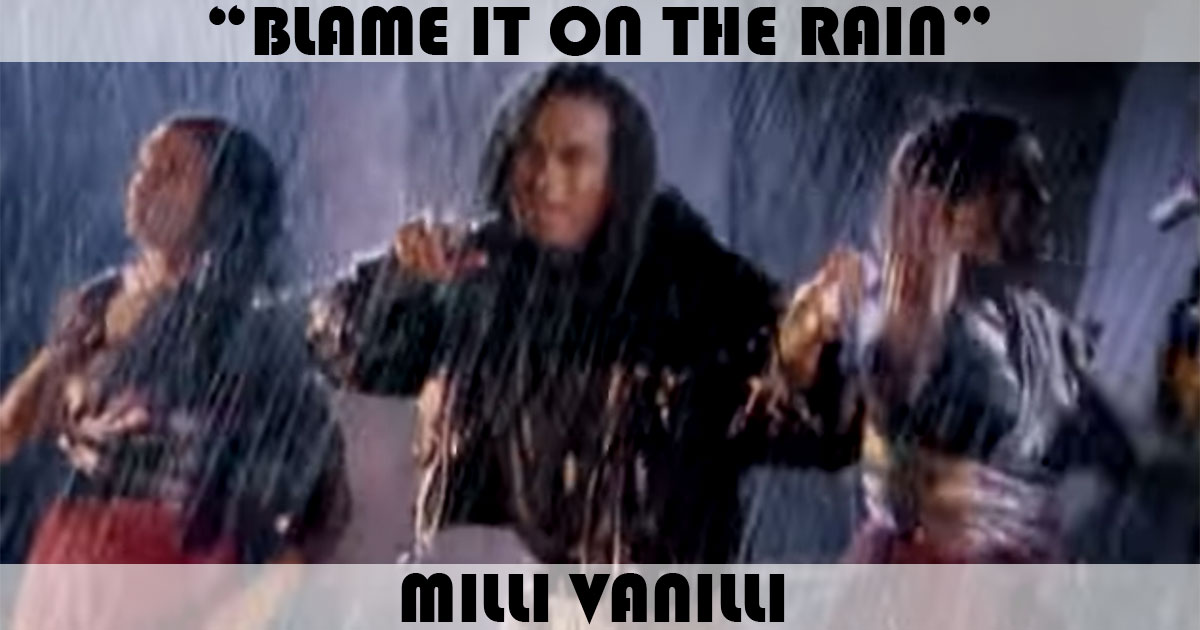
You know the song. That synthetic, late-80s drum beat kicks in, followed by a smooth, melodic vocal telling you that if you've got to lay the responsibility for a breakup somewhere, you might as well point at the weather. Blame It on the Rain was a juggernaut. It hit number one on the Billboard Hot 100 in November 1989, cementing Milli Vanilli as the biggest pop act on the planet. But honestly, the song is now inseparable from the mess that followed. It wasn't just a catchy tune; it became the soundtrack to one of the most infamous exposures in music history.
Most people remember the lip-syncing. They remember Rob Pilatus and Fab Morvan looking like stars while other people did the heavy lifting. But if you actually look at the mechanics of how Blame It on the Rain came together, it’s a fascinating case study in how the music industry "manufactures" a hit. It wasn't a fluke. It was a calculated, high-budget production that backfired in the most public way imaginable.
The Diane Warren Connection
People forget that Blame It on the Rain was written by Diane Warren. If you look at her track record, the woman is a hit machine. She's written for everyone from Aerosmith to Celine Dion. At the time, she was just starting to reach that peak level of ubiquity. She wrote the song as a straightforward pop-R&B ballad, and Arista Records boss Clive Davis knew it was a goldmine.
The production was handled by Frank Farian. Farian was a German producer who had already seen massive success with Boney M. in the 70s. He had a specific formula: find a great track, find the right voices, and—this is the part that got him in trouble—find the right "faces." Farian didn't think the actual singers of the song, Charles Shaw, John Davis, and Brad Howell, had the visual appeal to sell records in the MTV era. So, he hired Rob and Fab. They were dancers. They were models. They had the hair and the moves. They just didn't sing a single note on the record.
It’s kinda wild when you think about the pressure. Rob and Fab were living a lie while Blame It on the Rain was blasting out of every car radio in America. They were winning Grammys for work they didn't do. The tension was building behind the scenes because the guys actually wanted to sing on the next album. Farian refused. Eventually, the house of cards collapsed, but not before the song became a permanent fixture of pop culture.
Why Blame It on the Rain Still Sounds "Right"
Despite the scandal, the song holds up. Why? Because the session musicians and the actual vocalists were incredibly talented. When you listen to the bridge, the vocal layering is tight. The "rain" metaphors are classic Diane Warren—simple, relatable, and incredibly catchy.
There’s a specific irony in the lyrics. "Blame it on the rain that was falling, falling / Blame it on the stars that did shine at night." The song is literally about refusing to take responsibility for a failure. It’s about finding an external excuse for a personal disaster. When the lip-syncing news broke, the title of their biggest hit became a punchline. They couldn't blame the rain; they had to blame the system that created them.
The song’s success was also a product of the 1989 sonic landscape. We were transitioning from the big hair of the 80s into a more polished, R&B-influenced pop sound. Farian used the LinnDrum and Fairlight CMI to create that crisp, mechanical feel that was everywhere at the time. It sounded expensive.
The Fallout and the Grammys
The Recording Academy eventually did something they had never done before: they rescinded Milli Vanilli's Best New Artist Grammy. It was a massive embarrassment. But the interesting thing is that Blame It on the Rain didn't just disappear. If you go to a wedding or a 90s night today, people still dance to it.
We’ve moved into an era where "authenticity" is a buzzword, yet we use Auto-Tune and ghostwriters constantly. In a way, Milli Vanilli were just thirty years too early for the "fake it 'til you make it" culture. They were the extreme version of a trend that has always existed in the industry. They weren't the first to use session singers, and they certainly weren't the last. They just got caught because a hard drive skipped during a live performance in Bristol, Connecticut.
The Vocalists Behind the Curtain
We should talk about John Davis. He was one of the actual voices on the track. For years, he stayed in the shadows while others took the credit. He eventually formed "The Real Milli Vanilli," but the magic was gone by then. The public felt cheated. It wasn't just about the music; it was about the betrayal of the "image."
When you listen to the song now, try to separate the visual of Rob and Fab from the actual audio. The lead vocal has a gritty, soulful quality that Rob and Fab, who were European models with thick accents, couldn't have replicated if they tried. That’s the "tell." If anyone had really listened to their interviews and then compared them to the record, the ruse would have been obvious from day one.
How to Listen to 80s Pop with New Ears
If you're a fan of music history, Blame It on the Rain is a must-study. It represents the peak of the producer-controlled era. It shows what happens when marketing is prioritized over artistry. But it also shows the power of a well-written song. Even with a tarnished legacy, the track is a masterclass in hook construction.
To truly understand the impact of this era, you have to look at the other artists Diane Warren was writing for. Compare this track to "If I Could Turn Back Time" or "Nothing's Gonna Stop Us Now." You'll see the same DNA. The same emotional beats. The same "big" choruses.
Actionable Insights for Music Fans and Creators
If you want to dive deeper into this specific moment in music history or if you're a creator looking to learn from the past, keep these points in mind:
- Audit the Credits: Always look at the liner notes. Websites like AllMusic or Discogs show you who actually played the instruments and sang the backing vocals. It changes how you hear the music.
- Study Songwriting Structure: Analyze Diane Warren’s "verse-pre-chorus-chorus" formula in this song. It’s a blueprint for why pop songs get stuck in your head. Notice how the "rain" motif repeats every four bars in the chorus.
- The Ethics of Image: For modern artists, this story is a reminder that brand and talent have to align eventually. If the gap between your "Internet persona" and your actual skill is too wide, the "Milli Vanilli effect" is an inevitable risk.
- Watch the Documentaries: There are several deep-dive documentaries, including the recent 2023 Milli Vanilli film on Paramount+, that feature interviews with Fab Morvan. Seeing his perspective on the industry's exploitation provides a much-needed human element to the scandal.
- Value the Session Musician: Let this song be a reminder to appreciate the "ghost" performers. The success of Blame It on the Rain belongs to the vocalists like John Davis and Brad Howell just as much as it does to the songwriters.
The legacy of the track is complicated. It’s a great pop song wrapped in a lie. But at the end of the day, when that beat starts, most people aren't thinking about the Grammy scandal. They’re just singing along to the chorus.