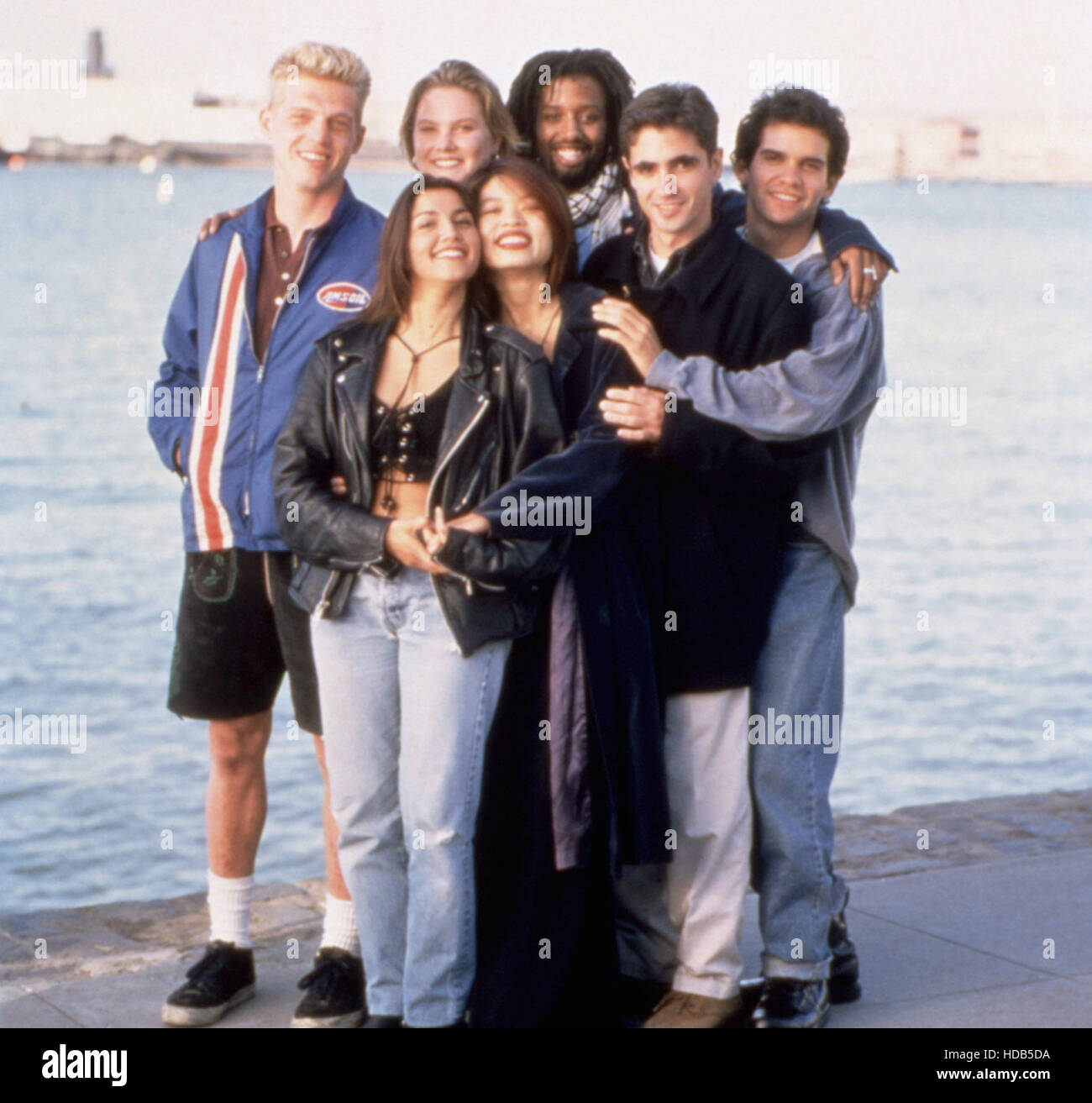
If you were watching MTV in the summer of 1994, you remember the house on Lombard Street. It was the peak of the 90s. Flannel was everywhere. Everyone was talking about "seven strangers." But while most people remember that season for the heartbreaking journey of Pedro Zamora or the hygiene-challenged antics of David "Puck" Rainey, there was another force in that house. Rachel Campos.
Back then, she was a 22-year-old recent graduate from Arizona State. She was bubbly, Catholic, and—in a house full of San Francisco liberals—a staunch Republican. Honestly, she was basically the blueprint for the "conservative voice" archetype that reality TV would milk for the next three decades.
The Girl Who Liked the Bad Boy
Rachel’s storyline in The Real World San Francisco wasn't just about politics. It was about her bizarre, often frustrating attraction to Puck. You remember Puck. He was the guy who used his fingers to eat peanut butter out of the jar and picked his scabs at the dinner table.
Castmate Judd Winick famously called her out on it. He basically said she had a thing for "bad boys." Rachel didn't really deny it. She had this rebellious streak that clashed with her strict upbringing, and for a while, Puck was the ultimate rebel. But it wasn't just a crush; it was a mess. Their "relationship" was a cycle of Puck being Puck—meaning loud, abrasive, and often cruel—and Rachel trying to find the humanity in him.
Eventually, even Rachel had enough. When the house finally voted to evict Puck, she was part of the consensus. But the drama didn't stop there. Once Jo Rhodes moved in to replace him, Rachel and Jo became the "high maintenance twins." They were the duo the other roommates often rolled their eyes at, mostly because they seemed a bit more interested in the San Francisco social scene than the "deep" conversations happening in the kitchen.
Rachel Campos and Pedro Zamora: The Relationship Nobody Expected
There is a common misconception that Rachel was just the "villain" to Pedro’s hero. It’s more complicated than that. When Pedro first revealed he had AIDS by showing the roommates his scrapbook, Rachel was visibly uncomfortable. She admitted she was scared. She distanced herself.
But then something shifted.
They actually became friends. Like, real friends. Pedro even traveled to Arizona with her to meet her parents. Think about that for a second. A gay, Cuban-American AIDS activist visiting a strict, conservative Catholic family in the desert in 1994.
- They climbed Camelback Mountain together.
- They talked about their vastly different worldviews.
- She was there at his commitment ceremony to Sean Sasser.
Looking back, those moments were huge for 90s TV. You had a passionate Republican and a gay man living with AIDS finding a middle ground. It wasn't always perfect—Pedro later felt she distanced herself again when things got "too real" with his health—but it was human. It wasn't the scripted, polished "debate" you see on news networks today. It was raw.
Life After the San Francisco House
People often forget that shortly after filming wrapped, Rachel was in a horrific car accident. It happened in 1995 while the fifth season of the show was being filmed in Miami. She was in a rental car when a head-on collision killed her boyfriend at the time and his friend. Rachel was thrown out of the window.
She survived, but she sustained serious injuries to her leg that still affect her today. It's a dark chapter that many casual fans don't know about. It changed her trajectory. She didn't just fade away into the "where are they now" bin of reality stars.
Instead, she leaned into the very thing that made her stand out in the first place: her conservative identity.
From Lombard Street to the Republican Mainstream
Rachel didn't just "get lucky" with a TV career. She fought for it. She tried out for The View multiple times. Seriously. She was in the final running when Lisa Ling got the job, and again when Elisabeth Hasselbeck was hired. She was determined to be that conservative voice on a major platform.
Eventually, she found her permanent home at Fox News. But before the Fox & Friends Weekend gig, there was Road Rules: All Stars.
That show changed everything. Not because of the "missions," but because she met Sean Duffy. He was from The Real World: Boston. They became the ultimate MTV power couple. They didn't just stay in the reality bubble; they moved to Wisconsin, Sean became a District Attorney, then a Congressman, and now he's a major figure in the 2026 political landscape, even serving as the acting administrator of NASA.
Why Rachel Campos Real World San Francisco Still Matters
When you look at Rachel Campos in The Real World San Francisco, you’re seeing the birth of the modern media personality. She wasn't just a "character." She was a precursor to the polarized world we live in now.
She was one of the first people to realize that being the "other" in a room—the one with the unpopular opinion—was actually a career path.
Here is the reality of her impact:
- She proved that reality TV could be a springboard for legitimate political influence.
- She humanized conservative views for an MTV audience that largely rejected them.
- She showed that you could be "the girl who liked the bad boy" and still end up as a mother of nine and a national TV host.
It’s easy to judge her based on her current political takes, but if you go back and watch the 1994 footage, you see a young woman trying to reconcile a very strict, traditional background with the chaotic, progressive energy of San Francisco.
If you want to understand the history of reality TV, you have to look at the San Francisco season. It wasn't just about the "real world." It was about how we talk to people we don't agree with. Rachel was the test case for that. Sometimes she passed, sometimes she failed, but she was never boring.
What You Can Do Next
To get the full picture of how much reality TV has changed, go back and watch the original 1994 episodes rather than just the "best of" clips. Pay attention to the quiet moments between Rachel and Pedro. Compare that to the way political discourse happens on social media today. It’s a wild reminder that even thirty years ago, we were trying to figure out how to live together in the same house without losing our minds.