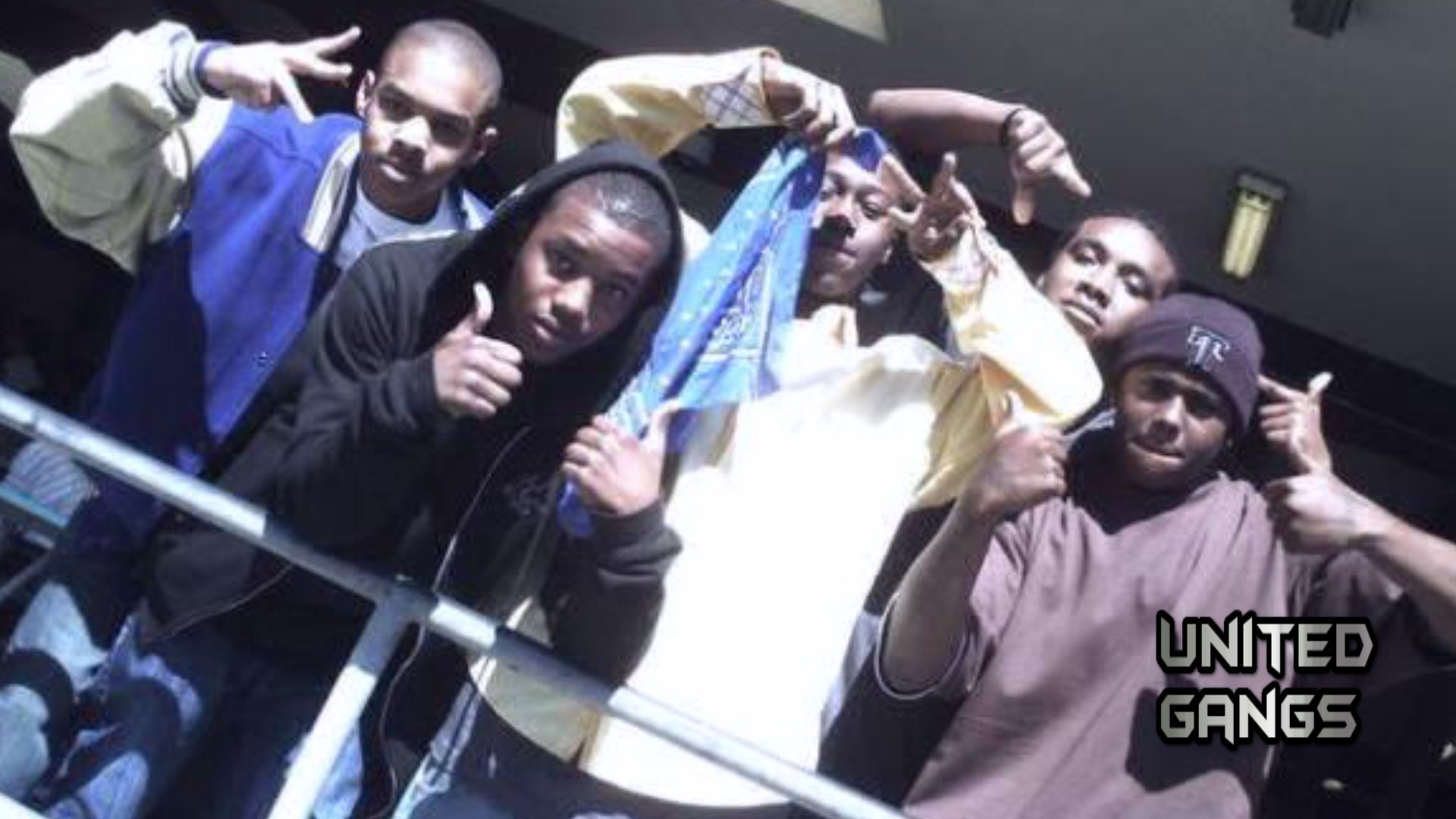
When people talk about the Rollin' 30s Harlem Crips, they usually start with the name. It sounds like a contradiction. Harlem is New York, right? But if you’re standing on the corner of 39th Street and Western Avenue in South Central Los Angeles, you aren’t in Manhattan. You’re in the heart of one of the most storied and complex neighborhoods in the history of California street culture.
The Rollin' 30s Harlem Crips aren't just another set. They are a massive, multi-generational organization with a footprint that stretches far beyond a few city blocks. They've been around since the 1970s. That’s decades of history, conflict, and internal evolution packed into a single identity. Honestly, it’s a lot to wrap your head around if you only know what you see in movies or 30-second news clips.
Where the Harlem Name Actually Comes From
It’s a common mix-up. Most people assume there’s a direct branch-to-root connection with New York’s Harlem. That's not exactly it. The name "Harlem" in this context refers to a specific section of South Central Los Angeles—the Jefferson Park area—that was nicknamed Harlem back in the day. It was a cultural hub for the Black middle class in LA before the demographics shifted and the gang era took hold.
The "Rollin' 30s" part of the name refers to the streets they claim, primarily between Jefferson Boulevard and Martin Luther King Jr. Boulevard. Think of it as a grid. This isn't a small crew. We are talking about one of the largest Crip sets in the city. At their peak, estimates put their membership in the thousands. That’s a huge number of people under one banner. Because of that size, they aren't a monolith. They have subgroups, or "cliques," like the Denker Park Boys or the 39th Street gang.
If you look at the geography, they are bordered by rivals and allies alike. It’s a dense, high-stakes environment. To the north and east, you have the Rollin 20s Neighborhood Bloods. That boundary has been the site of intense friction for years. To the south, you find the Rollin 40s Neighborhood Crips. While they share the "Rollin" moniker and are part of the larger Neighborhood Crip (NHC) alliance, even those relationships have had their ups and downs over the decades.
The Internal Structure and the NHC Alliance
The Rollin' 30s are a cornerstone of the Neighborhood Crip movement. You’ll often see them referred to as "30 NHC." This is important because it defines who they are supposed to be cool with and who they definitely aren't. In the 1980s, the Crip world fractured. It wasn't just Crips vs. Bloods anymore. It became Crips vs. Crips. Specifically, the "deuce" (Neighborhood) vs. the "tray" (Gangster Crips or Eight Tray).
The 30s sided with the deuces.
This alliance means they are generally aligned with the Rollin 40s, 50s, 60s, and 90s. But here’s the thing about street politics: it’s never as simple as a map makes it look. Internal beefs happen. Personal grudges between members of "friendly" sets can spark conflicts that last years. It's messy. It's human. It's rarely as organized as a corporate flowchart.
Why the 30s Stand Out
Size matters. In the 1990s, the Rollin' 30s were frequently cited in LAPD reports as one of the most active sets in the Southwest Division. They weren't just about territory; they were about influence. Because they had so many members, their culture spread fast. You started seeing Rollin' 30s chapters popping up in other cities—Denver, Colorado is a prime example. The Denver 30s became a massive entity in their own right, showing how an LA brand could be exported across state lines.
It wasn't just about the streets, though. The influence bled into the music and the look of the era. The 30s have always had a certain "style" associated with them—a specific way of representing that distinguished them from the 60s or the 40s. It’s a local nuance that outsiders usually miss.
The Impact of High-Profile Crackdowns
Law enforcement has spent decades trying to dismantle the 30s. In 2013, one of the biggest stories hit the headlines. It was a massive federal and local raid called "Operation Thumbs Down."
Why that name?
It was a direct reference to the hand signal used by the set—a "thumbs up" to represent the "3" in 30s. Police claimed the gesture was being used to intimidate the community, so they flipped it for the operation's name. They arrested dozens of people. They seized guns. They seized drugs. The headlines were everywhere. The authorities thought they had dealt a "death blow" to the organization.
But history shows these groups are resilient. When you arrest the "top" tier, you often create a power vacuum. Younger, more impulsive members step up. The cycle continues because the underlying issues—lack of economic opportunity, systemic disinvestment in South Central, and the social pull of the neighborhood—don't go away just because a few dozen people are in handcuffs.
The 2013 raid was significant because it used federal RICO statutes. That’s the same stuff they used to take down the Mafia. It changed the stakes. Suddenly, guys weren't looking at a few years in state prison; they were looking at decades in federal facilities across the country.
Misconceptions and the Human Element
One thing people get wrong is thinking every member is a "soldier" on a mission. It’s more like a neighborhood. There are people who are deeply involved in the criminal side. There are people who are "from" the set but just live their lives, maybe just hanging out on the porch. Then there are the "O.G.s" who have transitioned into community roles, trying to stop the younger generation from making the same mistakes they did.
It’s a spectrum.
You have figures who have tried to pivot toward peace. After the 1992 LA Riots, there was a massive push for a Crip-Blood treaty. The Rollin' 30s were part of those conversations. For a moment, it felt like the violence might actually stop. And while the broad treaty didn't hold forever, it created lines of communication that still exist today. There are men in those neighborhoods who can call their counterparts in rival sets to de-escalate a situation before someone gets hurt. That’s the work that doesn't make the news.
The Role of Social Media
In 2026, the game has changed. Back in the 80s and 90s, you knew where a set stood by the graffiti on the wall. Now, it’s on Instagram and TikTok.
"Digital banging" is a real thing.
Younger members of the 30s post videos, flash signs, and trade insults with rivals in the comments section. It’s a double-edged sword. It helps them recruit and maintain their "brand," but it also provides a roadmap for the police. Every post is a digital footprint. Investigators now spend more time monitoring hashtags than they do patrolling some alleys. This shift has made the violence more unpredictable. A comment on a post can lead to a drive-by faster than a dispute over a drug corner ever could.
The Reality of the "Harlem" Identity Today
The neighborhood is changing. Gentrification is hitting parts of South Central. You see coffee shops and new apartment complexes moving into areas that used to be strictly 30s territory. This creates a weird tension. You have lifelong residents—some associated with the set, some not—being priced out of the very blocks they fought to protect or claim for forty years.
What does a street gang do when the street itself is being sold to a developer?
Some sets are fading. Others are becoming more nomadic. But the Rollin' 30s have a deep-rooted history that makes them harder to displace than smaller crews. They are woven into the fabric of Jefferson Park.
Understanding the Stakes
If you're trying to understand the Rollin' 30s Harlem Crips, you have to look past the "gang" label. You have to see the sociology of it. It’s a response to an environment. For some, it’s a family. For others, it’s a trap. For the city of Los Angeles, it’s a permanent part of the landscape that requires more than just police raids to "fix."
The 30s have survived the crack era, the gang injunctions of the 2000s, and the federal raids of the 2010s. They’ve seen their members become rappers, community leaders, and inmates. They've seen their streets change names and their buildings torn down.
Honestly, the story of the 30s is the story of South Central itself. It’s a story of survival, for better or worse.
Actionable Perspectives for the Community
Understanding this history isn't just for trivia. It matters for anyone working in urban development, social work, or local government.
- Support Grassroots Intervention: Programs led by former gang members (O.G.s) are often more effective than traditional policing because they have the "street cred" to actually mediate disputes.
- Acknowledge the Geography: Understanding the specific boundaries (like the 30s' claim to Jefferson Park) helps in predicting where tensions might flare up during neighborhood shifts.
- Invest in Economic Alternatives: The lure of the set diminishes when there are actual, high-paying jobs available. The 30s rose to power in a vacuum of opportunity; filling that vacuum is the only long-term solution.
If you're researching this for a project or just to understand your neighborhood better, remember that these are real people with families and histories. The Rollin' 30s aren't just a headline—they are a complex community with a legacy that is still being written every day on the streets of Los Angeles.