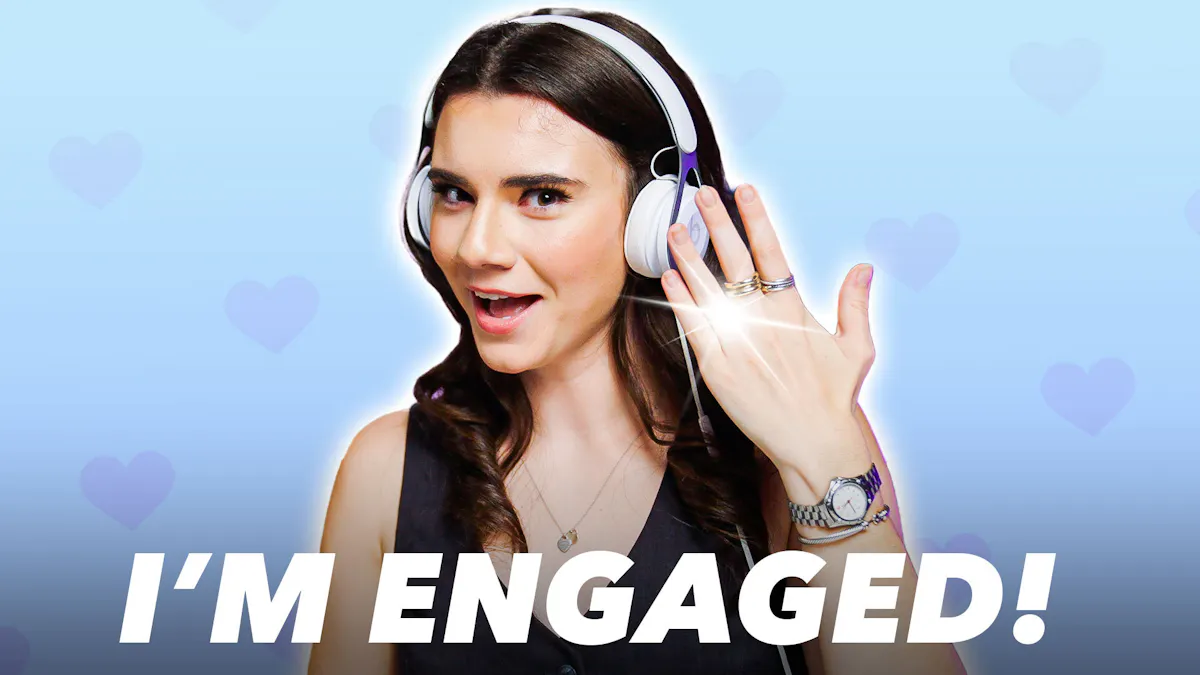
You’ve seen it on TikTok. A girl flashes a massive diamond—or maybe a modest gold band—while a trending audio plays in the background. But the comments aren't all "congrats" and heart emojis. Instead, there's a specific, biting phrase that keeps popping up: "That’s a shut up ring." It’s a harsh term. It’s the kind of thing that makes people rethink their entire relationship timeline.
Basically, a shut up ring is an engagement ring given not out of a genuine, enthusiastic desire to marry, but as a way to silence a partner who has been "nagging" or pressuring for a proposal. It’s a placeholder for commitment. It’s a bribe for peace and quiet.
Relationships are messy. People wait years for a "yes," and sometimes that wait turns into an ultimatum. When one person feels forced into a jewelry store, the resulting engagement often carries a heavy, unspoken weight. Is it a promise of forever? Or is it just a way to stop the constant arguments about where the relationship is going? Honestly, the distinction matters more than the carat count.
Where did this term actually come from?
While the concept of a "pity proposal" has existed since basically the invention of marriage, the specific phrase "shut up ring" exploded in the late 2010s and early 2020s on social media platforms like Reddit and TikTok. It’s deeply rooted in the "waiting" culture of modern dating.
Take a look at r/Waiting_镯 (the subreddit for people waiting for proposals). You’ll see thousands of users venting about "Shut Up Rings." They describe a specific vibe: the partner seems annoyed during the proposal, the ring might be a random choice without input, or the proposal happens immediately after a massive blowout fight about the future.
Psychologists and relationship experts have actually weighed in on this dynamic. Dr. Stan Tatkin, creator of the PACT (Psychodynamic Approach to Couple Therapy), often discusses the "pro-social" versus "pro-self" motivations in relationships. A proposal should be pro-social—it’s for the couple. A shut up ring is pro-self; the proposer is doing it to alleviate their own stress or stop the "nagging."
How to spot the signs of a shut up ring
It isn't always obvious. Sometimes the ring is gorgeous. Sometimes the Instagram post looks perfect. But usually, there are cracks in the foundation.
First, think about the ultimatum factor. If you had to say, "Propose by December or I'm leaving," and they propose on December 30th with a blank stare, that's a red flag. Real commitment doesn't usually require a deadline that feels like a court summons.
Then there's the post-engagement energy. Does your partner actually want to talk about the wedding? If you bring up venues or guest lists and they immediately shut down or say "we have plenty of time" for three years straight, you might be wearing a shut up ring. The ring was the end goal for them—not the marriage.
- The Lack of Effort: The proposal happened on the couch while watching Netflix after you cried about your cousin getting married.
- The Budget Disconnect: They make six figures but bought a $200 sterling silver ring just to "get it over with," or conversely, they spent way too much money they don't have just to distract you from their lack of emotional readiness.
- The Secrecy: They haven't told their parents or friends. They want the ring on your finger to keep you quiet, but they aren't ready for the world to know they're "off the market."
The Psychology of the "Placeholder" Engagement
Why do people even do this? It seems counterintuitive to spend thousands of dollars on someone you aren't sure about.
Fear of loss is a powerful drug. Many people don't actually want to get married, but they really don't want to be single. They like their partner. They like the routine. They just don't want the legal and social weight of a permanent union. So, they buy time.
Clinical psychologist Dr. Ramani Durvasula, known for her work on high-conflict relationships, often points out how "future faking" works. Giving someone a ring is the ultimate form of future faking. It’s a physical manifestation of a promise that the proposer has no intention of keeping. It buys them another two, three, or five years of the status quo.
It's also about power dynamics. If one person is "begging," the other person holds all the cards. Giving the ring shifts the power. Now, if the "receiver" complains about the lack of a wedding date, the proposer can say, "I gave you the ring, what more do you want? Stop being ungrateful." It’s a classic gaslighting move disguised as a romantic gesture.
Is every "long-awaited" ring a shut up ring?
No. Definitely not.
Nuance is important here. Some people just move at a snail's pace. There are couples who date for ten years, get engaged, and have a beautiful, healthy marriage. The difference is enthusiasm.
A healthy engagement—even a late one—is marked by a shared vision. If both people are excited, if the proposer is proud to give the ring, and if the "waiting" was due to external factors like finishing school or saving for a house, it’s not a shut up ring.
It becomes a shut up ring only when the ring is used as a tool for manipulation or a shield against conflict.
The TikTok Effect: Why we're obsessed with calling it out
Social media has made us all armchair psychologists. We see a video of a girl crying over a ring and instead of "Aww," we look at the guy's face. If he looks like he’d rather be getting a root canal, the "shut up ring" comments start flooding in.
This cultural obsession stems from a collective realization that "the dream" isn't just about the jewelry. Gen Z and Millennials are increasingly skeptical of traditional milestones. They’ve seen their parents get "shut up" marriages that ended in messy divorces. There's a new demand for radical honesty in dating.
When creators like @pessimisticprospect or various "dating coaches" on TikTok breakdown these videos, they're teaching viewers to look for "micro-expressions" of resentment. It’s a fascinaton with the dark side of romance. We want to believe in love, but we’re terrified of being the person who was "settled for."
What happens after the "Yes"?
The data on "ultimatum marriages" isn't great. While specific statistics on the term "shut up ring" don't exist in academic journals yet, studies on "marital sliding" versus "deciding" are very real.
Researchers at the University of Denver (Scott Stanley and Galena Rhoades) found that couples who "slide" into milestones—like moving in together or getting engaged because it's the "next step" or to resolve an issue—tend to have lower marital quality than those who make a conscious, enthusiastic decision.
A shut up ring is the ultimate "slide." It’s a reactive move, not a proactive one. Often, these engagements lead to "The Long Engagement," a period of 4+ years where no wedding is planned, or they lead to a "shut up wedding," which is just an even more expensive version of the same mistake.
Breaking the cycle: What to do if you suspect you have one
If you’re looking at your hand and feeling a pit in your stomach instead of joy, you need to have a very uncomfortable conversation.
Honesty is the only way out. You have to ask the hard question: "Did you propose because you want to be my husband/wife, or did you propose because you were tired of me asking about it?"
Watch their reaction. A partner who truly wants to be with you might be offended or hurt, but they will eventually reassure you with specific reasons why they want a future with you. A partner who gave you a shut up ring will likely get defensive, angry, or try to flip the script on your "insecurity."
Actionable Steps for Relationship Clarity:
- The Timeline Test: Ask to set a wedding date within the next 30 days. It doesn't have to be a date for next month, but it has to be a concrete date on a calendar. If they refuse to even look at a year, the ring is a placeholder.
- The "No Ring" Hypothetical: Ask yourself (and them): "If I gave the ring back today but stayed in the relationship, would the pressure and fighting start all over again?" If the answer is yes, the ring is the only thing holding the peace.
- Financial Transparency: Discuss the wedding budget immediately. Someone who gave a shut up ring often won't want to put actual money toward a ceremony because, in their mind, the "transaction" ended when they bought the ring.
- Seek Neutral Ground: Go to a couple's counselor. A professional can help peel back the layers of why the proposal felt forced and whether there's a foundation for a real marriage beneath the resentment.
Ultimately, a ring is just metal and stone. It has no power to save a relationship that isn't built on mutual desire. You deserve to be someone’s "hell yes," not their "fine, here."
If the ring was meant to make you be quiet, maybe the best thing you can do is start speaking up louder than ever about what you actually need. Don't let a diamond act as a gag order. Your future is worth more than a bribe.