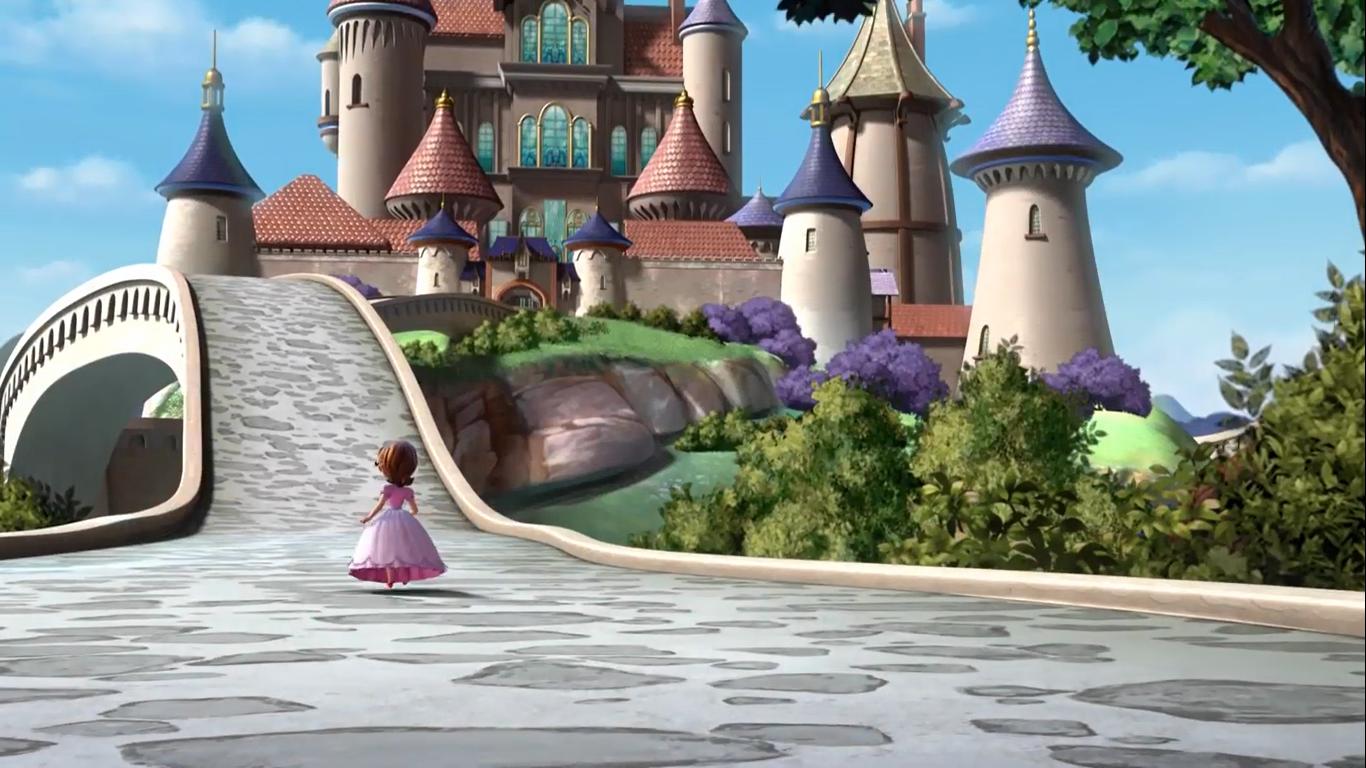
If you’ve spent any time at all watching Disney Junior over the last decade, you know the Sofia the First castle isn't just a background drawing. It's a character. Officially known as Enchancia Castle, this massive, sprawling piece of architecture basically serves as the anchor for everything Sofia learns about being a princess. It’s huge. It’s purple. It’s got more secret passages than a spy novel. Honestly, when you look at how the show's creators—Craig Gerber and his team—designed the space, they weren't just making a "pretty place." They were building a playground that represented the blending of two very different families.
Most people just see the spires and the glitter. But if you actually pay attention to the layout, you’ll notice how the castle reflects the show's core theme: change. When Sofia moves in with her mom, Miranda, the castle has to adapt. It wasn't built for them; it was King Roland II’s ancestral home.
What’s Actually Inside the Sofia the First Castle?
Let's get real for a second—the floor plan of Enchancia Castle is absolute chaos in the best way possible. It sits on a cliffside, overlooking the village and the harbor, which is a classic trope for Disney royalty. But inside? That’s where things get weird. You have the standard stuff, like the grand ballroom where Sofia had her first royal ball (and famously struggled with that waltz). Then you’ve got the more functional areas, like the massive dining hall where the family has those slightly awkward "new family" dinners.
The heart of the castle, though, isn't the throne room. It’s Sofia’s bedroom.
When she first moved in, the room was overwhelming. It was too big. It felt cold. But as the series progressed, that specific space in the Sofia the First castle became the hub for her magical adventures. It’s where she talks to Clover, her rabbit best friend, and where the Amulet of Avalor usually starts glowing to send her on a mission. If you look at the animation details, the room is filled with soft purples and pinks, contrasting with the more rigid, traditional golds and deep reds found in the rest of the palace. It’s a visual representation of Sofia’s influence on the old-school monarchy.
The Secret Library: The Castle’s Best Kept Secret
Later in the series, we find out the castle isn't just stone and mortar. It’s a gateway. The Secret Library is probably the most important location in the entire franchise. Accessing it requires Sofia to use a hidden entrance through a painting, leading her to a massive subterranean room filled with "unfinished books."
This isn't just a library. It’s a narrative engine. Each book represents someone in the kingdom who needs help, and Sofia, as the "Storykeeper," has to go out and finish the story. It turns the castle from a place of domestic life into a mission control center. The physics of it are impossible—the library seems ten times larger than the castle's actual footprint—but in the world of Enchancia, magic always trumps architecture.
Why the Design Matters for Kids
Psychologically, the Sofia the First castle acts as a "safe home base." For kids watching at home, the castle represents stability. No matter how scary a mission gets or how much Cedric the Sorcerer messes up a spell, Sofia always returns to the castle. It’s her sanctuary.
But it’s also a place of work. Unlike Cinderella’s castle, which is mostly a symbol of "happily ever after," Sofia’s home is where she trains. She has a classroom where Flora, Fauna, and Merryweather (the fairies from Sleeping Beauty) teach her. There's a stable for Minimus, her flying horse. The castle functions more like a boarding school than a traditional palace. This was a deliberate choice by the Disney writers. They wanted to show that being a princess is a skill set, not just a wardrobe choice.
Cedric’s Tower: The Outsider’s Perspective
You can't talk about the Sofia the First castle without mentioning Cedric’s workshop. It’s tucked away in a remote tower, usually depicted as cluttered, dark, and filled with bubbling potions. Cedric is the "Royal Sorcerer," but he’s also a bit of a joke to the rest of the court. His tower is the one place in the castle that feels separate from the royal family’s polish.
It’s significant because it’s where Sofia spends a lot of her time. She’s one of the few people who actually bothers to climb all those stairs to visit him. By including this space, the show creators gave the castle a "fringe." It’s not all sunshine and tea parties. There’s a messy, magical, slightly frustrated energy in that tower that balances out the perfection of the royal suites.
The Royal Prep Academy Connection
While not technically part of the main Sofia the First castle, the Royal Prep Academy is the sister location that defines Sofia's daily life. It’s a short coach ride away (or a flying horse ride, if you’re Sofia). The architecture there mimics the Enchancian style but adds more academic flair—massive libraries, outdoor arenas for "Derby" racing, and specialized magic labs.
The interplay between the home castle and the school is what makes the world feel lived-in. Sofia isn't just floating in a vacuum. She has a commute. She has neighbors. She has a specific place in the geography of her world.
Real-Life Inspirations
Disney Imagineers and animators often look at real European landmarks when designing these things. While Enchancia is a fictional land with a Mediterranean-meets-British Isles vibe, the castle takes cues from places like Neuschwanstein in Germany (the classic "Disney" look) and the Alcázar of Segovia in Spain. You can see it in the way the towers are clustered and how the castle seems to grow out of the natural rock formation.
- The Cliffs: The castle is built on a precipice, making it defensible and majestic.
- The Water: Enchancia is a maritime kingdom, so the castle’s proximity to the docks is vital for trade and travel.
- The Garden: The hedge maze and gardens are where a lot of the character development happens between Sofia and her siblings, Amber and James.
Living in a "Blended" Castle
One of the most nuanced parts of the show is how the castle reflects a blended family. King Roland didn't just give Sofia a room; he had to integrate two commoners into a centuries-old royal lineage. You see this in the portraits on the walls and the way the servants interact with Miranda. The castle is a place of tradition that is slowly being modernized by Sofia’s kindness and practical "village" logic.
Honestly, the Sofia the First castle is kind of a metaphor for the show's entire message: you might live in a fancy house, but it's what you do within those walls—and who you let in—that actually defines your "royalty."
Practical Takeaways for Fans and Parents
If you're looking to bring a bit of the Enchancia magic into the real world, there are a few ways to engage with the castle's themes without needing a magic amulet.
First, look at the "Secret Library" concept. It's a great way to encourage reading. You can set up a "secret" corner in a room that is designated for storytelling and problem-solving. It turns a boring bedroom into a space for agency.
Second, understand the "training" aspect. Sofia’s castle is a place of learning. If your kid is obsessed with the show, they likely respond to the idea that Sofia has to practice to be good at things. Use the castle as a framework for milestones.
Lastly, check out the various toy versions. Over the years, Mattel and Disney have released several playsets of the Sofia the First castle. Most of them focus on the "Magic Rise" elevator or the talking base where the characters can interact. While they're just plastic, they help kids narrate their own stories within the geography of the show.
The Sofia the First castle remains one of the most well-thought-out environments in modern children's television. It isn't just a backdrop for merchandise; it's a carefully constructed world that mirrors the internal growth of a young girl trying to find her place in a big, complicated family. It manages to be both aspirational and relatable, which is a pretty hard trick to pull off for a pile of animated stones.
To fully appreciate the world of Enchancia, pay attention to the background art in the "Secret Library" episodes. The animators tucked in hundreds of Easter eggs and references to other Disney properties within the castle walls. You can track Sofia's growth by how much of the castle she is allowed to explore as the seasons progress. It's a journey from the bedroom to the throne room, and finally, to the world beyond the castle gates.
Next Steps for Enchancia Experts
- Map the Rooms: Watch the "Secret Library" arc again and try to trace how the underground tunnels connect to the main palace.
- Identify the Influences: Look up the Alcázar of Segovia and compare its turret design to the main spires of Roland’s palace.
- Analyze the Color Palette: Notice how the lighting in the castle shifts from cool blues in the early episodes to warmer, more inclusive tones as the family bonds.