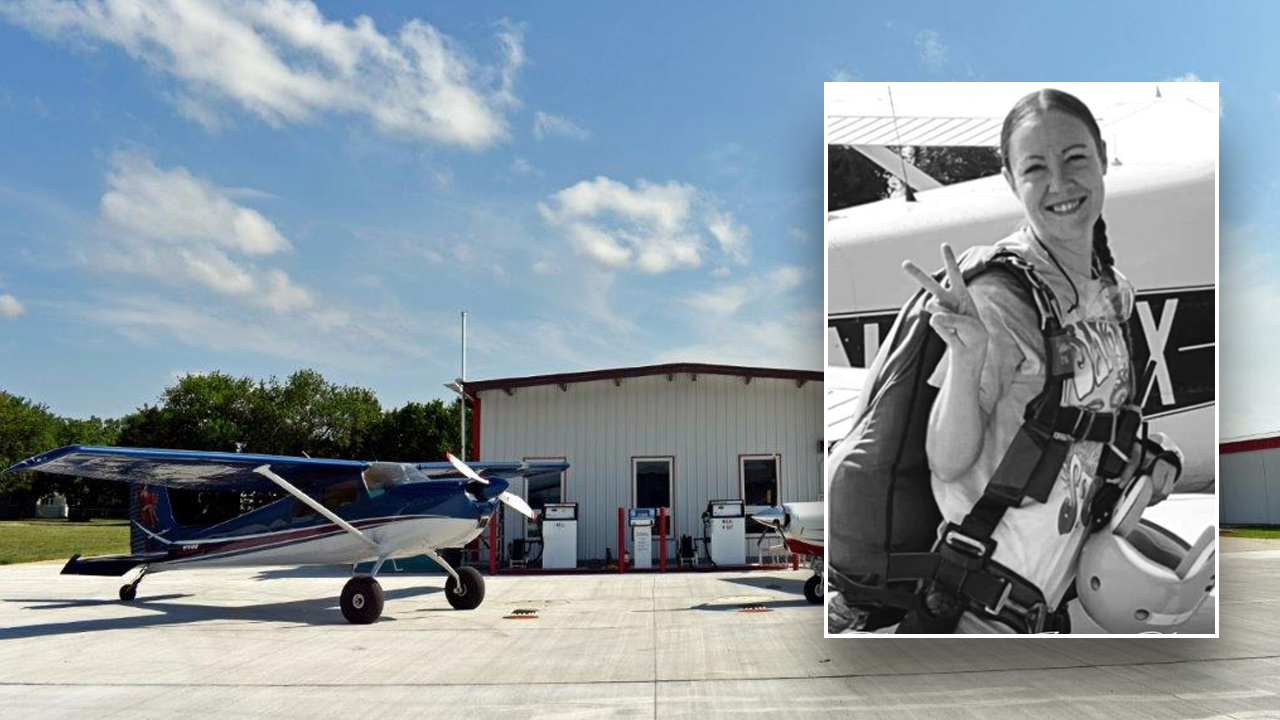
Imagine you’re sitting at 33,000 feet. Everything is normal. You’re a 22-year-old flight attendant named Vesna Vulović, just doing your job on JAT Flight 367. Then, in a split second, a briefcase bomb explodes in the cargo hold. The plane rips apart over Czechoslovakia. You don’t have a parachute. You aren’t even supposed to be on this flight—you were confused for another Vesna. But suddenly, you are plummeting through the freezing air, trapped in a jagged piece of the fuselage. It sounds like a nightmare or a Hollywood script, but it is the documented reality of how a woman survives fall from airplane and enters the Guinness World Records.
People usually die. Physics says you should die. When you fall from that height, your body reaches terminal velocity—about 120 mph—long before you hit the ground. Yet, Vesna lived. She didn't just survive the fall; she survived the secondary impact, the freezing temperatures, and the massive internal trauma that followed. It makes you wonder what actually happens to the human body when the impossible becomes real.
The Physics of the Impossible: How Vesna Vulović Defied Death
Most people think falling from a plane is an instant death sentence. Honestly, it usually is. But in the case of Vesna Vulović on January 26, 1972, a specific set of chaotic variables aligned. She was pinned by a food cart in the tail section of the McDonnell Douglas DC-9. This is crucial. While other passengers were sucked out into the depressurized void, she stayed inside the metal shell.
Think about it this way. The fuselage acted as a sort of protective "crumple zone." When the tail hit the snow-covered slopes of Srbská Kamenice, it didn't just hit a flat, hard surface. It hit at an angle. It slid. This lengthened the "impulse" of the crash. In physics terms, if you increase the time it takes to come to a stop, you decrease the force of the impact. It’s the same reason cars have airbags.
The Low Blood Pressure Factor
There is another wild detail. Vesna had a history of very low blood pressure. Normally, that would keep you from being a flight attendant. She actually drank a ton of coffee right before her medical exam to trick the doctors. When the plane depressurized at 33,000 feet, most people’s hearts would have exploded or they would have succumbed to immediate cardiovascular failure. Her low blood pressure might have actually prevented her heart from bursting upon the sudden change in cabin pressure.
She was found screaming inside the wreckage by Bruno Honke, a former World War II medic. He knew how to keep her alive until help arrived. She had a fractured skull, two broken legs, and three crushed vertebrae. She was paralyzed from the waist down for a while. She was in a coma for ten days. But she woke up. And eventually, she walked again.
Juliane Koepcke: The Jungle Survival Story
Vesna isn't the only one. If you look into how a woman survives fall from airplane, you have to talk about Juliane Koepcke. In 1971—just a year before Vesna’s crash—Juliane was flying over the Peruvian rainforest. Her plane, LANSA Flight 508, was struck by lightning. The aircraft disintegrated mid-air.
Juliane was 17. She was strapped into her seat row when it broke away from the main body of the plane. She fell two miles into the Amazon.
The Canopy Effect
How do you survive a two-mile drop? For Juliane, it was likely the "helicopter effect" of her seat row spinning through the air, combined with the dense, multi-layered canopy of the rainforest. The trees acted like a series of nets. They broke her fall, branch by branch, until she hit the ground. She woke up the next day with a broken collarbone and a deep gash in her arm, but she was alive.
She spent eleven days trekking through the jungle. She knew about maggots. She knew how to find water. Her parents were zoologists, so she had the literal "expert" training to survive the aftermath of the fall. She eventually found a boat and some local loggers who saved her.
What Actually Happens to Your Body?
Let's get clinical for a second. When you are in a freefall from 30,000 feet, the air is too thin to breathe. You pass out from hypoxia within seconds. This is actually a mercy. You aren't "awake" for most of the fall.
Your body starts to tumble. Without a stabilizing force, you enter what skydivers call a "flat spin." This sends blood rushing to your head or feet, which can cause strokes or blackouts. But if you are inside a piece of wreckage, the aerodynamics change. The debris creates drag. It slows you down just enough that, if you hit something "soft" like snow, mud, or a forest canopy, your internal organs might not completely liquefy on impact.
- Deceleration Trauma: This is the real killer. Your shell (your skin and bones) stops, but your organs keep moving at 120 mph.
- The "Water" Myth: Never aim for water. At terminal velocity, hitting water is like hitting concrete. You want something with "give."
- The Survival Mindset: Experts like Alastair Hodgson, a world-class skydiver who survived a double parachute failure, suggest that while physics does the heavy lifting, the psychological will to keep breathing after the impact is what separates survivors from fatalities.
Misconceptions About High-Altitude Survival
You see it in movies all the time. Someone falls, catches a breeze, and lands in a haystack. In reality, haystacks won't save you from 30,000 feet. The survival rate for "unintentional high-altitude jumps" is statistically near zero. When a woman survives fall from airplane, it is usually because of a "total system" failure of the aircraft that leaves a portion of the structure intact around her.
Some skeptics tried to debunk Vesna Vulović’s story decades later. In 2009, some journalists suggested the plane was shot down at a much lower altitude (about 2,600 feet) by the Czechoslovak Air Force. They claimed the 33,000-foot story was communist propaganda. However, the flight data recorders and the debris field patterns heavily supported the high-altitude breakup theory. The Guinness World Records still recognizes her feat. Whether it was 30,000 feet or 3,000 feet, falling in a broken metal tube and walking away is a miracle of engineering and biology.
How to Increase Survival Odds (Theoretically)
No one plans to fall out of a plane. But if the unthinkable happens, there are "best practices" derived from these rare survival cases.
- Find a "Big" Piece of Debris: If the plane is breaking up, try to stay with the largest section of the fuselage. It provides protection and drag.
- The Arched Position: If you are in pure freefall, mimic a skydiver. Spread your arms and legs. Arch your back. This creates maximum surface area and slows you down to about 120 mph.
- Aim for the "Squishy" Stuff: Snowbanks are the gold standard. Trees are second. Deep bogs or marshes are third.
- Protect the Head: Wrap your arms around your skull. Interlock your fingers. You can survive broken legs; you cannot survive a cracked cranium.
Vesna Vulović lived until 2016. She became a national hero in Serbia and an activist. She wasn't afraid of flying, though she had no memory of the crash itself due to the amnesia caused by her head injuries. She often said she felt like a cat with nine lives.
Real-World Takeaways for Travelers
While these stories are sensational, they highlight the extreme resilience of the human frame. Modern aviation is incredibly safe—you are more likely to be struck by lightning than to be in a mid-air breakup. However, understanding the mechanics of survival reminds us that "impossible" is just a word.
If you are ever in an emergency:
- Keep your seatbelt fastened: Even when the sign is off. Most "falls" happen because of extreme turbulence or sudden decompression where unbuckled passengers are ejected.
- Study the safety card: It sounds boring, but knowing the exit layout can save your life in the "survivable" part of a crash—the landing.
- Wear natural fibers: In any crash, fire is a huge risk. Synthetic fabrics like polyester melt to your skin. Cotton and wool don't.
The phenomenon of how a woman survives fall from airplane serves as a grim but fascinating testament to luck, physics, and the sheer stubbornness of life. We study these outliers not because we expect to join them, but because they define the very limits of human endurance.
Next Steps for Further Research
To understand the physiological limits of the human body further, research the "LD50" of human impact—the speed at which 50% of people will die from a fall. You can also look into the Engineering Reports from the JAT Flight 367 investigation, which detail the structural stresses that allowed the tail section to remain relatively intact during its descent. For those interested in the psychological aspect, Juliane Koepcke’s memoir, When I Fell From the Sky, offers a first-hand account of the survival mindset required to navigate the Amazon after a two-mile drop.