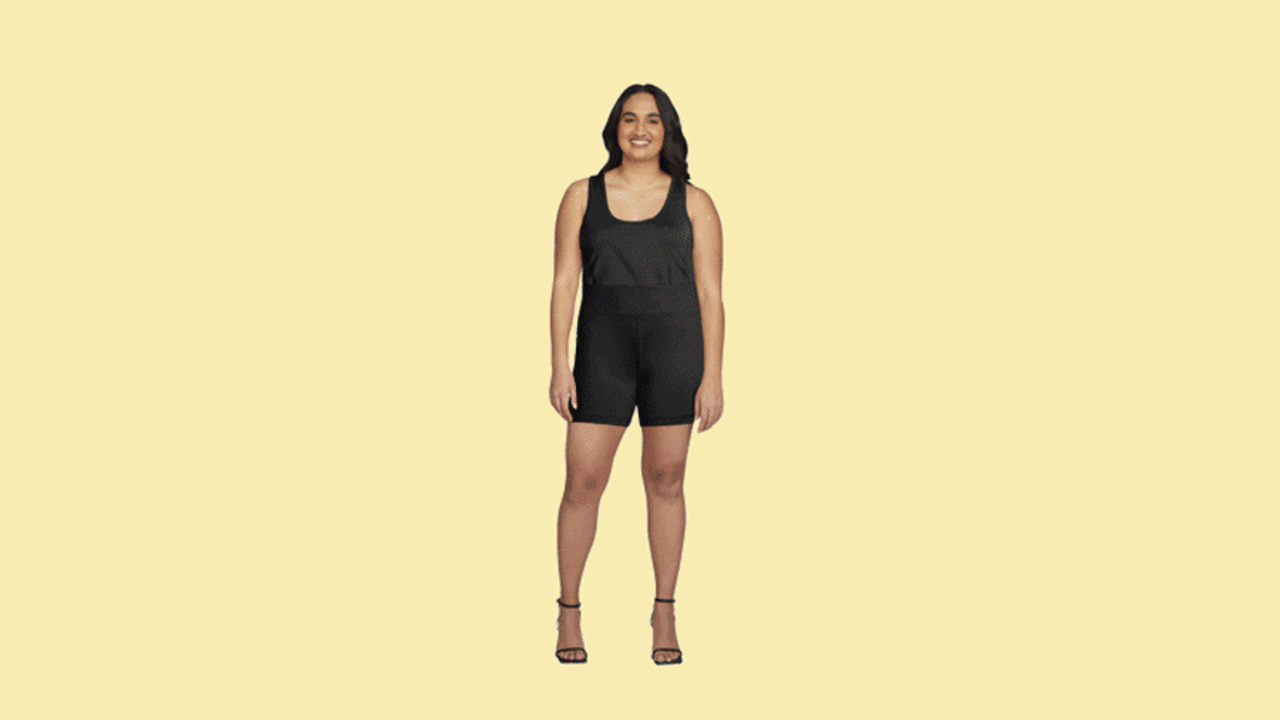
Sheer fabric is everywhere. Walk into a Zara, scroll through Pinterest, or look at the latest Saint Laurent runway, and you’ll see it—organza, mesh, gossamer silks, and pointelle knits that leave very little to the imagination. But here is the thing: a transparent clothing try on in a dressing room or in front of a ring light is a completely different beast than actually wearing these pieces out in the real world. Most people buy a sheer top because it looks ethereal on a mannequin, only to realize they have no idea what to put underneath it once they get home.
It’s tricky.
The rise of sheer fashion isn't just a "naked dress" red carpet moment anymore. It has bled into everyday wardrobes. However, the disconnect between how these garments are marketed and how they function for the average person is massive. When you see a transparent clothing try on video on social media, the lighting is controlled and the angles are curated. Real life has harsh sunlight, wind, and movement. Understanding how to navigate the opacity—or lack thereof—is the difference between looking intentionally chic and feeling accidentally exposed.
Why the Transparent Clothing Try On Often Leads to Buyer’s Remorse
Most shoppers fail at the try-on stage because they don't account for the "movement factor."
A mesh dress might look stunning when you are standing perfectly still in a mirror. But the moment you sit down or walk, the fabric bunches, shifts, and changes how much it reveals. This is why professional stylists like Michaela Erlanger often suggest doing a "stress test" during any transparent clothing try on. Sit. Squat. Reach for a high shelf. If the sheer fabric pulls uncomfortably or reveals a bra strap you intended to hide, the garment isn't sized correctly for your layering strategy.
Context matters too. A sheer blouse for a gallery opening in Chelsea requires a different layering approach than a mesh beach cover-up in Tulum. People often try things on without the intended underpinnings. If you’re trying on a transparent skirt with neon-pink gym underwear, you aren’t getting a real sense of the final look.
Actually, the biggest mistake is over-lining.
Many people get scared of the transparency and layer a thick, bulky camisole underneath. This kills the silhouette. It makes the "ethereal" fabric look heavy and cluttered. The goal of a successful transparent clothing try on should be to find the thinnest, most seamless base layer possible—or to lean into the transparency with intentional, decorative lingerie.
The Technical Reality of Sheer Fabrics
Not all sheer is created equal. You’ve got your natural fibers like silk chiffon and your synthetics like polyester mesh.
- Silk Chiffon: High-end, breathable, but incredibly delicate. It has a matte finish that diffuses light beautifully.
- Polyester Mesh: Durable, stretchy, and often used in "second-skin" tops. It’s much more transparent than chiffon but can sometimes look "cheap" if the seams aren't finished properly.
- Organza: Stiff and structured. It doesn't cling to the body, which makes it a great entry point for people nervous about sheer clothes.
When you're doing a transparent clothing try on, pay attention to the seams. Because the fabric is see-through, the internal construction of the garment is visible to the world. High-quality sheer garments use French seams, which hide the raw edges of the fabric inside a neat tuck. If you see messy, overlocked edges through the fabric, the garment will look messy on your body, no matter how well it fits.
Layering Strategies That Actually Work
Forget the boring beige camisole. Honestly, it usually looks like a bandage.
If you want to master the transparent clothing try on, you need to think about contrast. A black sheer shirt over a black lace bralette is a classic for a reason—it’s intentional. It says "I meant to show you this." If you’re aiming for a more conservative look, try a "tone-on-tone" approach. If the shirt is emerald green, find an emerald green silk tank. This preserves the color story while providing the necessary coverage.
There is also the "under-layer as outerwear" philosophy.
Brands like Skims or Hanro have popularized high-quality basics specifically designed to be seen. During a transparent clothing try on, try layering a sheer piece over a bodysuit. Bodysuits provide a smooth, line-free base that keeps the focus on the outer garment. This is particularly useful for sheer trousers or dresses where a traditional slip might ride up.
Lighting: The Invisible Variable
This is the part no one talks about.
A garment can look 50% opaque in a dim bedroom and 100% transparent under the fluorescent lights of a grocery store or the harsh midday sun. If you are serious about a transparent clothing try on, you have to check the garment in multiple lighting scenarios. Stand by a window. Use your phone's flash to take a photo. If the camera flash reveals your underwear through the "opaque" parts of the dress, so will a photographer at a wedding or a bright office light.
Modern "influencer" culture has skewed our perception of what is wearable. Filters and ring lights can make sheer fabric look like a soft blur. In the real world, textures are sharp. Skin is visible.
Common Misconceptions About Sheer Style
- "It’s only for thin people." Absolutely false. Sheer fabrics drape beautifully on all body types. The key is structural support underneath. A well-fitted corset or high-waisted shaping brief can provide a beautiful canvas for a sheer overlay.
- "It’s only for nighttime." Nope. A sheer turtleneck under a wool blazer is a great daytime texture play. It’s about "peeking," not "showing."
- "Dry cleaning is optional." Sheer fabrics are magnets for oils and sweat. Because the fabric is so thin, stains show up immediately on both sides. Check the care label during your transparent clothing try on. If it says "Dry Clean Only," believe it. Water can easily pucker or ruin the tension of mesh and chiffon.
Practical Steps for Your Next Fitting
Don't just wing it. If you’re heading to the mall or ordering a haul for a transparent clothing try on at home, follow these steps to avoid a return-shipping nightmare.
Bring your kit. Always have a nude-to-you seamless thong, a black bralette, and a high-waisted slip on hand. You can’t judge a sheer dress if you’re wearing mismatched loungewear underneath. It just won't work.
Check the "Pull." Gently tug at the seams. Sheer fabrics are prone to "seam slippage," where the threads pull away from the stitching. If you see gaps forming during your transparent clothing try on, the fabric is too weak or the garment is too small. It will rip within three wears.
Evaluate the hem. Sheer garments are notoriously difficult to hem because you can't easily hide the stitches. If the dress is too long, factor in the cost of a specialist tailor. A DIY hem on a sheer fabric usually ends in a jagged, visible mess.
Audit your comfort level. Walk around the room for five minutes. If you are constantly pulling the fabric down or checking your reflection to see if "too much" is showing, you won't enjoy wearing it. Confidence is the only thing that makes sheer clothing look high-fashion rather than accidental.
Invest in "nipple covers" or fashion tape. Sometimes the best look is no bra at all, but that requires security. Test these during your try-on to ensure they don't create weird bumps or shadows under the specific weight of the fabric you're testing.
By the time you finish your transparent clothing try on, you should know exactly what is going under the piece, where you are going to wear it, and how you're going to clean it. If any of those are a mystery, leave it on the rack.