Death is messy. Not just emotionally—though that’s the part we usually talk about at funerals—but physically. When a person dies alone and stays that way for weeks, or when a hoarder’s home becomes a biohazard, someone has to go in and scrub the floorboards. That someone, for a long time in Melbourne, Australia, was Sandra Pankhurst.
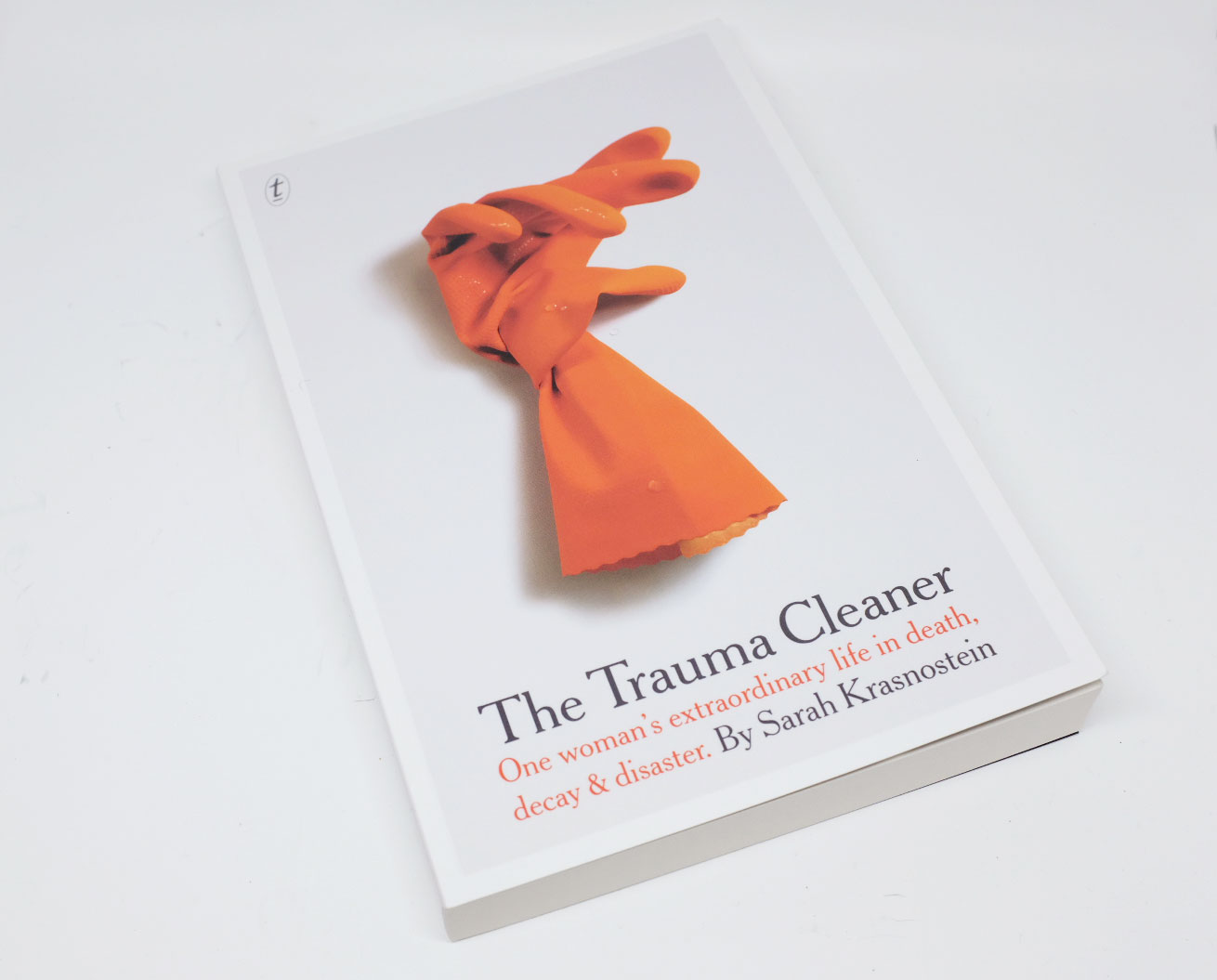
Most people first heard of her through Sarah Krasnostein’s 2017 book, The Trauma Cleaner: One Woman's Extraordinary Life in the Business of Death, Decay, and Disaster. It isn't just a true crime curiosity. Honestly, it’s one of the most complex biographies written in the last decade. It’s about the literal filth of human existence, sure, but it’s mostly about how we tidy up the wreckage of our own lives.
Sandra wasn't just a cleaner. She was a trans woman, a former sex worker, a survivor of horrific childhood abuse, and eventually, a business owner who approached crime scenes with a level of radical empathy that most of us couldn't muster on our best days.
What The Trauma Cleaner Actually Teaches Us About Grief
When you pick up The Trauma Cleaner, you might expect a "gross-out" book. You might think you're getting a play-by-play of the smells and sights of decomposition. Krasnostein gives you some of that, but she pivots quickly. The focus shifts to the people left behind.
Sandra’s genius wasn't just in knowing which industrial chemicals melt away dried blood. It was in how she spoke to the hoarders. She didn't walk into a house filled with twenty years of newspapers and plastic bags and see "trash." She saw a protective barrier. She understood that for many of her clients, the "stuff" was the only thing keeping the world from hurting them again.
Radical Empathy in the Face of Squalor
There is a specific scene in the book where Sandra is working with a man whose home is literally overflowing with waste. Most people would judge him. They’d call him lazy or crazy. Sandra just treats him like a human being who is having a very hard time.
She knew about "hard times."
Born as a boy named Peter into an adopted family that didn't want her, she was forced to sleep in a backyard shed and wasn't allowed to eat with the rest of the family. That kind of early-life negation does one of two things: it either breaks you completely, or it gives you a "superpower" for seeing the discarded people of the world. Sandra chose the latter.
The Reality of Specialized Cleaning as a Business
It’s easy to romanticize the "trauma cleaner" role after reading the book, but the business side is brutal. Sandra’s company, Specialized Trauma Cleaning Services (STC), dealt with scenarios that would give the average person PTSD.
- Unattended deaths: Where a body has decomposed for days or months.
- Suicide scenes: Requiring meticulous biological remediation.
- Hoarding situations: Which are often more mentally taxing than the bloodier jobs.
- Meth lab decontamination: A highly technical and dangerous process.
Sandra’s approach to business was basically built on the idea that no one should be defined by their worst day. If someone died in a room, she wanted that room to be a sanctuary again. She wasn't just cleaning for the sake of hygiene; she was cleaning to restore dignity to a space that had lost it.
Why Sarah Krasnostein’s Writing Style Works
Krasnostein doesn't write like a journalist watching from a distance. She spent years following Sandra. She went to the jobs. She sat in the van. The prose is lyrical, sometimes almost too beautiful for the subject matter, but that’s the point. It mirrors Sandra herself—a woman who wore makeup and perfume while scrubbing floors covered in human remains.
The book structure is intentionally fragmented. It jumps between Sandra’s past—her marriage, her transition, her time working in a brothel—and her present-day cleaning jobs. This isn't just a stylistic choice. It reflects how trauma works. It’s never linear. Our past is always "bleeding" into our present, much like the stains Sandra spent her life removing.
The Trans Experience and Reinvention
You can’t talk about The Trauma Cleaner without talking about gender. Sandra’s transition wasn't some neat, modern "coming out" story. It was a gritty, dangerous survival tactic in a world that was incredibly hostile to trans women in the 1970s and 80s.
She lived multiple lives. She was a husband and a father before she transitioned. She was a drag queen. She was a sex worker who survived a brutal rape and attempted murder. She was a funeral director. Finally, she was the "Trauma Cleaner."
Sandra’s life was a masterclass in the art of the "pivot." She proved that you can literally build a new self out of the ashes of the old one. For anyone feeling stuck in their current identity or circumstances, her story is a powerful, if somewhat grim, reminder that the human spirit is weirdly resilient.
Addressing the Common Misconceptions
People often ask if the book is "too sad" to read.
Honestly? It is sad. It’s heartbreaking. But it’s not depressing. There’s a massive difference. Depressing books leave you feeling empty; sad books like this one leave you feeling full of a strange kind of hope. It’s the hope that even in the most disgusting, forgotten corners of society, there is still room for kindness.
Another misconception is that it’s a "how-to" guide for crime scene cleaning. It’s definitely not. If you’re looking for technical manuals on biohazard disposal, look elsewhere. This is a character study. It’s about the woman, not the bleach.
The Legacy of Sandra Pankhurst
Sandra passed away in 2021. Her death felt like the end of an era for those who had been moved by her story. But the book has ensured that her philosophy—this idea of "radical non-judgment"—lives on.
She showed us that the things we try to hide—our mess, our grief, our "shameful" pasts—are exactly the things that connect us to everyone else. We’re all just trying to keep the house clean while the world tries to fill it with dust.
How to Apply the Lessons of The Trauma Cleaner to Your Life
You don't have to start a crime scene cleaning business to take something away from Sandra’s life. Most of us will never have to scrub a hoard, but we all deal with "internal" trauma cleaning.
- Practice Radical Non-Judgment. The next time you see someone whose life looks like a wreck, try to see the person instead of the mess. Ask yourself what they are trying to protect or hide.
- Accept the Mess. Perfection is a lie. Sandra’s life was messy, her work was messy, and her death was complicated. That’s okay.
- Dignity is a Choice. You can choose to treat people with dignity even when they are at their lowest point. In fact, that’s when it matters most.
- Reinvent Yourself When Necessary. If your current "identity" isn't working, you have the right to change. Sandra changed names, careers, and lives until she found one that fit.
- Understand the Cost of "Stuff." The hoarding stories in the book are a sobering reminder that we cannot take our possessions with us. They often end up being a burden for the people we leave behind.
The Trauma Cleaner remains a vital read because it refuses to look away. It looks at the blood, the filth, and the broken hearts, and it says, "This too is part of being human." It’s a messy, beautiful, devastating book about a woman who spent her life making sure that even in death, no one was truly discarded.
If you haven't read it, start there. But don't just read it for the shock value. Read it to understand the invisible labor that keeps our world functioning—the people who show up when everyone else runs away.
Moving Forward
To truly understand the impact of Sandra's work, consider looking into the local organizations in your area that handle elder care or hoarding intervention. Often, these groups need volunteers or support long before a "trauma cleaner" is ever required. Understanding the psychology of hoarding and isolation is the first step in preventing the tragedies Sandra spent her life cleaning up.