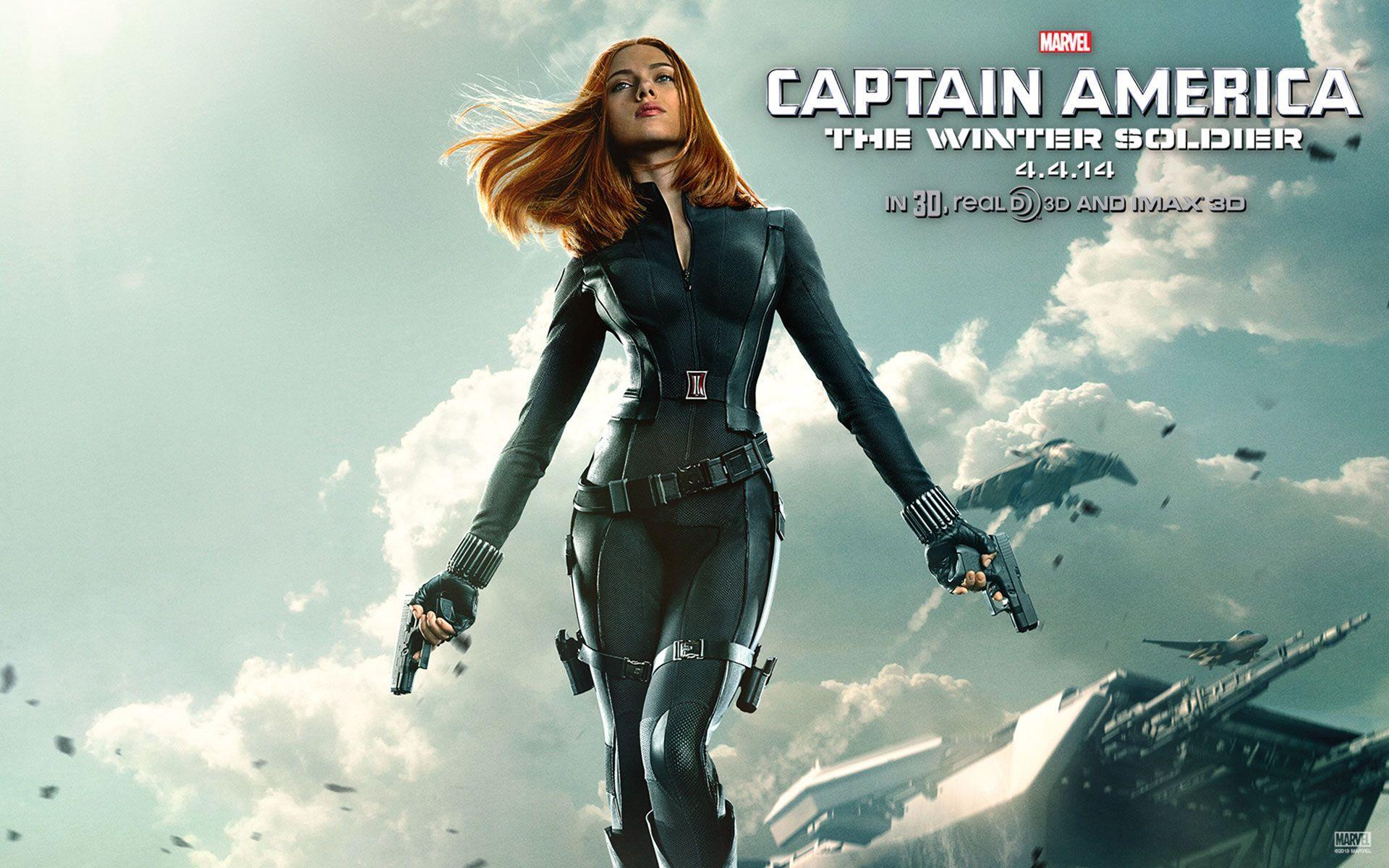
Steve Rogers and Natasha Romanoff shouldn’t have worked. Seriously. On paper, you’ve got a "Man Out of Time" with a moral compass that points north even in a hurricane, paired with a former KGB assassin who spent years "wiping red from her ledger." It’s the classic buddy-cop dynamic, but deeper. When we talk about Captain America Black Widow dynamics, most people immediately jump to shipping. They want to know if they ever dated or if that kiss on the escalator in The Winter Soldier meant something more.
Honestly? It’s way more interesting than a simple romance.
The MCU spent a decade building a platonic soulmate bond that actually anchored the entire Infinity Saga. While Tony Stark and Steve Rogers were busy being the "mom and dad" of the Avengers who eventually went through a messy divorce, Natasha was the one who actually kept Steve grounded in the modern world. She taught him how to survive in a gray world. He gave her something to believe in that wasn’t just a mission briefing.
The Winter Soldier: Where Captain America Black Widow Dynamics Changed Everything
Before 2014, they were just coworkers. The Avengers (2012) showed them fighting side-by-side, but they didn’t really know each other. Steve was still mourning Peggy and trying to figure out how the internet worked. Natasha was still playing the role of the spy who couldn't be trusted.
Then Captain America: The Winter Soldier happened.
This movie is basically the blueprint for their relationship. You’ve got Steve, who is fundamentally uncomfortable with the shady side of S.H.I.E.L.D., and Natasha, who literally lives in those shadows. The brilliance of their partnership in this film is how they rub off on each other. Remember the car ride to New Jersey? Natasha asks Steve who he wants her to be. It’s a defense mechanism. She’s spent her whole life being whoever she needed to be to get the job done. Steve, in his typical straightforward way, just wants her to be his friend.
It’s subtle.
He doesn’t judge her past. He doesn't look at her like a monster, even when she reveals how much she knows about the darker parts of the world. In return, she protects him. That kiss on the escalator wasn't about passion; it was about survival. "Public displays of affection make people uncomfortable," she says. It was a tactical move that felt like a turning point. It wasn't just about hiding from HYDRA; it was about Natasha letting Steve into her world of deception to keep him safe.
The Problem With Shipping Romanogers
Fans love the "Romanogers" tag. I get it. Chris Evans and Scarlett Johansson have insane chemistry. They’ve been friends in real life since The Perfect Score in 2004, and you can see that comfort on screen. But making them a couple would have actually ruined the weight of their story.
Think about it.
In a cinematic universe where every female lead is usually relegated to "the love interest," Natasha being Steve’s most trusted confidant—without the need for a bedroom scene—was revolutionary. She was the one who told him to stay away from Sharon Carter (well, kinda, she mostly just teased him about it). She was the one who stayed by his side at the start of Civil War when Peggy died.
Civil War and the Choice That Broke the Team
If you want to see the complexity of Captain America Black Widow interactions, look at the airport fight in Civil War. Natasha starts on Team Stark. She signs the Sokovia Accords because she’s a pragmatist. She knows that if they don’t have a hand on the wheel, they’re going to get steered off a cliff by the government.
Steve, of course, refuses.
But look at what happens at the end of that fight. Natasha is standing there, watching Steve and Bucky try to reach the jet. T’Challa is closing in. This is the moment where her loyalty to the "system" breaks. She shocks Black Panther with her widow’s bite and lets Steve go.
"You’re not going to stop," she tells him later.
She knew him better than Tony did. Tony thought he could reason Steve into submission. Natasha knew Steve would die for what he believed in, so she chose him. She became a fugitive for him. That’s not just "friendship." That’s a level of loyalty that transcends legal documents and superhero teams.
The Fugitive Years: Avengers Infinity War
By the time we see them in Infinity War, they’ve been underground for two years. They look ragged. Steve has the beard; Natasha has the blonde hair. They’ve been living in the shadows together, along with Sam Wilson.
There’s a shared language there.
When they show up at the train station in Edinburgh to save Wanda and Vision, they move like a single unit. There’s no hesitation. This era of their relationship is often overlooked because the movie is so crowded with other characters, but it’s the peak of their professional partnership. They were the "Secret Avengers." No backup, no billionaire funding, just a shield, some batons, and a lot of trust.
Endgame: The Final Act of a Shared Legacy
The five-year jump in Endgame is where the tragedy of Captain America Black Widow really hits home. Steve is trying to run a support group. He’s trying to "move on," or at least pretending to. Natasha is the one left at the compound, eating peanut butter sandwiches and trying to keep a global (and galactic) monitoring system running.
She’s the one who can’t let go.
For Steve, being a soldier was what he did. For Natasha, the Avengers were her family. They were the first people who ever truly saw her as a hero. When she dies on Vormir, it’s not just a loss for the team; it’s the moment Steve loses his tether to the modern world.
The scene by the lake after they return from the Time Heist is heartbreaking. Steve is silent. He’s grieving the woman who taught him how to live in the 21st century. People often complain that Natasha didn't get a funeral, while Tony did. While that’s a valid meta-critique of the filmmaking, within the story, her "funeral" was Steve’s decision to finally go back.
He fulfilled the mission. He brought everyone back. And then, he finally took Natasha’s advice from years prior: he got a life.
What Most People Get Wrong About Vormir
There is a nagging theory that Steve should have been the one to go to Vormir with Natasha. People think that because their bond was so strong, the "Soul for a Soul" trade would have been more meaningful.
But that ignores the arc of Clint Barton.
Clint and Natasha had a history that predated the Avengers. However, Steve and Natasha had a future they were building together. If Steve had gone to Vormir, he wouldn't have let her jump. And if he had jumped, the world wouldn't have had its moral center to lead the final charge against Thanos. The tragedy of their relationship is that she died so he could finally stop fighting.
Practical Insights for MCU Fans and Writers
If you’re analyzing the Captain America Black Widow dynamic for a script, a fan project, or just to win an argument on Reddit, keep these specific touchstones in mind:
- Mutual Growth: Steve became more flexible and cynical (in a healthy way) because of Natasha. Natasha became more idealistic and hopeful because of Steve.
- The "Check-In": In almost every movie they share, there is a quiet moment where they check on each other's mental state. It’s never about the mission; it’s about "Are you okay?"
- Trust Over Truth: Natasha lies for a living. Steve tells the truth to a fault. Their middle ground was trusting each other even when the "truth" was messy.
- Physicality: Their fighting styles merged over time. If you watch the choreography in The Winter Soldier versus Civil War, they begin to cover each other’s blind spots instinctively.
To really appreciate this duo, re-watch The Winter Soldier and Endgame back-to-back. Ignore the flashy fight scenes for a second and just watch their faces when they look at each other. You aren't seeing two superheroes; you're seeing two lonely people who found a home in each other's company.
The next time you're debating MCU pairings, remember that the most impactful relationships aren't always the ones that end in a wedding. Sometimes, they're the ones that end with one person saving the world and the other finally finding peace. To dive deeper into the specific fight choreography of the duo, look up the work of the Russo Brothers' stunt coordinators, who specifically designed their "tag-team" moves to show their growing synchronization.