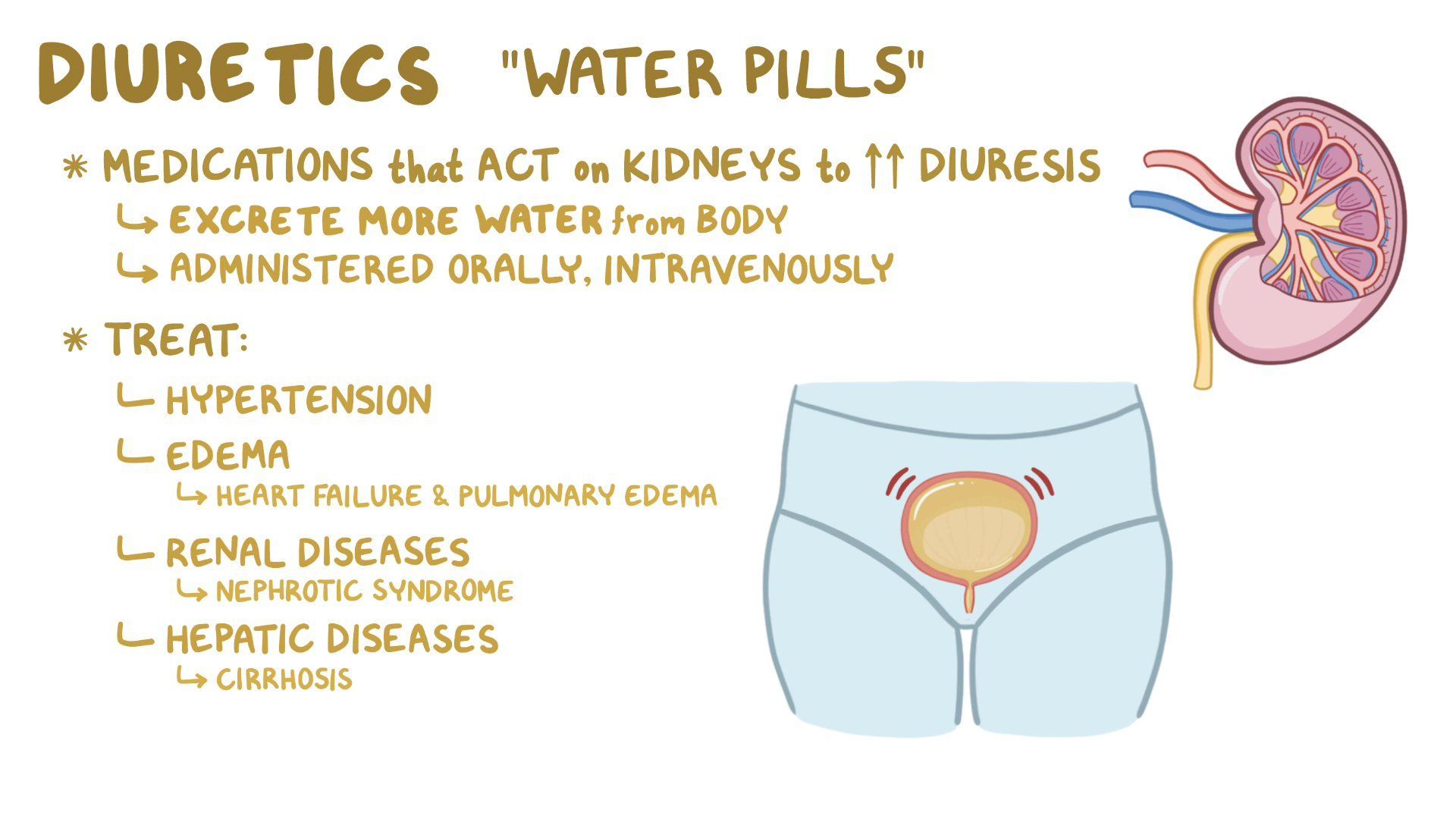
You’re probably taking it for your blood pressure. Most people are. Thiazide diuretics—think Chlorthalidone or Hydrochlorothiazide (HCTZ)—are the old-school workhorses of the cardiology world. They're cheap. They work. But there is this weird, almost accidental side effect that most doctors don't lead with when they hand you that prescription. Thiazide diuretics and calcium have a relationship that is fundamentally different from almost every other water pill on the market.
While most diuretics make you pee out everything—sodium, potassium, and yes, calcium—thiazides are different. They're stingy. They actually tell your kidneys, "Hey, hold onto that calcium."
It’s a quirk of biology.
Because of this, thiazides do more than just drop your systolic numbers. They might actually be keeping your skeleton intact. If you’re worried about osteoporosis or kidney stones, this "side effect" isn't a bug; it's a massive feature.
The Kidney Trick: How Thiazide Diuretics and Calcium Actually Interact
To understand why this matters, you have to look at the distal convoluted tubule. That's a tiny part of your kidney’s filtering system. Usually, sodium and calcium are handled somewhat similarly. But thiazides block the NCC (sodium-chloride cotransporter). When that happens, the cell inside the kidney gets a bit "salty" for lack of a better term, which triggers a secondary mechanism that pulls calcium back into the blood rather than letting it slide out into your bladder.
It's sort of a "buy one, get one free" deal for your health.
You take the pill to reduce the volume of fluid in your blood vessels, which lowers the pressure. But then, as a bonus, your blood calcium levels get a slight nudge upward, or at least they don't drop. For a 65-year-old woman worried about a hip fracture, that is a huge deal. Dr. Michael Mannstadt and other experts in endocrinology have often pointed out that this hypocalciuric effect (meaning "less calcium in the urine") is unique to the thiazide family. Loop diuretics like Lasix (furosemide)? They do the opposite. They dump calcium. If you're on the wrong one, you might be accidentally thinning your bones while trying to save your heart.
Why Your Urine Calcium Matters More Than You Think
Ever had a kidney stone? If you have, you know it's a special kind of hell. Most kidney stones are made of calcium oxalate. When you have too much calcium floating around in your urine (hypercalciuria), it starts to crystallize. It’s basically like rock candy forming in your ureter. Not fun.
Thiazide diuretics are a first-line defense here. By keeping the calcium in your blood and out of your pee, they stop the "raw material" of the stone from ever reaching the kidneys.
Honestly, it’s one of the few times in medicine where the treatment for a cardiovascular issue solves a urological nightmare simultaneously. You’ve got to appreciate the efficiency.
The Bone Density Bonus
The data isn't just theoretical. We've seen this in large-scale observational studies for decades. People on long-term thiazide therapy tend to have higher bone mineral density (BMD) in their hips and spine compared to those on other blood pressure meds.
One landmark study published in The Lancet showed that thiazide users had a significantly lower risk of hip fractures. We aren't talking about a tiny 1% difference. It was substantial enough that many geriatricians prefer thiazides over ACE inhibitors or Calcium Channel Blockers if the patient is already at risk for falls.
Think about it this way.
A fall is just a fall until you break something. If your bones are slightly more "mineralized" because your kidneys have been recycling calcium for five years, you might walk away with a bruise instead of a surgical consult.
The Serum Calcium Warning
But look, it’s not all sunshine and strong bones. Because thiazides keep calcium in the blood, they can sometimes mask—or even trigger—a condition called hypercalcemia (too much calcium in the blood).
If you start a thiazide and your blood work suddenly shows high calcium, it might not be the drug's "fault" entirely. Often, the drug unmasks a hidden problem like primary hyperparathyroidism. This is when one of your tiny parathyroid glands goes rogue and starts pumping out hormones that pull calcium out of your bones. The thiazide just makes the high levels obvious because the kidneys can't vent the excess anymore.
Your doctor should be checking your labs about two weeks after you start. If they don't? Remind them.
Practical Realities of Thiazide Use
You have to be smart about the timing. Most people take their "water pill" in the morning. Why? Because if you take it at 8:00 PM, you’ll be up every two hours visiting the bathroom. Sleep is just as important for your blood pressure as the medication is.
Also, watch your salt.
It sounds counterintuitive, but if you eat a massive amount of sodium while on a thiazide, you can actually cancel out some of that calcium-saving benefit. The kidneys are complex. They try to balance the electrolytes, and a salt-heavy diet forces them to work against the medication. Basically, you're paying for the pill but then sabotaging it with a bag of chips.
- Chlorthalidone vs. HCTZ: Chlorthalidone is actually more potent and lasts longer, but HCTZ is more common. Both help with calcium, but Chlorthalidone is often favored by researchers for its superior "24-hour coverage."
- The Potassium Problem: While thiazides save calcium, they waste potassium. You might get leg cramps or feel tired. This is why many people take a potassium supplement or a "potassium-sparing" diuretic alongside the thiazide.
- The Vitamin D Synergy: If you’re taking Vitamin D and Calcium supplements for your bones and you’re on a thiazide, you need to be extra careful. You might actually end up with too much calcium.
It’s a balancing act. You aren't just a collection of pipes; you're a chemistry set.
What Most People Get Wrong About Diuretics
There's this myth that all diuretics cause dehydration and "wash out" your nutrients. You'll see "wellness influencers" telling you to avoid them because they deplete minerals.
That is a dangerous oversimplification.
Yes, you lose some minerals. But the specific interaction between thiazide diuretics and calcium is a rare case where the "depletion" is actually a "retention." You are literally hoarding a mineral that most aging adults desperately need.
Does this mean everyone should take a thiazide? No. If you have gout, thiazides can be a nightmare because they can raise uric acid levels. If you're a brittle diabetic, they might slightly nudge your blood sugar up. It's never as simple as "this drug is good" or "this drug is bad." It’s about whether the drug fits your specific biological profile.
Actionable Next Steps for You
If you're currently on a blood pressure medication, or if you're looking into bone health options, here is the move.
First, check your pill bottle. If you see "Hydrochlorothiazide," "HCTZ," "Chlorthalidone," or "Indapamide," you are on a thiazide or a thiazide-like diuretic.
Second, if you have a history of kidney stones or have been told your bone density is thinning (osteopenia), talk to your doctor about whether your blood pressure regimen is working for or against those goals. If you're on a loop diuretic like Furosemide but don't have congestive heart failure, ask why. You might be losing calcium unnecessarily.
Third, get a "Chem-7" or a Basic Metabolic Panel (BMP) blood test. Look at your calcium levels. If they are at the high end of normal, and you're taking a thiazide, you might want to ease off the high-dose calcium supplements.
Fourth, don't just stop taking the med because you read this. Rebound hypertension is real and it’s dangerous. Any changes to your thiazide routine need to be tapered and monitored.
The goal is to manage the pressure in your veins without sacrificing the strength of your skeleton. It's a fine line, but with the right diuretic, it's one you can actually walk.