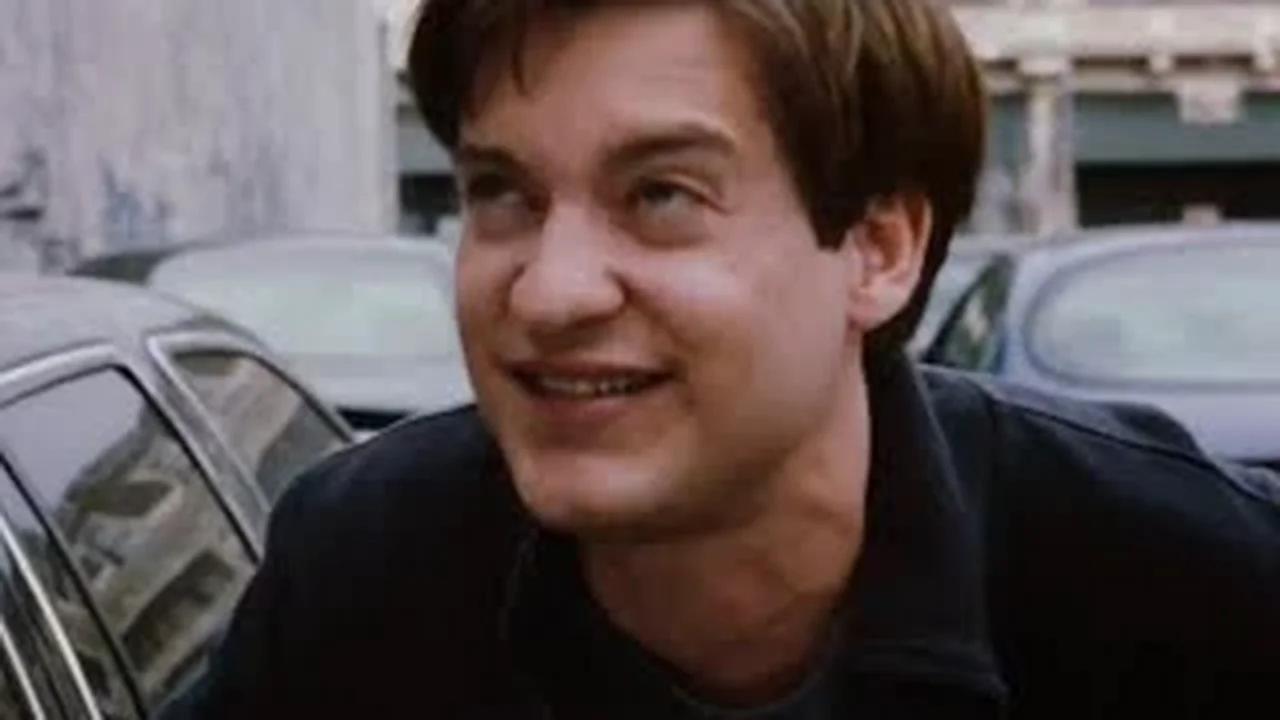
"My back! My back!"
If you grew up in the early 2000s, you can probably hear Tobey Maguire’s strained, high-pitched groans just by reading those words. It’s one of the most iconic moments in superhero cinema, occurring right after Peter Parker tries to leap across a rooftop in Spider-Man 2, realizes his powers are gone, and craters onto a parked Ford Focus.
Most people think it’s just a funny bit of physical comedy. A classic Sam Raimi slapstick moment. But honestly? That scene is one of the biggest "inside jokes" in Hollywood history. It wasn’t just Peter Parker having a rough Tuesday. It was a pointed, meta-commentary on a behind-the-scenes drama that almost cost Tobey Maguire his entire career as the web-slinger.
The $17 Million Backache
To understand why Tobey Maguire my back became such a legendary meme, you have to go back to 2003. Tobey had just finished filming Seabiscuit, a horse-racing drama that required him to drop a ton of weight and endure some seriously jarring physical work on a mechanical horse.
He claimed the production of Seabiscuit had trashed his back.
As the start date for Spider-Man 2 loomed, Tobey’s camp started raising alarms. They sent a neurosurgeon, Dr. Ian Armstrong, to meet with director Sam Raimi and producer Laura Ziskin. The message was clear: Tobey might not be physically capable of doing the stunts for the sequel.
Now, this is where it gets messy.
Hollywood insiders weren't entirely buying the "injury" story. At the time, Tobey was reportedly in the middle of a tense salary negotiation. He’d made about $4 million for the first movie, but after it shattered box office records, he wanted a massive raise—somewhere in the ballpark of $17 million. When the studio heard about the back injury, they didn't offer a massage. They called his bluff.
Sony Pictures essentially told Tobey: "If you're too hurt to play Spider-Man, we’ll find someone who isn't."
Enter Jake Gyllenhaal (The Spider-Man That Almost Was)
The studio didn't just threaten to replace him; they actually started the process. They reached out to Jake Gyllenhaal, who was dating Kirsten Dunst (Mary Jane Watson) at the time. Gyllenhaal even began preparing for the role.
Tobey realized he’d overplayed his hand. Fast.
In a move that sounds like something straight out of a PR crisis manual, he had to go on a "redemption tour." He met with the studio heads, apologized, and underwent rigorous medical testing to prove he could handle the suit. He eventually got the part back—and the $17 million—but the "back injury" story was now public knowledge.
Sam Raimi, being the master of camp and meta-humor that he is, decided to lean into the scandal. He wrote a scene where Peter Parker literally falls flat on his face and yells "My back!" as a cheeky wink to the audience who had spent months reading about Tobey's real-life spinal issues in the tabloids.
From Meta-Joke to Viral Meme
For a long time, the "My back" scene was just a funny memory for Millennial Marvel fans. Then the internet happened.
In the late 2010s, "Raimi-meming" became a subculture. People started taking clips from the original trilogy and remixing them into absurd, often dark, comedy videos. The Tobey Maguire my back clip was perfect fodder. It’s short, the audio is distinct, and the physical comedy is top-tier.
The meme usually follows a specific format:
- Peter yells "I'm back!" (Thinking his powers have returned).
- He jumps.
- He falls.
- He groans "My back... oh, my back!"
It became a universal shorthand for hubris. It’s what you post when you think you’ve finally got your life together, only to have a minor inconvenience ruin your entire week.
The Ultimate Payoff in No Way Home
The peak of the Tobey Maguire my back saga didn't actually happen in 2004. It happened in 2021.
When Tobey Maguire officially returned to the role in Spider-Man: No Way Home, Marvel Studios knew they had to acknowledge the meme. There’s a quiet moment between the three "Spider-Men"—Tobey, Andrew Garfield, and Tom Holland—where they’re stretching before the final battle at the Statue of Liberty.
Tobey’s Peter Parker starts cracking his back, complaining about the stiffness that comes with being an older superhero. Andrew Garfield’s Peter steps in to help him crack it.
It was a beautiful, full-circle moment. It took a 20-year-old salary dispute, turned it into a movie joke, then a viral meme, and finally into a piece of heartwarming character development. It showed that "Peter-Two" had stayed active as a hero for decades, and yeah, swinging through Queens for 20 years is going to do some damage to your lumbar.
Why the Story Still Matters
So, what can we actually learn from the whole Tobey Maguire my back situation?
First, it’s a masterclass in how to handle a PR disaster. Tobey could have stayed bitter, but he leaned into the joke. By allowing Raimi to parody his real-life drama, he took the power away from the tabloids.
Second, it highlights the grueling physical reality of being an action star. Whether the injury was as severe as he claimed or just a negotiating tactic, the "Spidey-crouch" and the wirework required for those movies are notoriously hard on the body. Tom Holland and Andrew Garfield have both spoken about the physical toll the suit takes.
Actionable Takeaways for Fans and Creators
If you're a fan of the meme or a creator looking to understand why certain things "go viral," here is the breakdown:
- Self-Deprecation Wins: Audiences love it when a big star can laugh at themselves. The "My back" scene transformed Tobey from a "demanding actor" back into a "relatable guy."
- Context is King: The meme is funny on its own, but it’s hilarious once you know it was born out of a million-dollar contract dispute.
- Longevity in Lore: Marvel’s decision to include the back-cracking scene in No Way Home proves that acknowledging "fan-canon" and memes is a great way to build loyalty.
The next time you see a clip of Tobey clutching his spine after hitting that car, remember that you’re not just watching a movie stunt. You’re watching one of the most successful "pivots" in entertainment history. It’s a reminder that even if you fall (literally and professionally), you can usually find a way to crack your back and get back into the swing of things.
To dive deeper into the history of the Raimi trilogy, you can look into the original 2003 Variety and Los Angeles Times reports that detailed the Jake Gyllenhaal casting talks. They offer a fascinating window into how close we came to a completely different cinematic universe.
---