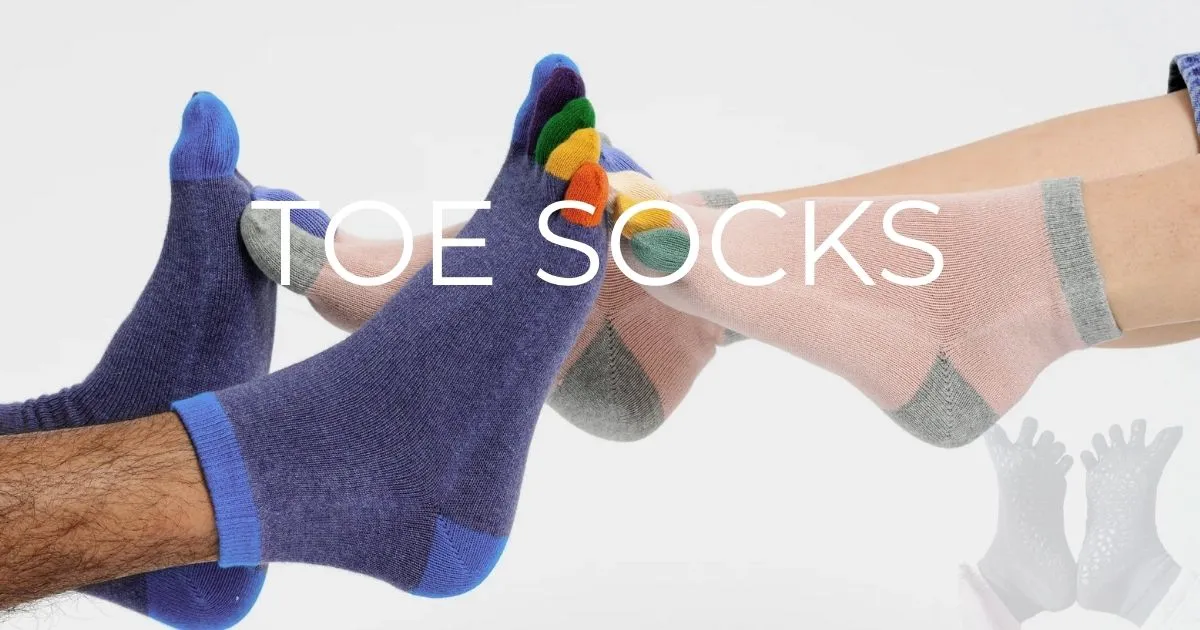
Look at your feet. Seriously, take a second. Most of us spend our entire lives cramming these complex, 26-bone architectural marvels into narrow, pointy leather boxes. It’s weird when you think about it. We basically treat our feet like a single solid block of wood rather than a dynamic piece of machinery. That’s where the whole conversation around toe socks benefits starts to get interesting, even if you think they look a little ridiculous.
They aren’t just for hikers or people who love quirky patterns.
Most people see five-toe socks and think of the 1970s or maybe those neon striped ones from middle school. But the podiatry world sees them differently. When you slip into a pair of Injinji or Creepers, you aren't just making a fashion statement—though it’s a bold one, for sure. You're actually allowing your foot to function the way biology intended. It’s about splay. It’s about skin-on-skin friction. Honestly, it’s about finally stopping that annoying pinky toe blister that ruins every long walk.
The Science of Toe Splay and Why Alignment Matters
Conventional socks act like a giant rubber band. They squeeze your toes together. Over years of wearing tight socks and tighter shoes, your toes start to cave inward. This is called hallux valgus, or the beginning of a bunion. It sucks.
When you use toe socks, each digit is wrapped in its own sleeve. This creates a physical barrier that encourages your toes to spread out. This is "toe splay." Why does splay matter? Balance. If you're standing on a narrow base, you're less stable. When your toes spread, your base of support widens. This is why you see so many ultra-marathoners and trail runners wearing them. They’re navigating technical terrain where a millimeter of stability is the difference between a PR and a rolled ankle.
Dr. Ray McClanahan, a renowned podiatrist and the creator of Correct Toes, has long advocated for footwear that allows the foot to remain in its natural shape. He often points out that most foot deformities in the Western world are "shoe-shaped feet." Toe socks are a foundational tool in reversing that compression. They assist in realigning the bones without the need for invasive surgery in some early-stage cases. It’s not magic; it’s just giving your anatomy some breathing room.
No More Blisters: The End of Skin-on-Skin Friction
Blisters are the worst.
They happen because of heat, moisture, and friction. In a normal sock, your toes rub against each other thousands of times every mile. This creates "interdigital blisters." By wrapping each toe in a moisture-wicking fabric—usually a blend of Merino wool or Coolmax—you eliminate that friction entirely. The fabric absorbs the sweat between the toes, which is usually where the swampiness starts.
Think about it this way.
If you're hiking the Appalachian Trail or even just walking 10,000 steps around a humid city, your feet sweat. A lot. Standard socks trap that moisture between your toes, softening the skin and making it prime real estate for painful hot spots. Toe socks act like a squeegee for your sweat. They pull the moisture away from the skin and into the fabric fibers where it can evaporate.
Sensory Feedback and "Proprioception"
There’s this fancy word called proprioception. It’s basically your brain’s ability to know where your body parts are in space without looking at them. Your feet are packed with nerve endings. When you encase them in a thick, restrictive sock and a stiff shoe, you’re basically numbing those nerves. It's like trying to play the piano while wearing oven mitts.
One of the most overlooked toe socks benefits is the boost in sensory feedback. When your toes can move independently, they "feel" the ground better. This sends clearer signals to your brain about the surface you're walking on. If you're into yoga or Pilates, you’ve probably noticed people wearing grip-bottom toe socks. That’s not just for hygiene. It’s because being able to grip the mat with your individual toes helps with those difficult balance poses. You’re using the full dexterity of your foot.
A Solution for Athlete's Foot?
Let’s get a bit gross for a second. Tinea pedis, or Athlete's Foot, thrives in dark, damp, warm environments. The space between your fourth and fifth toes is like a luxury resort for fungus. Because toe socks keep these gaps dry and separated, they make it significantly harder for fungal infections to take hold.
It’s a simple mechanical solution to a biological problem.
If you struggle with recurring foot funk, switching your sock liner might do more than any spray or powder. You’re removing the environment the fungus needs to survive. It’s a preventative measure that actually makes sense. Plus, it keeps your feet smelling way less like a locker room at the end of a long day.
The Learning Curve: It’s Kinda Annoying at First
Let's be real. Putting on toe socks for the first time is a chore. It takes forever. You’re sitting there trying to guide your pinky toe into its little home, and it just won't go. It’s frustrating.
But here’s the thing: that struggle is actually a sign of how much you need them. If your toes are so stiff or curled that you can't easily slide them into a sock, your foot health is already compromised. After a week or two, your toes regain some of that lost "independent" movement. Suddenly, you're sliding them on in seconds. It’s basically physical therapy you can do while sitting on your bed.
Choosing the Right Material
Not all toe socks are created equal. If you buy the cheap, polyester ones from a bargain bin, you’re going to hate them. They won’t breathe, they’ll slip down, and they’ll feel bulky.
- Merino Wool: This is the gold standard. It’s naturally antimicrobial (less stink) and regulates temperature beautifully. Brand like Injinji use a "NuWool" blend that’s fantastic for hiking.
- Synthetic Blends: Look for Coolmax or Lycra. These are designed for high-intensity running. They provide a "second skin" fit that doesn't bunch up inside your shoe.
- Cotton: Honestly? Avoid it for performance. Cotton holds onto water. Once your feet get wet in cotton toe socks, they stay wet, which defeats half the purpose of wearing them.
What Most People Get Wrong About the Fit
You might think you need to size up your shoes to accommodate the extra fabric between your toes. Usually, you don't. The fabric is incredibly thin. However, if you are wearing shoes with a narrow, pointed toe box (looking at you, traditional dress shoes), toe socks might feel cramped.
The real magic happens when you pair toe socks with "wide toe box" shoes. Brands like Altra, Topo Athletic, or Vivobarefoot are designed with a "foot-shape" last. This gives your toes the actual physical space to spread out while the socks do the work of keeping them separated. It’s a symbiotic relationship. If you wear toe socks in shoes that are too narrow, you’re just adding more bulk to a crowded space.
Real World Results: Who Actually Benefits?
- Distance Runners: If you’re hitting 20+ miles a week, the reduction in friction is a lifesaver. No more losing toenails to repetitive impact.
- Hikers: Total game changer for steep descents where your feet slide forward and your toes jam together.
- People with Bunions: It won't "cure" a severe deformity overnight, but it provides immediate relief from the constant pressure of toes overlapping.
- Waitstaff and Nurses: Anyone on their feet for 12 hours. The improved circulation and reduced moisture make a massive difference by the end of a shift.
The Actionable Plan for Better Foot Health
If you're ready to stop treating your feet like an afterthought, don't go out and replace your entire drawer at once. That's expensive and unnecessary.
Start by buying two pairs of high-quality Merino or synthetic blend toe socks. Wear them around the house first to get used to the sensation. It feels weird between your toes—sorta like wearing a thong sandal, but for every toe. Give it three days.
Once you’re used to the feeling, take them on a short 2-mile walk or run. Pay attention to your balance. Notice if your feet feel "fresher" or less swampy afterward. If you like the results, gradually phase out your old tube socks. Your feet have spent decades being squished; give them a few weeks to rediscover what it’s like to actually move.
Switching to toe socks is a small change, but considering your feet carry your entire body weight for roughly 150,000 miles over your lifetime, they probably deserve the upgrade. Stop the squish. Let your toes breathe. Your future self (and your pinky toes) will thank you.
Step-by-Step Transition:
- Purchase: Get one pair of Injinji (Run or Trail series) or a similar reputable brand.
- Acclimation: Wear them for 2-4 hours at home without shoes to let your toes adjust to the separation.
- Test: Use them during your next workout or long walk.
- Evaluate: Check for hot spots or redness. Most users find an immediate reduction in irritation.
- Expand: If you have "hammer toes" or early bunions, consider pairing the socks with a wider shoe brand to maximize the corrective benefits.