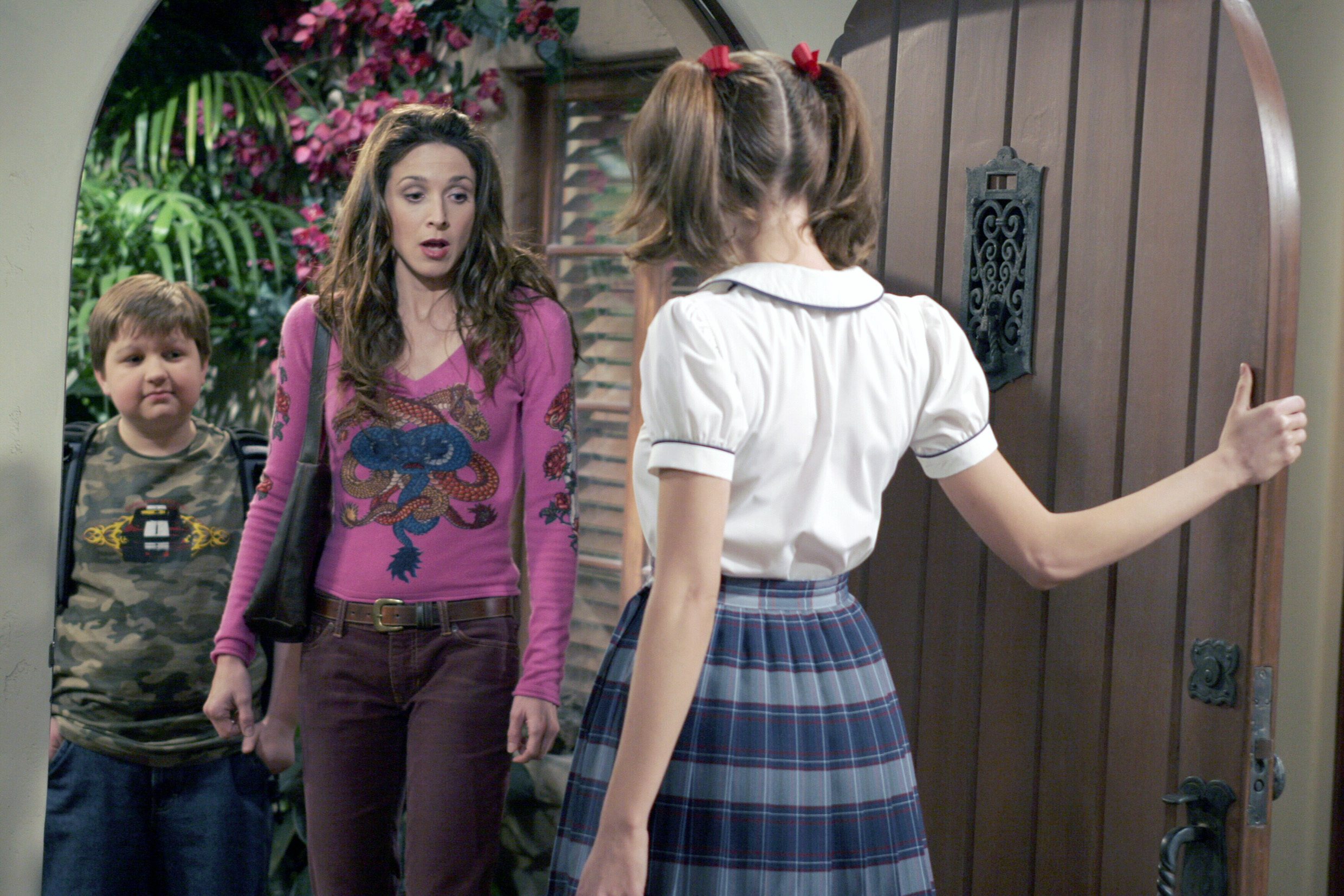
Lindsey McElroy was a train wreck. Let's just be honest about that. When she first showed up in season seven of Two and a Half Men, nobody really expected her to stick around for nearly a hundred episodes. She was just the mom of Jake’s friend Eldridge. But then, she and Alan Harper started this weird, toxic, deeply hilarious dance that lasted until the series finale. If you’re looking back at two and a half men lindsey, you're looking at the most significant relationship Alan ever had outside of his messy divorce with Judith. It was a relationship defined by cheap wine, infidelity, and a house that literally burned to the ground.
Courtney Thorne-Smith brought something different to the show. Before her, Alan’s love interests were usually one-off gags or women who were far too stable to stick around a guy who lived on his brother’s couch. Lindsey was different because she was just as broken as he was. She was a heavy drinker, a bit of a pyro, and had a penchant for making terrible life choices.
The Fire and the Fallout
The moment their relationship shifted from a casual fling to a permanent fixture of the show was "The Give-and-Take and the Take-and-Take." Alan, being the perennial loser we love to mock, accidentally burns down Lindsey’s house with a cheap massage oil candle. It's peak Alan. But what’s fascinating is that Lindsey doesn't just walk away. She moves in.
This changed the dynamic of the beach house. Suddenly, Charlie (and later Walden) had to deal with not just one Harper leech, but a whole secondary family unit. Lindsey wasn't a guest; she was a fixture. She brought Eldridge, who was essentially a dumber, more stoned version of Jake. It created a bizarre mirror image of the main cast. While Charlie was living his high-life fantasy, Alan and Lindsey were downstairs living a suburban nightmare inside a billionaire's mansion.
It's actually kinda wild how much the writers put her through. Most sitcom girlfriends are there to be the "straight man" to the lead's antics. Lindsey was rarely that. She was often the catalyst for the chaos. Whether she was cheating on Alan with his own brother (yeah, remember that?) or hiding her drinking habits, she was never a passive character.
Why Their Relationship Refused to Die
You have to wonder why Alan stayed. Or why she stayed. Honestly, it's because they were both terrified of being alone and both felt they couldn't do any better. Alan is a chiropractor with no money and a complex the size of Malibu. Lindsey is a woman who realized her "prime" was fading and her safety net was gone.
They were a match made in a very specific kind of sitcom hell.
One of the funniest aspects of two and a half men lindsey was the constant back-and-forth about her ex-husband, Chris. He was rich, successful, and everything Alan wasn't. Lindsey used Chris as a weapon. She would go back to him, then back to Alan, then maybe a random guy she met at a bar, then back to Alan again. It became a running gag that Alan was her "backup plan," but he was so desperate for affection that he accepted the role with a pathetic kind of pride.
The Post-Charlie Era and the Walden Problem
When Charlie Sheen left the show and Ashton Kutcher’s Walden Schmidt moved in, the show struggled to find its footing. But Lindsey stayed. In fact, her role became even more prominent. She provided a sense of continuity. While the house changed owners, the toxic cycle between Alan and Lindsey remained a constant.
Courtney Thorne-Smith’s chemistry with Jon Cryer was arguably better than his chemistry with almost anyone else on the set. They had this rhythm. It was a fast-paced, cynical, and deeply sarcastic rapport. They didn't act like a couple in love; they acted like a couple who had been married for forty years and hated every second of it, yet couldn't imagine talking to anyone else.
There was that one arc where Lindsey started dating a guy named Larry. Larry was nice. Larry was rich. Larry was a total idiot. Alan, naturally, befriended Larry under a fake name ("Jeff Strongman") because he couldn't let Lindsey go. It was one of the most convoluted and ridiculous storylines in the later seasons, but it worked because we knew how far Alan would go to keep a toehold in Lindsey’s life. It wasn't about love anymore. It was about obsession and the fear of starting over.
The Problem With Lindsey's Character Development
If we're being hyper-critical, Lindsey's character suffered from the same thing most long-running sitcom characters do: flanderization. In her early appearances, she was a relatively normal mom who happened to have a spark with Alan. By the end, she was a caricature. She was "the drunk one." She was "the unfaithful one."
Chuck Lorre and the writing team didn't really want her to grow. If she grew, she'd leave Alan. If she left Alan, Alan might actually find happiness, and a happy Alan Harper is a boring Alan Harper. So, Lindsey had to stay messy. She had to keep drinking. She had to keep making eyes at other men.
Some fans argue she was the villain of the show. Think about it. She cheated constantly. She belittled Alan (though, to be fair, everyone did). She was arguably more manipulative than Judith because she kept giving Alan hope. Judith was at least honest about her disdain for him. Lindsey kept him on a leash.
Ranking the Lindsey Eras
If you're binge-watching the series on Peacock or catching reruns, you'll notice three distinct "Lindsey" phases:
- The New Girlfriend (Season 7): This is when she was at her most likable. She was a fresh start for Alan and felt like a "real" person. The chemistry was palpable, and you actually rooted for them.
- The On-Again, Off-Again Nightmare (Seasons 8-10): This is the peak of the toxicity. The house fire, the cheating, the breakups. This is where most of the iconic two and a half men lindsey moments happen.
- The Larry/Endgame Saga (Seasons 11-12): This is when the show got weird. The "Jeff Strongman" plotline took up way too much screen time, and Lindsey became more of a plot device than a character.
Despite the dip in writing quality toward the end, Thorne-Smith stayed committed to the bit. She played the "hot mess" better than almost anyone else on network TV at the time.
What Actually Happened in the Finale?
The series finale, "Of Course He's Dead," was a fever dream of meta-commentary and inside jokes. But what about Lindsey? In the end, she and Alan are still... whatever they are. There was no grand wedding. There was no final breakup.
In a way, that’s the most realistic ending for them. People like Alan and Lindsey don't change. They don't have a "happily ever after" or a dramatic "goodbye forever." They just keep existing in each other's orbits, fueled by gin and low self-esteem.
It’s worth noting that Lindsey survived the entire transition of the show. She saw the rise and fall of Charlie Harper and the arrival of Walden. She was one of the few characters who could bridge those two very different versions of the series. That’s a testament to the character’s utility in the writer's room. She was the perfect foil for Alan’s brand of neuroticism.
The Legacy of the Character
When people talk about the "women of Two and a Half Men," they usually mention Rose or Judith first. But Lindsey McElroy appeared in more episodes than almost any other recurring female character. She wasn't just a guest star; she was the unofficial fourth lead for the second half of the series.
She represented the reality of dating in your 40s and 50s that the show usually avoided in favor of Charlie’s parade of 20-somethings. It was ugly, it was desperate, and it was often pathetic. But it was also the most "human" part of the show.
Actionable Insights for Fans and Rewatchers
If you're going back to revisit the Alan and Lindsey saga, here’s how to get the most out of it without getting frustrated by the repetitive plots:
- Watch for the subtle physical comedy: Jon Cryer and Courtney Thorne-Smith are both masters of the "reaction shot." Often, the funniest part of their scenes isn't the dialogue, but the look of pure exhaustion on her face or the twitch in his eye.
- Pay attention to the Eldridge/Jake parallel: The show dropped this eventually, but the early seasons of their relationship used the kids as a great way to show how Alan and Lindsey were failing as parents in identical ways.
- Don't look for logic in her finances: Lindsey goes from losing everything in a fire to seemingly having plenty of money, then back to being broke. It’s a sitcom. Just roll with it.
- Skip the "Jeff Strongman" arc if you're short on time: Honestly, it’s the weakest part of her run. If you want the "classic" Lindsey experience, stick to seasons 7 through 9.
Lindsey McElroy was never meant to be a role model. She was a cautionary tale wrapped in a gorgeous blonde package. She was the personification of "settling," and in the cynical world of Two and a Half Men, that made her the most relatable character on the screen.
Next time you see a rerun of the episode where she tries to convince Alan to have a threesome or the one where she gets way too into a "Book Club" that’s just a front for drinking, remember that she was the only person who could truly handle Alan Harper. And that, in itself, is a superpower.
Moving Forward with the Series
To truly understand the impact of two and a half men lindsey, you have to view her as the bridge between the old show and the new one. She provided the grounding for Alan that allowed him to stay in the house after Charlie died. Without that relationship, Alan’s presence in the beach house during the Walden years would have felt even more forced than it already did.
If you’re interested in more behind-the-scenes drama or character deep-dives from this era of sitcoms, look into the production notes from season 8. It was a pivotal time where the chemistry between Thorne-Smith and Cryer actually saved several episodes that were struggling due to Sheen’s off-screen issues. Understanding the context of the "fire" episodes—which were filmed during a time of massive uncertainty for the cast—adds a whole new layer to the frantic energy Lindsey brought to the screen.
Check out the episode "A Chocolate Milkshake for the Mistakes" for what is arguably her best performance. It encapsulates everything the character was: a mess, a mother, and the only woman who could ever truly make Alan Harper feel like a man, even if it was only for twenty minutes at a time.