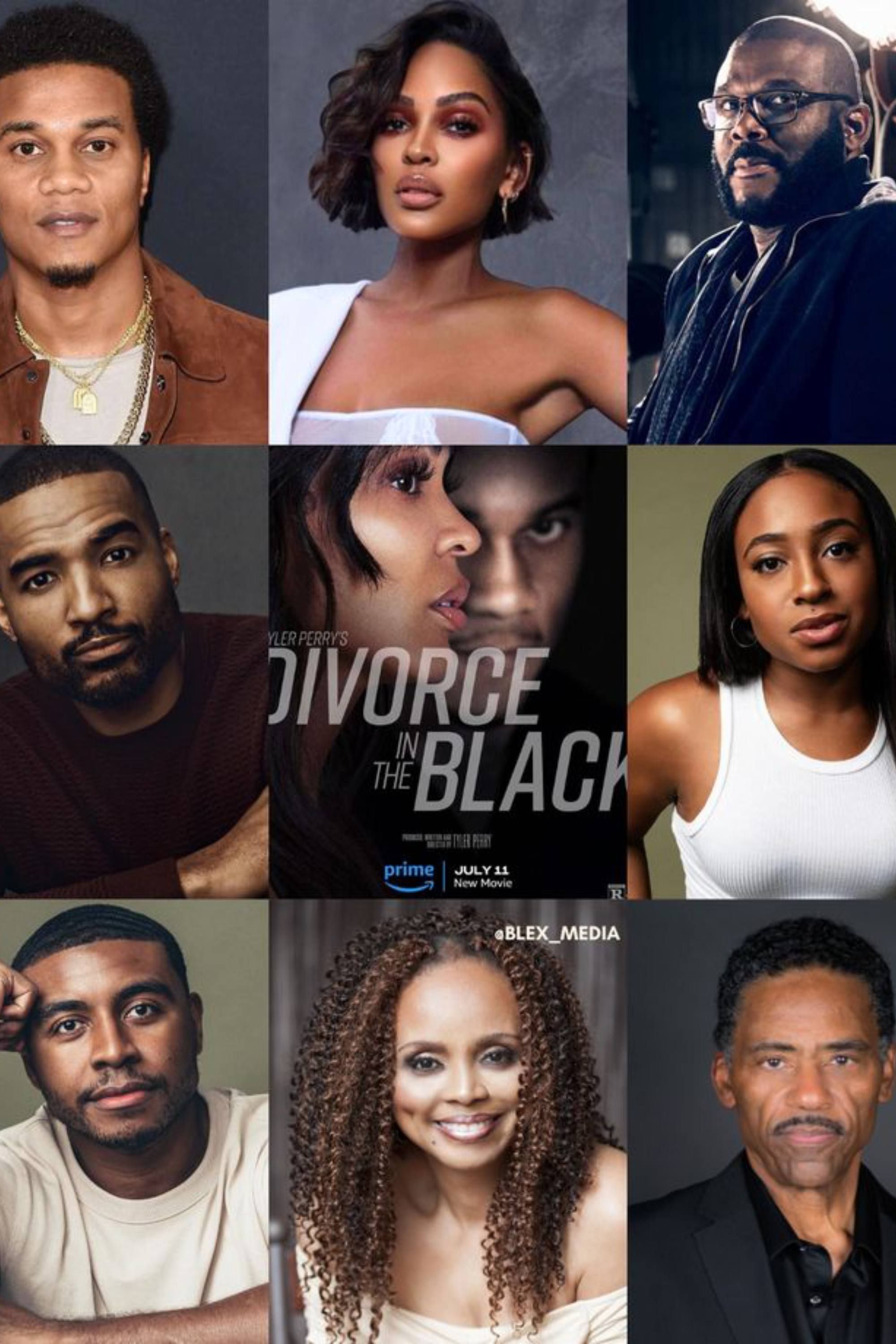
You’ve probably seen the memes. Or maybe you saw that staggering 0% score on Rotten Tomatoes and wondered if the internet was just being dramatic. But honestly, when Tyler Perry Divorce in the Black hit Amazon Prime Video, it did something most "critically acclaimed" movies can’t. It blew the roof off the streaming charts.
People were talking. Loudly.
The film follows Ava, played by the ever-radiant Meagan Good, a bank professional who is basically the "perfect" wife. She’s patient. She’s loyal. She’s also married to Dallas (Cory Hardrict), a man who is—to put it lightly—a total nightmare. When Dallas abruptly demands a divorce, Ava’s world shatters, but the story isn’t really about the breakup. It’s about the wild, twisted secrets that come crawling out of the woodwork once the marriage papers are signed.
Why Tyler Perry Divorce in the Black Sparked a Massive Cultural Debate
This movie didn't just drop and disappear. It ignited a firestorm about how Black women are portrayed in cinema, specifically in Perry’s universe.
Critics absolutely shredded it. They called it "asinine" and "reckless."
Yet, the audience? They couldn't stop watching. In its first four days alone, the movie racked up nearly 500 million minutes of watch time. That is a massive disconnect between what the "experts" think and what the people actually want to see on their Friday nights.
There’s a specific trope at play here that Perry fans know well: the "Strong Black Woman" who endures way too much. Ava is the daughter of a preacher (played by Richard Lawson), and she’s trapped in a cycle of emotional and physical abuse. When Dallas leaves her, she’s devastated. But as the plot thickens, we find out Dallas didn't just leave; he actively sabotaged her life for years.
The Real Story Behind the Script
A lot of people asked if this was based on a true story.
Short answer: No.
Longer answer: It’s a Tyler Perry production, which means it’s built on the "truth" of archetypes. Perry has often said he writes from what he’s seen in the community—the struggles of faith, the toxicity of certain family dynamics, and the resilience of women. While Ava and Dallas aren’t real people, the gaslighting and the "church-folk" drama feel very real to a lot of viewers.
Interestingly, the movie was shot incredibly fast. Cory Hardrict mentioned in an interview that they finished the whole thing in about three weeks. That speed is a Perry trademark, but it’s also what leads to the technical hiccups critics love to point out—like cars staying on during every scene or the weirdly empty office sets.
Breaking Down the Ending: Redemption or Revenge?
If you haven't seen the ending of Tyler Perry Divorce in the Black, things get pretty intense. It shifts from a domestic drama into a full-on psychological thriller.
Ava finds a new spark with Benji (Joseph Lee Anderson), a guy who has apparently loved her since high school. But Dallas isn't the type to just walk away quietly, even though he was the one who wanted the divorce in the first place. This is where the movie gets controversial.
- The "List": Ava’s friend Rona makes a list of all the terrible things Dallas did. It's meant to be a wake-up call.
- The Confrontation: The final act involves a home invasion, a lot of screaming, and a level of violence that caught some viewers off guard.
- The Message: Perry seems to be arguing that sometimes, you can't just pray the "devil" away. You have to fight back.
Is it a healthy portrayal of moving on? Maybe not. Is it entertaining? Based on the numbers, absolutely.
The Business of the 0% Rating
It’s rare for a movie to get a 0% on Rotten Tomatoes. Like, genuinely hard to achieve.
Even "bad" movies usually have one or two critics who find something to like. But for Tyler Perry Divorce in the Black, the consensus was a total wall of "nope." Critics felt the dialogue was clunky and the plot was recycled from Perry’s earlier work like Acrimony or Diary of a Mad Black Woman.
But here is the kicker: Amazon doesn't care about the 0%.
This film drove more new Prime Video subscriptions in the U.S. than any other Amazon MGM Studios-produced movie to date. It proves that there is a massive, underserved audience that wants this specific brand of high-octane, emotional storytelling, regardless of what the New York critics say.
What We Can Learn from Ava's Journey
If you're watching this for more than just the drama, there are some actual takeaways.
- Watch the red flags early. The movie shows that Dallas’s family was toxic from the jump. If the mother-in-law is telling you she hates you at a funeral, believe her.
- Community matters. Ava’s parents and her friend Rona were her safety net. Without them, she would have been completely isolated.
- Self-worth isn't tied to a marriage certificate. Ava spent the first half of the movie trying to "fix" a man who didn't want to be fixed. The real "win" wasn't finding Benji; it was finding her own voice.
Tyler Perry knows his audience. He knows they want to see a villain get what’s coming to them and a heroine find her light. He delivers that every single time, even if it's wrapped in a package that makes film students cringe.
If you’re looking to dive deeper into these themes, your next step is to look into the psychology of trauma bonds in cinema. Understanding why we are drawn to "survival narratives" like Ava’s can change the way you view everything from Madea to the latest streaming thrillers. You might also want to compare this film to Mea Culpa to see how Perry’s thriller style is evolving—or staying exactly the same.