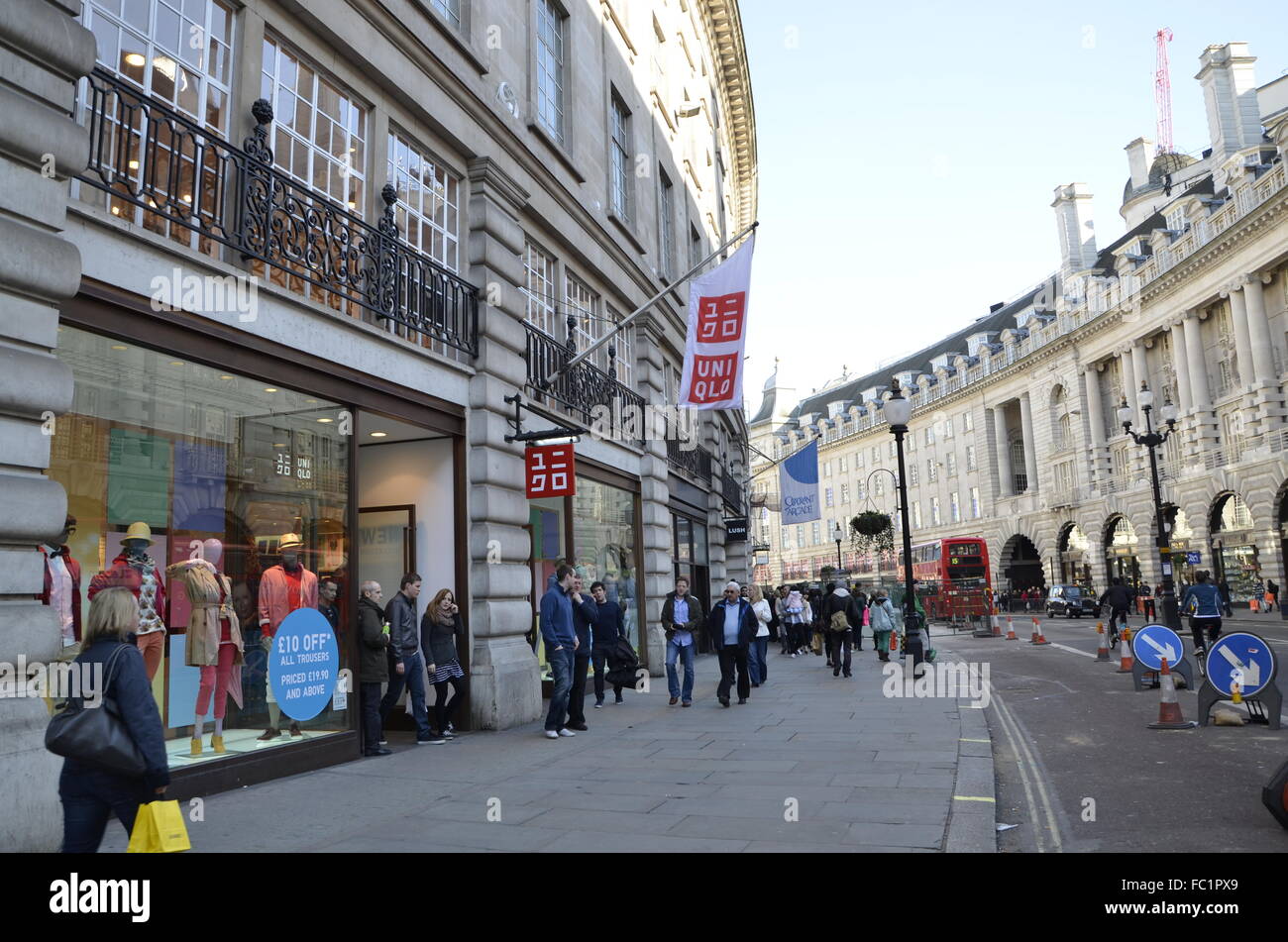
You’re walking down Regent Street. It’s loud. It’s crowded. The Grade II listed buildings look like they’ve been there since the dawn of time, and honestly, most of the shops feel like museums where you aren't allowed to touch anything. Then you see it. The Uniqlo London Regent Street flagship. It’s not just another place to grab a pack of socks or a puffer jacket that everyone else in the city is already wearing. This 1,900-square-meter space, which opened back in 2022, actually managed to do something pretty rare: it made a massive global chain feel like it actually belongs in London.
It’s big. Like, three-floors-of-obsessive-detail big.
Most people think of Uniqlo as the place for Heattech and those round mini shoulder bags that went viral on TikTok. But the Regent Street location is basically a love letter to Japanese efficiency mixed with British heritage. It shares a building with Theory (both are owned by Fast Retailing), so you get this weirdly seamless transition from functional basics to high-end tailoring.
The Heritage Architecture Nobody Actually Notices
Look up. Seriously. The building itself is a masterpiece of 19th-century architecture. When Uniqlo moved into 101-113 Regent Street, they didn't just rip everything out and replace it with white plastic and LED screens. They kept the soul of the place. You’ve got these incredible original features, like the decorative plasterwork on the ceilings and the massive stone pillars that make you feel like you’re shopping in a cathedral of knitwear.
It’s a vibe.
The design was handled by the long-time Uniqlo collaborators at Curiosity, a Tokyo-based studio. They had to navigate the strict rules of English Heritage while making the space feel modern. The result is a staircase that looks like a piece of art and a layout that doesn't feel like a maze. Unlike the chaotic energy of the Oxford Street stores, Uniqlo London Regent Street has breathing room. You can actually move without hitting someone’s shopping bag.
Why the Joint Entrance with Theory Matters
It’s kinda smart. You enter through a shared space. One side is the minimalist, slightly pricey world of Theory. The other is the colorful, accessible world of Uniqlo. It reflects how people actually dress now. Nobody wears head-to-toe luxury unless they’re on a runway. Most of us mix a £150 blazer with a £12 t-shirt. This store layout just admits that reality.
RE.UNIQLO and the Repair Revolution
We need to talk about the second floor. This is where the RE.UNIQLO Studio lives. Honestly, this is the best part of the whole shop. While every brand talks about "sustainability" in their marketing emails, this is a physical space where you can actually get your stuff fixed.
It’s not just for Uniqlo clothes, either.
If you’ve got a hole in your favorite sweater or a rip in your jeans, the staff there use traditional Japanese Sashiko stitching techniques to fix it. Sashiko is basically functional embroidery. Instead of hiding the tear, they turn it into a pattern. It makes your old clothes look better than the new ones. They also do standard repairs like replacing buttons or fixing hems, usually starting around £3 to £5.
It’s practical. It’s cheap. It keeps clothes out of the landfill.
- Sashiko Stitching: Beautiful, visible mending that turns a rip into a design feature.
- Standard Repairs: Zips, buttons, and hems fixed by pros.
- Customization: You can get embroidery done on your new purchases to make them feel personal.
The UT Studio and the Art of the T-Shirt
Downstairs is the UT (Uniqlo T-shirt) floor. If you’re into Japanese pop culture, this is your mecca. They’ve got collaborations with everyone from the Louvre to Keith Haring to random anime series you’ve never heard of.
The Uniqlo London Regent Street branch usually gets the exclusive drops first. They have these digital screens and massive displays that feel more like a gallery than a retail space.
But the real draw is the "UTme!" station. You can go to a tablet, pick a design—often featuring local London artists or classic Japanese motifs—and have it printed on a shirt or a tote bag right there. It takes about 15 minutes. It’s the perfect "I visited London and all I got was this cool shirt" souvenir that isn't a tacky Union Jack print.
Local Partnerships and the "Spirit of London"
Uniqlo didn't just drop a Japanese store into London; they tried to integrate. They partnered with local institutions. You’ll see furniture from the London-based design duo Isokon Plus. They’ve had pop-ups with MagCulture, which is an amazing independent magazine shop.
There’s even a corner dedicated to the Royal College of Art. They showcase work from students and graduates, which gives the store a sense of community that you don't usually find in a massive global flagship.
Masterpiece in Logistics: The Click and Collect Game
Let’s be real for a second. Shopping in person can be a nightmare. But the click-and-collect system at this store is terrifyingly efficient. Because the store is so big, they have a massive back-stock. If you order something online, it’s usually ready for pickup in a few hours.
The pickup point is tucked away so you aren't standing in the middle of the main floor feeling like a delivery driver. It’s smooth.
And the self-checkout? It’s still magic. You just drop your entire basket into the bin, and it instantly knows everything you’ve bought using RFID tags. No scanning individual barcodes. No "unexpected item in bagging area." It’s the kind of technology that makes you wonder why every other store is still living in 2010.
What Most People Get Wrong About Shopping Here
People assume that because it’s on Regent Street, it’ll be picked over and messy. Wrong. Because this is the flagship, it’s the store Uniqlo cares about the most. The displays are always sharp. The staff actually know the difference between the "Extra Fine Merino" and the "Premium Lambswool."
Another misconception is that it’s just for tourists.
While tourists definitely flock there, it’s a staple for Londoners who work in the West End. The LifeWear philosophy—clothing that is simple, high-quality, and built to last—really resonates with the London commute. You need layers. You need stuff that handles rain but also the 30-degree heat of the Central Line.
Actionable Tips for Your Visit
If you’re planning to head to Uniqlo London Regent Street, don’t just walk in and look at the first rack of t-shirts. You’ll miss the good stuff.
- Go Early or Late: Avoid the 1:00 PM to 4:00 PM rush. It’s Regent Street; it gets hectic. Go right when they open (usually 10:00 AM) or an hour before they close.
- Check the RE.UNIQLO Queue: If you want a repair done, go to the second floor first. Sometimes there’s a waitlist for the Sashiko stitching, so you want to get your name down before you start browsing.
- Look for the Theory Bridge: There’s a literal bridge connecting the sections. It’s a great spot for a photo of the store’s architecture.
- Tax-Free for Visitors: If you’re visiting from outside the UK, bring your passport. They have a dedicated desk to help you get your VAT refund, and they actually know how the paperwork works.
- The "Special" Bin: Check near the changing rooms or the back corners for the "Value" racks. This is where they put the last-season collaborations that are marked down significantly. You can find £80 J+ or U collection pieces for £20 if you're lucky.
This store is a massive outlier in the world of "fast fashion." It’s not fast. It’s thoughtful. It’s a place where you can buy a shirt and then come back three years later to have it mended. In a city that’s always moving on to the next trend, there’s something really grounded about that.
Whether you're there for the tech, the tailoring, or just to hide from a sudden London downpour, the Regent Street flagship is easily the best version of Uniqlo in the country. It’s the benchmark.