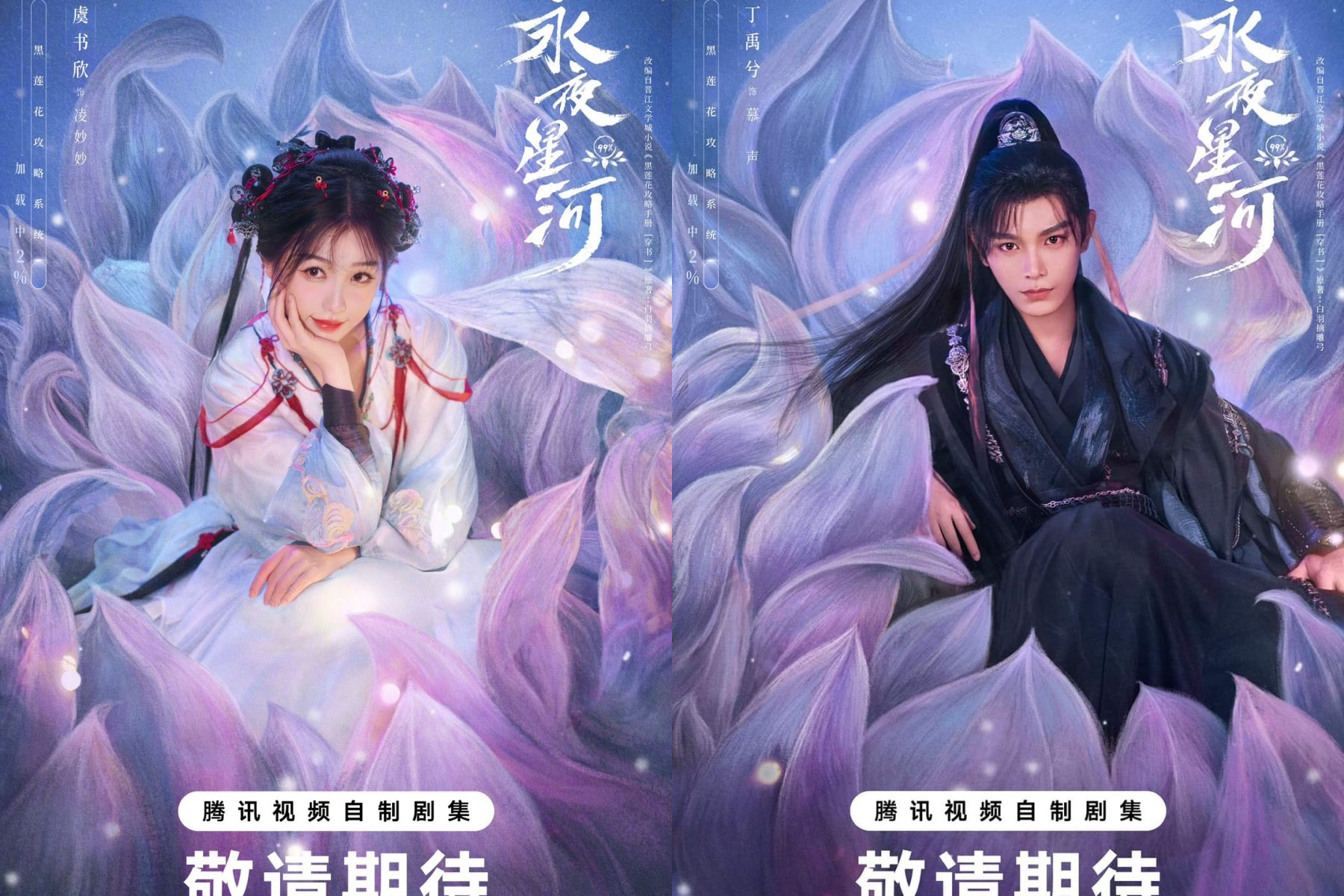
If you’ve spent any time scrolling through Weibo or Douban recently, you’ve probably seen the name Vinh Da Tinh Ha—or Love's Rebellion as it’s known to international audiences—popping up everywhere. It’s that rare kind of C-drama that somehow managed to break through the noise of a crowded 2024 release schedule. People are obsessed. But honestly? A lot of the chatter online misses the point of why this specific series actually worked while so many other xianxia dramas fell flat on their faces.
It’s not just about the CGI. It’s not just about Jing Tian’s return to the screen or Zhang Linghe’s growing fanbase.
There’s something deeper happening with Vinh Da Tinh Ha. It’s a show that leans into the "cultivation" tropes we all know by heart, yet it treats its characters with a level of psychological realism that’s frankly refreshing. You’ve seen the "cold immortal" and the "plucky herbalist" before. We all have. But this isn't that. It’s a story about agency, medical ethics in a fantasy world, and the messy reality of trying to save someone who might not want to be saved.
Why Vinh Da Tinh Ha Refuses to Be Just Another Xianxia
Most xianxia dramas follow a predictable rhythm: 1. Meet-cute. 2. Misunderstanding. 3. Three lifetimes of suffering. 4. Someone spits out blood and dies (usually in slow motion). Vinh Da Tinh Ha changes the texture. Based on the web novel Wo You San Ge Long Ao Tian Zhu Ma (I Have Three Dragon-Slaying Childhood Sweethearts) by Chang Yu, the adaptation takes a hard look at the "destiny" trope and asks: what if you just said no?
The plot centers on Nan Yan, played by Jing Tian. She’s a doctor. Well, a cultivator-doctor. She’s obsessed with saving her mother, which leads her into the dark, murky waters of the Yanggu Sect. This is where she crosses paths with Ji Yang, the fallen emperor played by Zhang Linghe.
Here is the thing.
Ji Yang isn't just brooding for the sake of looking cool in a silk robe. He’s a man who has lost his identity and is navigating a world that considers him a threat. The chemistry between the leads doesn't feel like a scripted mandate. It feels earned because it's built on a foundation of mutual survival rather than just "fate."
The show manages to balance the high-stakes political intrigue of the cultivation world with these tiny, quiet moments of domesticity. It’s weirdly grounded. One minute they’re fighting off spiritual monsters, and the next, Nan Yan is meticulously grinding herbs like she’s in a medical documentary. That attention to detail is what draws people in.
The Production Quality Gap
We need to talk about the visuals because that’s usually where these shows lose me. You know the look: over-saturated greens and blues, actors who look like they’re floating in front of a giant iPad. Vinh Da Tinh Ha actually invested in its art direction.
The color palette is more muted, more "earthy" than your standard idol drama. It gives the world a sense of weight. When Nan Yan enters the "Fairy Heart" or deals with the "Spirit of the Heart" seal, the visual language conveys the danger without looking like a PlayStation 2 cutscene.
The direction by Wen De Guang—the same mind behind Story of Yanxi Palace—is visible in every frame. He knows how to film a room so it feels claustrophobic or expansive depending on the character's internal state. It’s a subtle touch. You might not notice it consciously, but you feel it.
The Zhang Linghe Factor
Let’s be real. A huge part of the discourse around Vinh Da Tinh Ha revolves around Zhang Linghe. After Story of Kunning Palace, he’s become the go-to guy for "complex, slightly unhinged male leads."
In this role, he has to play a dual nature. He’s the fallen Emperor of the Seventh Heaven, but he’s also just Ji Yang, a man trying to hide his tracks. His performance here is more restrained than his previous work. There’s a lot of acting done just with his eyes—shifting from cold calculation to a sort of bewildered tenderness when Nan Yan does something unexpected.
It’s interesting to see him play against Jing Tian. She’s a veteran in the industry, and she brings a "big sister" energy to Nan Yan that makes the character feel more competent and less like a damsel. She’s the one with the medical knowledge. She’s the one who initiates the "Heart-to-Heart" seal. It flips the power dynamic in a way that feels modern, even if the setting is ancient.
Navigating the Plot: It’s More Than Just a Romance
If you’re coming to Vinh Da Tinh Ha just for the kissing scenes, you might be surprised by the complexity of the plot. It’s essentially a mystery.
- Who betrayed Ji Yang?
- Why is the Yanggu Sect so obsessed with Nan Yan’s mother?
- What is the price of immortality?
These aren't background questions. They drive the narrative forward at a clip that's almost too fast for some viewers. Honestly, the first ten episodes move like a freight train. You have to pay attention to the names of the sects and the specific spiritual laws being established, or you'll get lost.
The supporting cast also deserves a shoutout. Often in these big-budget dramas, the side characters are just there to fill space or provide "comic relief" that isn't actually funny. Here, characters like Yin Se and the various sect elders have their own agendas. They feel like people living their own lives off-screen, not just waiting for the leads to show up.
The Source Material vs. The Adaptation
Fans of the original novel have had mixed feelings, which is always the case. The book has a very specific tone—a bit more satirical, a bit more meta. The drama leans harder into the epic romance and the high-fantasy stakes.
Is that a bad thing? Kinda depends on what you like.
If you want a pure adaptation of the novel’s humor, you might find the drama a bit too serious. But if you want a visual spectacle that treats the world-building with respect, the drama is actually superior. It expands on the lore of the "Heart-to-Heart" seal, making it a central plot device that links the two leads in a way that's both a blessing and a curse. It’s a literal soul-bond that they can’t escape. Talk about high stakes.
Why This Show Hits Different in 2026
Looking back from the perspective of early 2026, we can see how Vinh Da Tinh Ha influenced the "New Wave" of xianxia. We’re seeing fewer shows about gods who are bored and more shows about humans who are trying to become gods for very specific, personal reasons.
It moved the needle away from "The World is Ending" toward "I need to save this one person."
It’s personal. It’s visceral.
The show also benefited from a global shift in how we consume C-content. Platforms like iQIYI and Viki have made it so that we aren't just watching a show; we’re participating in a global event. The real-time fan theories about the identity of the "Mastermind" in the later episodes were half the fun.
Technical Hurdles and Pacing Issues
I’m not going to sit here and tell you it’s a perfect show. No drama with a 40-episode run is.
There are segments in the middle—around episodes 22 to 28—where the pacing sags. We spend a bit too much time in the mortal realm doing side quests that don't feel entirely necessary. Some of the political machinations within the sects can get a bit repetitive. How many times can a jealous disciple try to poison someone?
But even in those slower moments, the production value holds it together. The costume design, specifically the use of traditional embroidery and silk layering, is some of the best seen in the last three years. It’s tactile. You can almost feel the weight of the robes.
Practical Takeaways for New Viewers
If you haven't started Vinh Da Tinh Ha yet, or if you’re midway through and feeling a bit overwhelmed, here is how to actually enjoy it:
Don't skip the intro. Usually, I’m a "skip intro" person, but the opening credits for this show actually contain a lot of visual metaphors for the ending. Pay attention to the recurring motifs of the lotus and the sword.
Keep a mental map of the "Three Realms." The show doesn't always hold your hand. Knowing who belongs to the Yanggu Sect versus the more orthodox sects will help you understand why certain betrayals hurt so much.
Watch the "Making Of" clips. Seriously. Seeing the practical effects and the wire-work involved in the fight scenes gives you a whole new appreciation for the actors' physicality. Zhang Linghe apparently did a significant portion of his own stunts, and it shows in the fluid movement of the fight choreography.
Listen to the OST. The music isn't just background noise. The main theme, performed by Liu Yuning, is basically a summary of Ji Yang’s entire character arc. It’s melancholic but resilient.
Vinh Da Tinh Ha isn't just a flash in the pan. It represents a maturing of the xianxia genre, where the focus is shifting from pure spectacle to character-driven storytelling. It’s about the burden of memory and the cost of power.
If you’re looking for a series to binge that offers more than just pretty faces in pretty places, this is it. It’s got heart, it’s got grit, and it’s got one of the most compelling central relationships in recent C-drama history.
To get the most out of your viewing experience, start by watching the first three episodes back-to-back. The world-building is dense, and it takes about that long for the central conflict to really hook you. Pay close attention to the medical terminology Nan Yan uses; it's often a clue for how a future conflict will be resolved. If you're a fan of the "soul-bond" trope, track how the physical sensations of the seal change as the characters' feelings for each other evolve—it's a subtle bit of storytelling that the show handles surprisingly well. Once you're through the initial setup, the payoff in the final arc is genuinely one of the most satisfying conclusions in the genre.