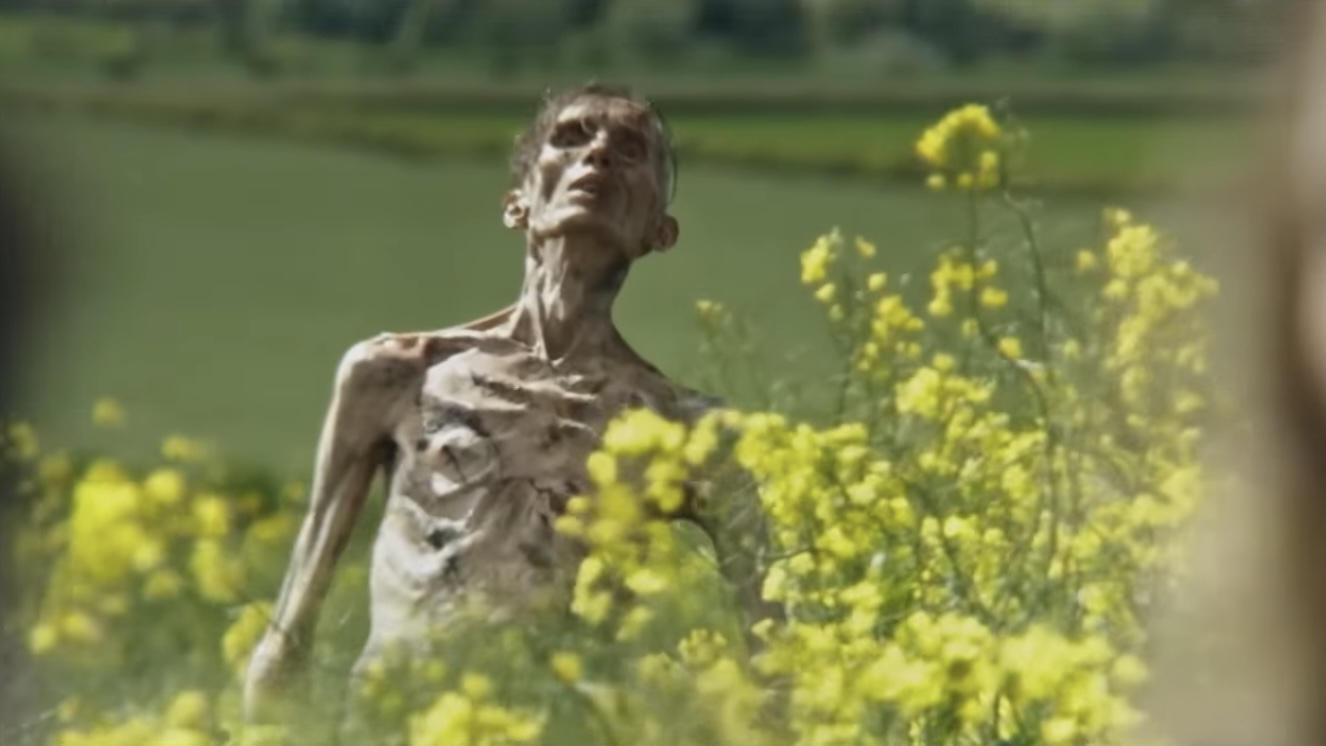
You’re sitting there. The lights are still low, the music is swelling, and the names of three thousand digital effects artists are scrolling past your eyes in a blur of white text on a black background. We’ve all been conditioned by a decade and a half of superhero movies to glue our seats to the theater chair until the very last frame of the production company logos. But when it comes to Danny Boyle’s return to the world of the "Rage" virus, the rules are a bit different. People are asking the same question: is there a 28 Years Later after credits scene worth the extra ten minutes of sitting through legal disclaimers?
Honestly, the answer isn't just a simple yes or no. It's about how Sony and the production team led by Cillian Murphy and Alex Garland decided to structure the rebirth of this franchise.
The truth about the 28 Years Later after credits scene
Let’s get the logistical stuff out of the way first. Historically, the "28" franchise hasn't been big on the Marvel-style stinger. Back in 2002, 28 Days Later didn’t need a post-credit scene because it had something better: multiple endings. Depending on which DVD you bought or which cinema you sat in, you might have seen Cillian Murphy's Jim survive on a hillside or die on a hospital gurney. That DNA of "alternate possibilities" is baked into this series. For 28 Years Later, the focus is less on a "teaser" and more on the narrative weight of the ending itself.
If you’re looking for a 30-second clip of a new monster or a character from a previous movie suddenly appearing in a dark hallway, you might be disappointed. The 28 Years Later after credits scene—or lack thereof—is a creative choice. Danny Boyle is a filmmaker who generally prefers the "hard cut." He wants you to sit with the feelings the finale evoked. He wants you to process the quiet horror of a world that has been broken for nearly three decades.
That said, rumors often swirl about "secret" footage. Don't fall for the TikTok clickbait. Always check the official runtime. If the movie is listed at 108 minutes and the credits start at 100, you have your answer. Usually, any "extra" content in this specific franchise shows up right before the mid-credits or is integrated into the stylized visual layout of the credits themselves.
Why the ending of 28 Years Later matters more than a stinger
Why are we so obsessed with post-credit scenes anyway? It’s basically FOMO. We’re scared of missing the "real" ending. But with 28 Years Later, the meat of the story is in the atmospheric resolution. Alex Garland, who wrote the original and returned for this installment, is famous for endings that leave you questioning the morality of the survivors. Think about Ex Machina or Annihilation. He doesn't do "to be continued" in a traditional way. He does "this is the new, terrifying reality."
The film stars Cillian Murphy returning as Jim, but it also introduces a massive ensemble including Jodie Comer, Aaron Taylor-Johnson, and Ralph Fiennes. The scale is huge. When you're dealing with a budget that dwarfs the original $8 million indie flick, the temptation to "franchise-it-up" is real. Yet, Boyle has always been a bit of a rebel. He’s more interested in the texture of the film—shot on modified iPhone 15 Pro Max cameras for that gritty, digital-age-is-dead look—than in copying the Disney playbook.
What the fans are saying vs. reality
There was a lot of chatter during the production in Northumberland and the Yorkshire Dales. Locals saw smoke, specialized vehicles, and high-intensity action sequences. Some theorists claimed these were for a "post-credits setup" for the sequel, 28 Years Later Part II: The Bone Temple, which Nia DaCosta is slated to direct.
Here is the reality:
Most of that "extra" footage was actually just world-building. Because they shot the first two films of this new trilogy back-to-back, there is a lot of overlap. Sometimes, what people think is an 28 Years Later after credits scene is actually just a very clever transition that leads into the themes of the next movie. It’s a bridge, not a bonus.
The technical legacy of the credits
If you do stay through the credits—and you should, just to respect the craft—pay attention to the music. John Murphy’s "In the House, In a Heartbeat" is one of the most iconic horror themes ever written. The way it’s rearranged for this film tells a story of its own. It starts frantic and ends with a sort of somber, orchestral exhaustion.
Staying through the credits also lets you see the sheer scale of the production. Unlike the first movie, which famously cleared the streets of London for mere seconds at a time with a tiny crew, this is a massive operation. You’ll see departments for "Infected Choreography" and "Survivalist Advisors." It reminds you that this isn't a low-budget zombie movie anymore. It’s a post-apocalyptic epic.
Misconceptions about "The Teaser"
Let’s talk about the "Boyle-Garland" vibe. There is a common misconception that every modern blockbuster must have a teaser for the sequel. When people search for a 28 Years Later after credits scene, they are usually looking for a confirmation of the next chapter.
- Misconception 1: If there's no scene, the story is over. False. Sony has already greenlit a trilogy.
- Misconception 2: Cillian Murphy is only in it for a cameo. Also false. He’s a central pillar of the new narrative.
- Misconception 3: The "Rage" has evolved into something supernatural. Nope. The film stays grounded in the biological horror that made the 2002 film a classic.
The real "extra" content is usually found in the visual storytelling during the first few minutes of the credits. Look for maps, radio signal graphics, or subtle changes in the landscape shown behind the text. That’s where the clues for Nia DaCosta’s sequel are hidden.
How to handle the theater experience
You’ve got a choice to make. When the screen goes dark and the first names pop up, do you bolt for the exit to beat the parking lot rush? Or do you hang back?
If you’re a die-hard fan of the lore, stay. Not because there’s definitely a cinematic scene, but because the audio cues and the final imagery often provide a "coda" to the experience. It’s about the atmosphere. The "Rage" virus isn't just about biting and screaming; it’s about the total collapse of societal structures. The silence at the end of the credits is often more powerful than a jump scare.
What comes next for the 28 Years Later saga?
Since this is the first part of a planned trilogy, the "ending" is naturally open-ended. We know that Nia DaCosta has been working on the second installment. We know that the third film is in the works. The strategy here is "The Lord of the Rings" style—a continuous story rather than a series of episodic adventures.
This changes the way we look for a 28 Years Later after credits scene. In a continuous story, you don't need a stinger to tell you there's more. The entire final act serves as the setup. The stakes have been raised from "surviving a week" to "rebuilding a species."
Actionable insights for your movie night
To make the most of your viewing, keep these points in mind:
- Watch the background: During the final scenes and the early credits, look for environmental storytelling. The state of the vegetation and the "look" of the infected will tell you how the virus has mutated over 28 years.
- Listen to the score: The music often contains motifs from the original 2002 film. If you hear a specific melody return during the credits, it's a hint at Jim's psychological state or the return of a legacy theme.
- Ignore the "Leaked" Clips: Don't go looking for the 28 Years Later after credits scene on grainy YouTube uploads. Most are fan-made edits using footage from 28 Weeks Later or World War Z.
- Stay for the visuals: Even if there isn't a narrative scene, the cinematography in the credits—shot by Anthony Dod Mantle—is often stunning and serves as a visual "palette cleanser" after the intensity of the film.
The most important thing to remember is that 28 Years Later is trying to bring "prestige" back to the zombie genre. It’s not about cheap thrills or post-credit gimmicks. It’s about the weight of time and the scars left by a world that ended nearly three decades ago. Whether you leave as soon as the names appear or wait until the janitors come in with their brooms, the impact of the film stays with you.
Now, go book your tickets and make sure you pay attention to the radio broadcasts in the background of the opening scenes—they often contain more spoilers than any post-credit scene ever could. Check the official Sony Pictures social media accounts for any last-minute "surprise" announcements regarding theater-exclusive footage, as they sometimes add clips a few weeks into the theatrical run to boost repeat viewings.