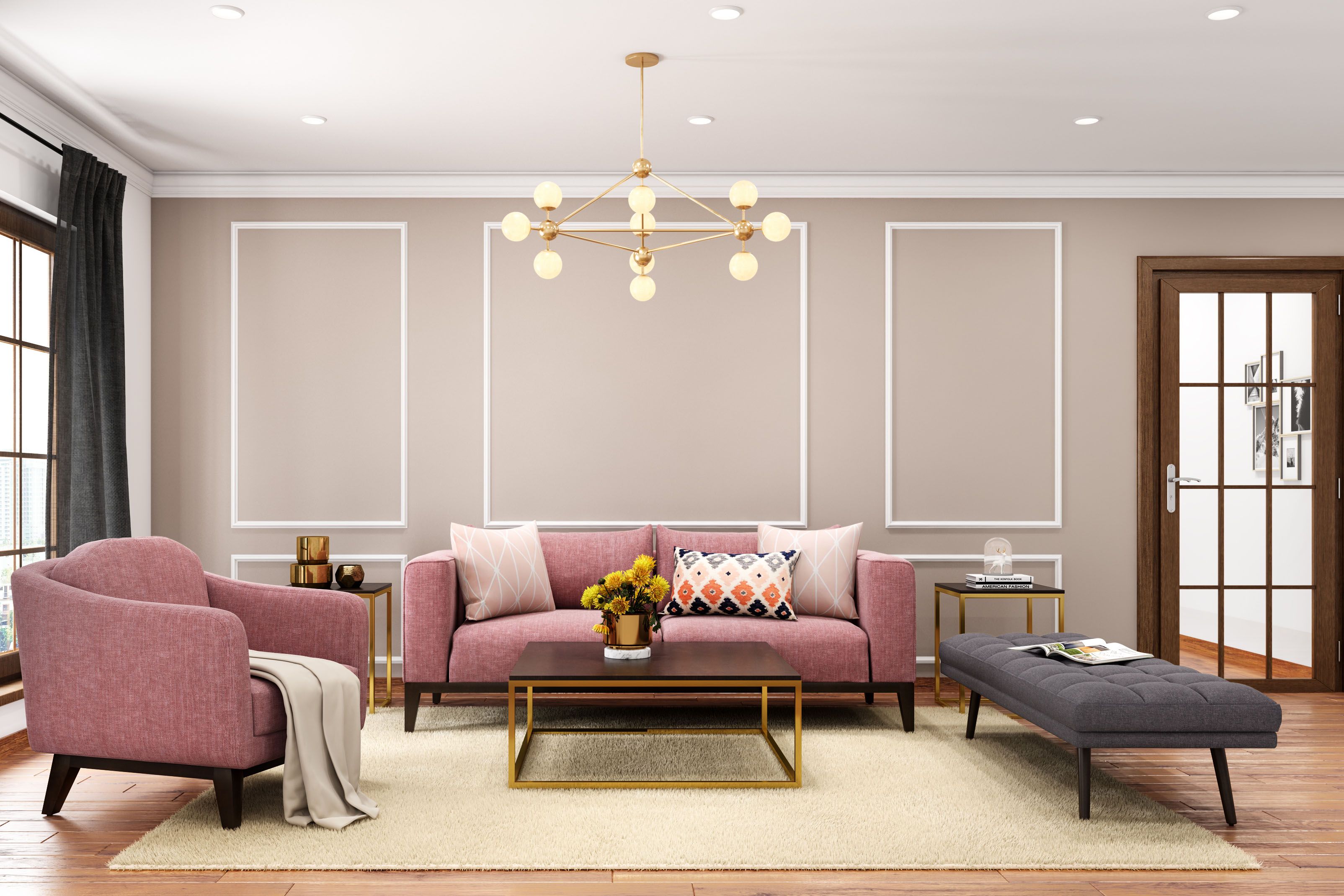
Decorating is hard. Honestly, most people just stare at a blank beige wall for three years before finally pinning up a random IKEA print they don't even like. It's a vibe, sure, but maybe not the one you want. Finding wall art living room ideas that don't feel like a corporate hotel lobby requires a bit of soul-searching and a willingness to break some "rules" you probably read in a 2012 blog post.
Scale is the biggest lie. You've probably heard that small rooms need small art. That’s wrong. Often, a massive, floor-to-ceiling canvas in a tiny apartment makes the room look intentional and expansive, whereas a tiny 8x10 frame just looks like an afterthought or a mistake.
Why Your Gallery Wall Looks "Off"
We’ve all seen them. The gallery walls that look like a cluttered junk drawer moved to the vertical plane. The secret isn't matching the frames; it’s the spacing. If you’re looking for wall art living room ideas that feel cohesive, you need to think about the "visual weight" of each piece.
Interior designer Emily Henderson often talks about the "rule of two to three inches" between frames. If they are too far apart, the eye sees a bunch of separate, lonely objects. If they’re close, the brain reads them as one single, powerful installation. It’s a psychological trick. It works.
Don't buy a "gallery wall in a box." Please. Those pre-curated sets from big-box retailers have zero personality. Instead, mix your mediums. Put a vintage oil painting next to a framed Polaroid, then hang a brass wall sculpture or a textile piece nearby. Texture is your best friend here. A flat wall with only flat paper prints feels two-dimensional and boring.
The Over-the-Sofa Struggle
This is the most common spot for art, and usually where people mess up the height. The "museum height" rule—hanging art so the center is 57 to 60 inches from the floor—is a decent starting point, but it fails when a sofa is involved.
If your sofa has a low back, and you hang the art at 60 inches, you’re going to have a giant, awkward gap of dead air. You want the art to feel "grounded" by the furniture. Usually, that means the bottom of the frame should be about 6 to 10 inches above the top of the sofa cushions. If you have to crane your neck to look at it, it’s too high. We call this "sky-art," and it’s the enemy of a cozy living room.
Large Scale vs. The Grid
If you hate the chaos of a gallery wall, go for a grid. It’s basically the "clean girl aesthetic" of interior design. You take nine identical frames, put nine similar botanical prints or architectural sketches in them, and hang them in a perfect 3x3 square. It’s symmetrical. It’s soothing. It’s very Nancy Meyers movie.
On the flip side, "the oversized solo" is a power move. One giant piece of art—something like 48x60 inches—acts as a focal point. It tells people exactly where to look. It also saves you the headache of leveling twenty different nails.
Unexpected Materials and 3D Elements
Wall art isn't just paint and paper. Some of the best wall art living room ideas involve things that weren't meant to be art at all. Think about architectural salvage. An old wooden corbel or a weathered window frame adds a sense of history that a digital print simply cannot replicate.
- Fiber art: Macramé had a huge moment, but we're seeing a shift toward more sophisticated woven tapestries and "rugs as art." Brands like Block Shop Textiles have popularized oversized woodblock prints on linen that look incredible when framed or hung from a simple wooden dowel.
- Lighting as art: A neon sign or a sculptural sconce functions as both a light source and a visual statement. It changes the mood of the room instantly when the sun goes down.
- Mirrors: Technically art? Maybe not. But a massive, ornate floor mirror leaned against a wall or a collection of vintage convex mirrors (the "witch's eye" style) adds depth and bounces light around.
The "Leaning" Method for Renters
If you’re terrified of losing your security deposit or you just have "commitment issues" with home decor, stop hammering nails. The "leaning" look is very European-chic. You take a large piece of art and literally just lean it against the wall on top of a sideboard, a mantel, or even the floor.
It feels casual. It feels like you’re an artist who just finished a masterpiece and haven't had time to hang it yet. Plus, it’s incredibly easy to swap things out when you get bored. You can layer a smaller frame in front of a larger one to create depth. This layering technique is a staple in the work of designers like Amber Lewis, who excels at that "collected over time" look.
What About Color?
Don't feel like the art has to match your throw pillows. That's a trap. If your room is all neutrals—whites, creams, tans—a piece of art with a single pop of high-contrast color (like a deep cobalt blue or a searing orange) acts as a catalyst for the whole space.
Conversely, if you have a dark, moody room with navy walls (think the "dark academia" trend), a light, airy sketch with lots of white space in the matting will provide a necessary visual "break" for the eyes.
Curating Your Personal Collection
Where do you actually find this stuff? Stop looking at the first page of Amazon.
- Estate Sales: This is where the treasures are. You can find original mid-century oil paintings for $50 because the kids just want to clear out their parents' house.
- Estate-sale.com or Hibid: These are great for online browsing, though shipping can be a beast for large items.
- Society6 and Juniper Print Shop: If you want modern digital art, these sites support actual artists. Juniper, specifically, offers digital downloads so you can print them yourself at a local shop like Staples or Mpix, which is way cheaper.
- Art Students: Check out local university exhibitions. You can buy original work from an up-and-coming artist for a fraction of gallery prices, and you get a cool story to tell guests.
Lighting Your Masterpieces
You spent the money, now make sure people can see it. Most living rooms rely on overhead "boob lights" or floor lamps, which leave walls in the shadows.
Battery-operated, remote-controlled picture lights are a game changer for wall art living room ideas. You don't need an electrician to hardwire anything. Brands like Big Ass Light (yes, that’s the name) or more affordable options on Wayfair allow you to clip a light to the top of the frame. It makes even a $10 thrift store find look like it belongs in the Louvre.
The Frame Matters More Than You Think
A cheap-looking frame can ruin a beautiful piece of art. If you buy a print, don't just shove it in a plastic document frame. Use a "mat"—that white or off-white cardboard border. A wide mat (3 to 5 inches) makes a small piece of art look significantly more expensive and professional.
Consider "float mounting" for pieces with interesting edges, like handmade deckled paper. This involves using acid-free adhesive to mount the art on top of the mat board rather than behind it, so the edges are visible. It adds a shadow line and a sense of three-dimensionality.
Actionable Steps to Finish Your Wall
First, measure your wall. Don't eyeball it. Take a roll of blue painter’s tape and outline the dimensions of the art you're considering on the wall. Leave it there for two days. If it feels too small, it definitely is.
Second, commit to a "center point." If you're doing a gallery wall, start with the largest piece in the center and work your way out. Don't try to be perfectly symmetrical; instead, aim for "balance." If you have a heavy, dark frame on the bottom left, balance it with something equally dark or large on the top right.
Finally, ignore the trends. If you love a weird painting of a cow, buy the cow painting. The biggest mistake in living room decor is trying to please a hypothetical guest instead of yourself. Your home should be a reflection of your weird, specific, wonderful life.
Go to a local thrift store this weekend. Look past the dusty VCRs and find one frame with a shape you like. Even if the art inside is terrible, you can replace it with a piece of fabric, a page from an old book, or even a high-quality piece of gift wrap. That’s your starting point. Move it around the room. Lean it. Hang it. See how the light hits it at 4:00 PM. Decorating isn't a destination; it's just a series of small experiments until things feel right.