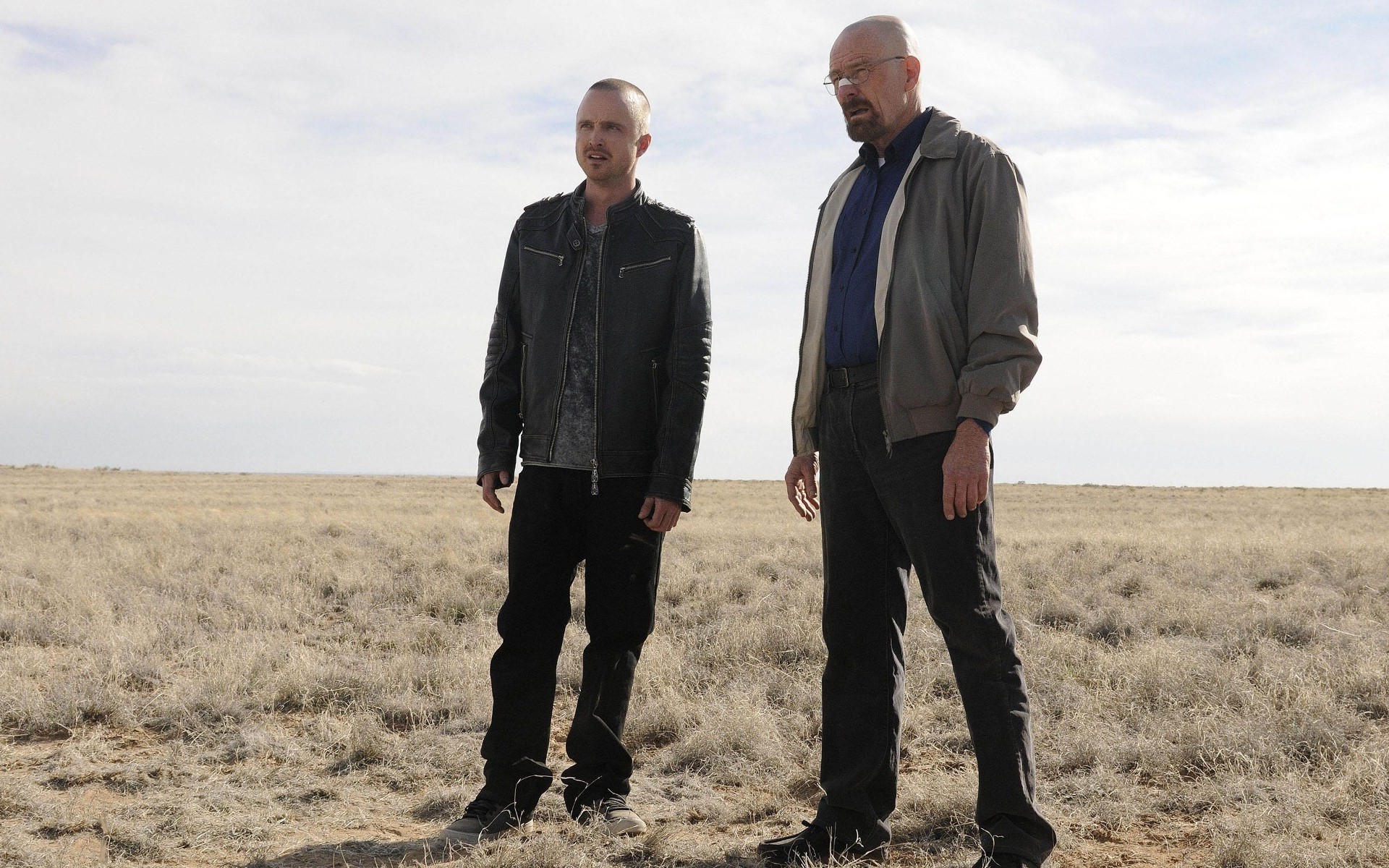
You think you know them. The teacher and the dropout. The mastermind and the junkie. It’s the classic "odd couple" setup, right? Honestly, if you look at the surface of Walter White and Jesse Pinkman, it looks like a simple story of a man breaking bad and dragging a kid down with him. But that's a total oversimplification.
It's actually way darker.
When Vince Gilligan first pitched Breaking Bad, he had a very different plan. Jesse Pinkman was supposed to die in season one. He was meant to be a plot device—a sacrificial lamb to show how dangerous Walt’s new life was. But Aaron Paul was too good. The chemistry was too real. So, Gilligan kept him, and in doing so, he created the most toxic, fascinating, and heartbreaking surrogate father-son relationship in television history.
The Myth of the "Mentor" Relationship
People love to talk about Walt "mentoring" Jesse. They point to the RV scenes or the "4 Days Out" episode where Walt teaches Jesse how to build a battery. It feels like a twisted version of a classroom. But let’s be real: Walt didn't want a student. He wanted a tool.
From the very first episode, Walt blackmails Jesse. It’s not a partnership; it’s an ultimatum. "Cook with me, or I turn you in." That sets the tone for everything that follows. Walt uses Jesse’s need for approval—a need Jesse clearly didn't get from his own parents—to keep him tethered.
It's a pattern.
Walt insults Jesse.
Jesse pulls away.
Walt gives him a tiny scrap of praise ("You are a blowfish!").
Jesse comes running back.
It’s classic emotional manipulation. You’ve probably seen it in real-life toxic relationships, but rarely is it written this precisely on screen. Walt knows exactly which buttons to push because he was Jesse's teacher. He knows Jesse is smart but lazy. He knows Jesse is desperate for someone to believe in him.
Why Jesse Stayed
This is the big question. Why didn't he just leave?
Honestly, by the time he realized how far gone Walt was, he was already buried. Jesse is a character defined by guilt. He feels every death. He carries the weight of Gale, of Drew Sharp, of Jane. Walt, on the other hand, compartmentalizes. He whistles while he works after a kid gets shot.
Jesse stayed because, for a long time, he believed Walt was the only person who actually cared about him. When Walt calls him "son" while Jesse is high in a crack house, it’s beautiful and horrifying at the same time. It’s a lie wrapped in a sliver of truth.
The Breaking Point: Brock and the Lily of the Valley
If you want to know the exact moment the relationship became irredeemable, it’s the poisoning of Brock. For years, fans debated if Walt actually did it. We saw the Lily of the Valley in his backyard, but it felt too cruel, even for him.
But he did.
He poisoned a child just to manipulate Jesse into helping him kill Gus Fring. This is the "Heisenberg" peak. He didn't just risk Jesse's life; he destroyed Jesse’s soul by making him believe his own clumsiness (losing the ricin cigarette) almost killed a kid.
The Shift in Power
By Season 5, the dynamic flips. Jesse is no longer the "junkie" student. He’s the moral compass of the show. While Walt is building an "empire," Jesse just wants out.
The tragedy of Walter White and Jesse Pinkman is that by the time Walt realizes he actually does care about Jesse—in his own warped way—it’s far too late. He saves Jesse in the finale, sure. He takes a bullet for him. But that doesn't make up for the months Jesse spent in a cage at the hands of Jack’s gang because Walt gave him up.
What This Taught Us About TV
Before Breaking Bad, most shows had "reset" buttons. The characters started the next episode basically the same as they were before. This show changed that. It proved that audiences wanted to see a "savage exercise in character transformation," as Rotten Tomatoes puts it.
We watched Walt turn into a monster and Jesse turn into a ghost.
- The Cinematography: Remember the yellow hazmat suits? They weren't just for safety. They signaled the chemical bond—and the toxicity—of the duo.
- The Dialogue: "Yo, Mr. White!" started as a joke and ended as a plea.
- The Legacy: Without this duo, we don't get the complex anti-heroes of the 2020s.
The Actionable Truth for Fans
If you're rewatching the series, look closer at the moments where Walt doesn't have to be a jerk, but chooses to be anyway. Look at when he refuses to go go-karting with Jesse. Jesse is literally begging for a distraction from his trauma, and Walt just shuts the door.
That’s the real Walter White.
Next Steps for the Deep-Dive Fan:
- Watch "Fly" again: It’s often called a filler episode, but it’s the most honest conversation they ever have. Walt almost confesses to Jane’s death. Almost.
- Compare the pilots: Watch the first episode of Breaking Bad and the final episode of Better Call Saul back-to-back. The contrast in their body language tells the whole story.
- Read the scripts: Vince Gilligan’s stage directions often describe Walt’s internal malice that even Bryan Cranston’s acting (brilliant as it is) keeps subtle.
The story of these two men isn't a "bromance." It’s a cautionary tale about how one man’s ego can consume everyone in his orbit. It's about how Jesse Pinkman survived a hurricane named Walter White, but he didn't come out the other side the same person.