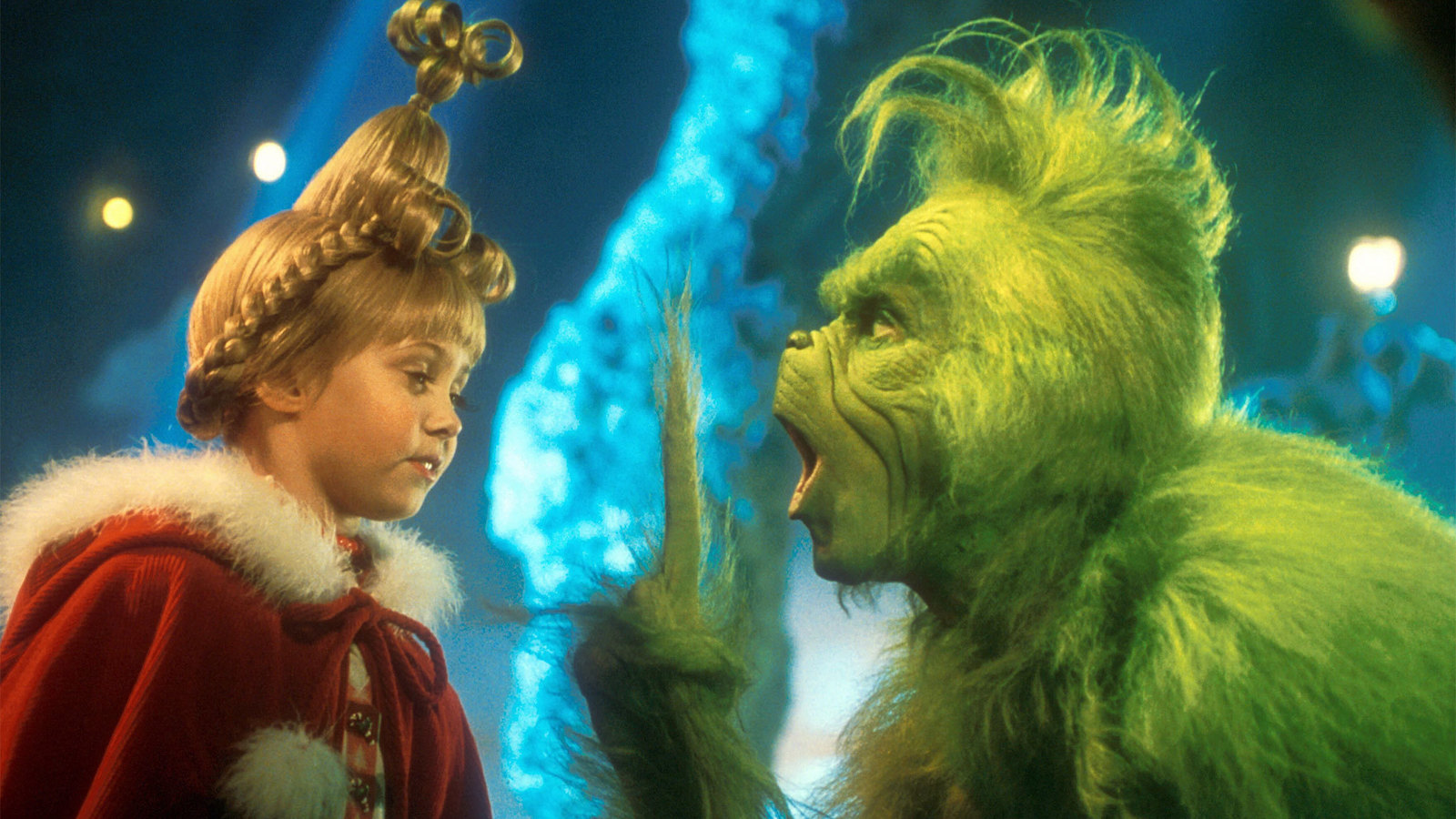
The Grinch is a weird guy. He lives on a mountain, hates noise, and possesses a heart that is scientifically documented to be two sizes too small. But if you’ve ever sat down to watch the classic 1966 TV special or flipped through the pages of the 1957 book, a nagging question probably popped into your head: Was the Grinch a Who, or is he some kind of different species altogether?
It’s a debate that has fueled countless playground arguments and Reddit threads.
Some people point to his green fur as proof he’s an outsider. Others look at his anatomy—the belly, the fingers, the general vibe—and see a direct connection to the residents of Whoville. Honestly, Dr. Seuss (Theodor Geisel) wasn't always one for rigid biological classifications. He liked things whimsical. But if we dig into the actual text, the original illustrations, and the expanded lore from various film adaptations, the answer becomes a bit more nuanced than a simple yes or no.
Breaking Down the Whoville Connection
To understand if he fits the "Who" mold, we have to look at what a Who actually is. In Horton Hears a Who!, we learn that Whos are microscopic beings living on a speck of dust. They are diverse. Some have fur, some don't. Some have pointy noses, others have round ones.
Now, consider the Grinch. He lives on Mount Crumpit, which is geographically part of the same "speck" environment as Whoville. He isn't an alien visiting from another planet. He’s a local.
In the original book, the Grinch is actually drawn in black and white with some pinkish-red accents. He wasn't even green until Chuck Jones decided to make him that color for the animated special. If you look at the 1957 sketches, his facial structure—the sloping forehead and the slightly upturned nose—actually mirrors many of the Who characters.
So, was the Grinch a Who by birth?
In the 2000 live-action film starring Jim Carrey, the writers went all-in on a specific backstory. They portrayed the Grinch as a Who who was delivered to Whoville by mistake as a baby. He grew up in the school system. He had a crush on Martha May Whovier. He was, for all intents and purposes, a member of their society until he was bullied into exile. Under this specific canon, he is absolutely a Who—just a genetically "different" one, perhaps a mutation or a subspecies.
The Case Against the Who Theory
Not everyone buys the "outsider Who" narrative.
If you stick strictly to the 1957 book, the distinction is much sharper. The text often refers to the Grinch and the Whos as separate entities. "The Grinch hated the Whos," Seuss writes. He doesn't say "The Grinch hated the other Whos." This linguistic choice suggests a fundamental difference in kind.
There's also the physical disparity.
- The Whos are generally portrayed as joyful, social, and communal.
- The Grinch is solitary, predatory (in a comedic sense), and physically much larger and stronger than the average Who.
- His heart condition—the whole "two sizes too small" thing—is treated as a unique biological defect, not a common Who medical issue.
Some Seuss scholars suggest the Grinch might be a "What." In the broader Seussian universe, there are plenty of creatures that don't have a specific race name. They just exist. Think about the Lorax or the Cat in the Hat. They are unique individuals. The Grinch might just be a "Grinch"—a species of one, or perhaps the last of a mountain-dwelling race that stayed away from the valley.
Why the "Green" Factor Changes Everything
It's funny how much a single color choice impacted our collective memory. If Chuck Jones hadn't chosen that "ugly" shade of green (reportedly inspired by several rental cars he had driven), we might not even be asking this. In black and white, he looks like a grumpy, hairy Who.
In the 2018 Illumination film, the Grinch is much more "plush." He looks less like a monster and more like a grumpy Muppet. This version emphasizes his isolation as a choice driven by trauma rather than biological "otherness."
But let’s get real.
If you walk like a Who, talk like a Who (he speaks their language perfectly), and live on the same speck of dust as a Who, you’re basically a Who. He’s the cynical, hairy, mountain-dwelling cousin that nobody invites to dinner until he stops stealing their stuff.
The Subspecies Argument
Biology in Whoville is weird. We know this.
If we look at the Grinch through a taxonomic lens, he might be Who-adjacent. Think of it like humans and Neanderthals. Closely related, capable of living in the same space, but distinct enough to be noticed. This explains why he can interact with Cindy Lou Who without her being terrified of a "monster." She sees him as a person. A mean person, sure, but a person nonetheless.
The 1977 prequel, Halloween Is Grinch Night, adds more layers. It shows the Grinch has a strange connection to the atmospheric "Sour-Sweet Winds" that blow through the mountains. This implies he has a supernatural or elemental connection to the land that the average town-dwelling Who lacks.
What the Experts Say
While there aren't many "Grinchologists" in the halls of Harvard, Seuss biographers like Charles D. Cohen have pointed out that Geisel often used the Grinch as a surrogate for himself. Geisel once famously said, "I was brushing my teeth on the morning of the 26th of last December when I noticed a very Grinch-ish countenance in the mirror. So I wrote the story about my sour friend, the Grinch, to see if I could rediscover something about Christmas that obviously I'd lost."
If the Grinch is a stand-in for the author, and the author is a human, then the Grinch is effectively the "human" element in a world of idealized, festive creatures. He represents the part of us that gets cranky, the part that feels like an outsider.
The Verdict on the Grinch’s Identity
So, let's settle it. Was the Grinch a Who?
If you follow the 2000 Ron Howard movie: Yes. He’s a Who with a birth defect (excessive hair and green skin) who suffered from social ostracization.
If you follow the 1957 Book: No. He is a separate creature, a "Grinch," who lives in geographical proximity to Whoville but remains biologically and socially distinct.
If you follow the "Seuss Spirit": It doesn't matter. The point of the character is that he is an "Other" who finds his way back into the fold. Whether he shares 99.9% of his DNA with Cindy Lou or 0%, the narrative arc is about the transition from "Them" to "Us."
Actionable Insights for Fans and Collectors
If you're looking to dive deeper into the lore or settle this argument at your next holiday party, keep these facts in your back pocket:
- Check the Feet: Whos in the original drawings often have very specific, delicate footwear or bare feet with few toes. The Grinch has large, hairy, expressive feet that Seuss used to convey his "creeping" nature.
- The Heart Variable: The Grinch is the only creature in the Seuss canon whose heart size is tied to his morality. This suggests his physiology is reactive to his emotions in a way that Whos are not.
- Primary Sources: To be a true expert, read the sequel poems and the 1970s television specials. They offer a much darker, more mystical version of the character than the modern "misunderstood" versions.
When you're watching the movies this year, look at the background characters. In the newer versions, you'll see Whos with all sorts of fur colors—blue, pink, yellow. In that context, a green Who isn't that far-fetched. He was just a guy who needed a better hobby than mountain-dwelling and theft.
To truly understand the character, look at how he treats Max. Max is a regular dog. This proves the Grinch exists in a world where "normal" animals and "sentient" creatures coexist. The Grinch stands right in the middle—more than an animal, but perhaps slightly less "civilized" than a Who.
Ultimately, the Grinch is whatever he needs to be to make the story work. He is the shadow to the Whos' light. He is the "bah humbug" to their "Fah Who Doraze." Whether he’s a different species or just a Who who skipped a few too many showers and spent too much time in the sun, his legacy is defined by his change of heart, not his genus and species.
For those tracking the evolution of the character, the most important takeaway is that the "Who" identity has been retroactively applied by filmmakers to make him more sympathetic. The original Grinch was a monster. The modern Grinch is just a neighbor with boundary issues.
Next Steps for Your Grinch Research:
- Compare the 1957 book illustrations with the 1966 animation to see how his "non-Who" features were exaggerated.
- Research the "Sour-Sweet Wind" lore in Halloween Is Grinch Night to understand his mystical origins.
- Analyze the 2000 film’s "Whobilation" scene to see how the town’s laws and customs treat him as a citizen.