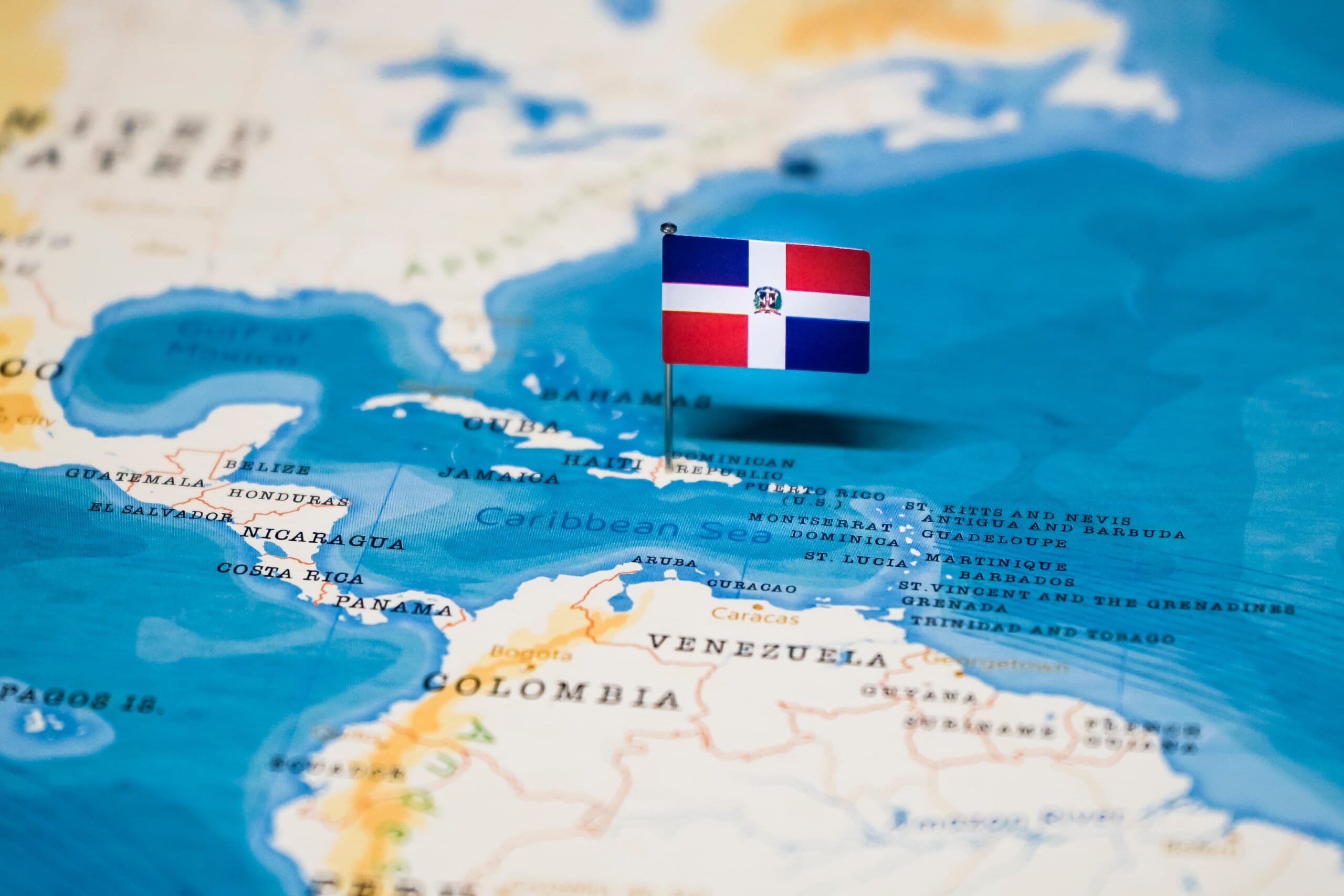
If you’re staring at a map of the Caribbean and scratching your head, don't worry. You're not alone. Figuring out what continent is Dominican Republic in can feel like a trick question, especially when the answer seems to shift depending on who you ask or what textbook you’re reading.
Most of us think of the Dominican Republic as this tropical getaway—Punta Cana, white sand, and endless merengue. But geologically and politically? It’s part of a much bigger picture.
The Straight Answer: What Continent Is Dominican Republic In?
Let’s get the "technical" answer out of the way. The Dominican Republic is located on the continent of North America. I know, it feels weird. When most people think of North America, they picture the vast landscapes of Canada, the neon lights of New York, or maybe the deserts of Mexico. They don't necessarily picture a palm-fringed island in the middle of the ocean. But geographically speaking, the Caribbean is a sub-region of the North American continent.
The country sits on the island of Hispaniola, which it shares with its neighbor, Haiti. Because the Caribbean islands are situated on the North American tectonic plate (well, mostly—it's complicated), they are grouped into North America for all official Olympic, UN, and MapQuest-style purposes.
Why People Get Confused
Honestly, the confusion makes sense. If you grew up in South America or parts of Europe, you might have been taught a "six-continent" model where "The Americas" is just one giant landmass. In that case, the Dominican Republic is just in "The Americas."
Then there’s the cultural factor. The DR is a powerhouse of Latin American culture. Because people speak Spanish and share a history with South and Central America, it’s easy to mentally "drag" the island further south than it actually is.
But look at the distance: Santo Domingo is only about 800-ish miles from Miami. It’s actually much closer to the United States than it is to, say, Brazil or Argentina.
A Breakdown of Where the DR Actually Sits
To really understand the location, you have to look at the neighborhood. The Dominican Republic is part of the Greater Antilles. This isn't just a fancy name; it refers to the larger islands in the Caribbean.
- To the West: Haiti (they share the same island).
- To the East: Puerto Rico (separated by the Mona Passage).
- To the North: The vast Atlantic Ocean.
- To the South: The Caribbean Sea.
It’s the second-largest country in the Caribbean after Cuba. It’s not just a tiny dot; it’s a massive, mountainous country with varied climates that would surprise most tourists.
Beyond Geography: Why the Location Matters
Knowing what continent is Dominican Republic in isn't just for winning pub trivia. Its location has shaped everything from its weather to its crazy-rich history.
The First "European" City
Because it was right in the middle of the sailing routes from Europe, the DR became the site of the first permanent European settlement in the Americas. Santo Domingo was founded in 1496. That means the first cathedral, the first university, and the first hospital in the "New World" were all built right here on this North American island.
The "Alps" of the Caribbean
You’d expect a Caribbean island to be flat, right? Wrong. The DR is home to Pico Duarte. This mountain stands at over 10,000 feet. It is the highest peak in the entire Caribbean. In the winter, it can actually get frosty up there. Imagine being in the "tropics" and seeing frost on the ground. That’s the geographical diversity we’re talking about.
The Low Point
On the flip side, the country also has Lake Enriquillo. This is a salt lake that sits about 140 feet below sea level. It’s the lowest point in the Caribbean. So, within one country, you have the highest highs and the lowest lows of the entire region.
Geopolitics: North American or Caribbean?
While the answer to "what continent is Dominican Republic in" is North America, the country identifies most strongly as Caribbean and Latin American.
Economically, it’s a beast. It’s one of the fastest-growing economies in the "LAC" (Latin America and Caribbean) region. It’s a major trading partner with the U.S., but it also has deep ties to Central America. In fact, it's part of CAFTA-DR, a free trade agreement that links it with the U.S. and several Central American nations.
Basically, the DR is the bridge. It’s where North American geography meets Latin American soul.
Common Misconceptions (The "No-Go" Zones of Facts)
- "It’s in South America because they speak Spanish."
Nope. Language doesn't determine continents. If it did, Australia would be in Europe. - "The Caribbean is its own continent."
I wish! It’s definitely a distinct region, but for the sake of the "Big Seven" continent list, it’s a sub-section of North America. - "It's a territory of the U.S."
People often confuse it with Puerto Rico. The Dominican Republic is a fully sovereign, independent nation. It has its own president, its own laws, and its own very proud identity.
Actionable Tips for Your Next Visit
If you're planning to visit this North American gem, don't just stay in the resort. Now that you know where it is on the map, go explore the diversity of the land.
- Check the Altitude: If you’re heading to Jarabacoa or Constanza (the "Dominican Alps"), pack a light jacket. It gets chilly!
- Fly into the Right Spot: If you want beaches, fly to Punta Cana (PUJ). If you want history and culture, fly into Santo Domingo (SDQ). They are about 2.5 hours apart.
- Learn the Lingo: Even though it's in North America, English isn't the primary language outside of tourist zones. Learning "kinda" basic Spanish phrases will go a long way.
- Respect the Sun: Being so close to the equator means the sun is brutal. Wear reef-safe sunscreen.
The Dominican Republic is a place of extremes—the highest mountains, the deepest lakes, and a history that predates almost every other city in the Western Hemisphere. It's more than just a spot on a map; it's the heart of the Americas.
Next Steps for You:
Check your passport requirements before booking. While it's in North America, most travelers still need a "Tourist Entry Fee" (usually included in your airfare now) and a valid passport to enter the country. If you're coming from the U.S. or Canada, the flights are short—usually under 4 hours from the East Coast—making it one of the easiest "international" trips you can take.