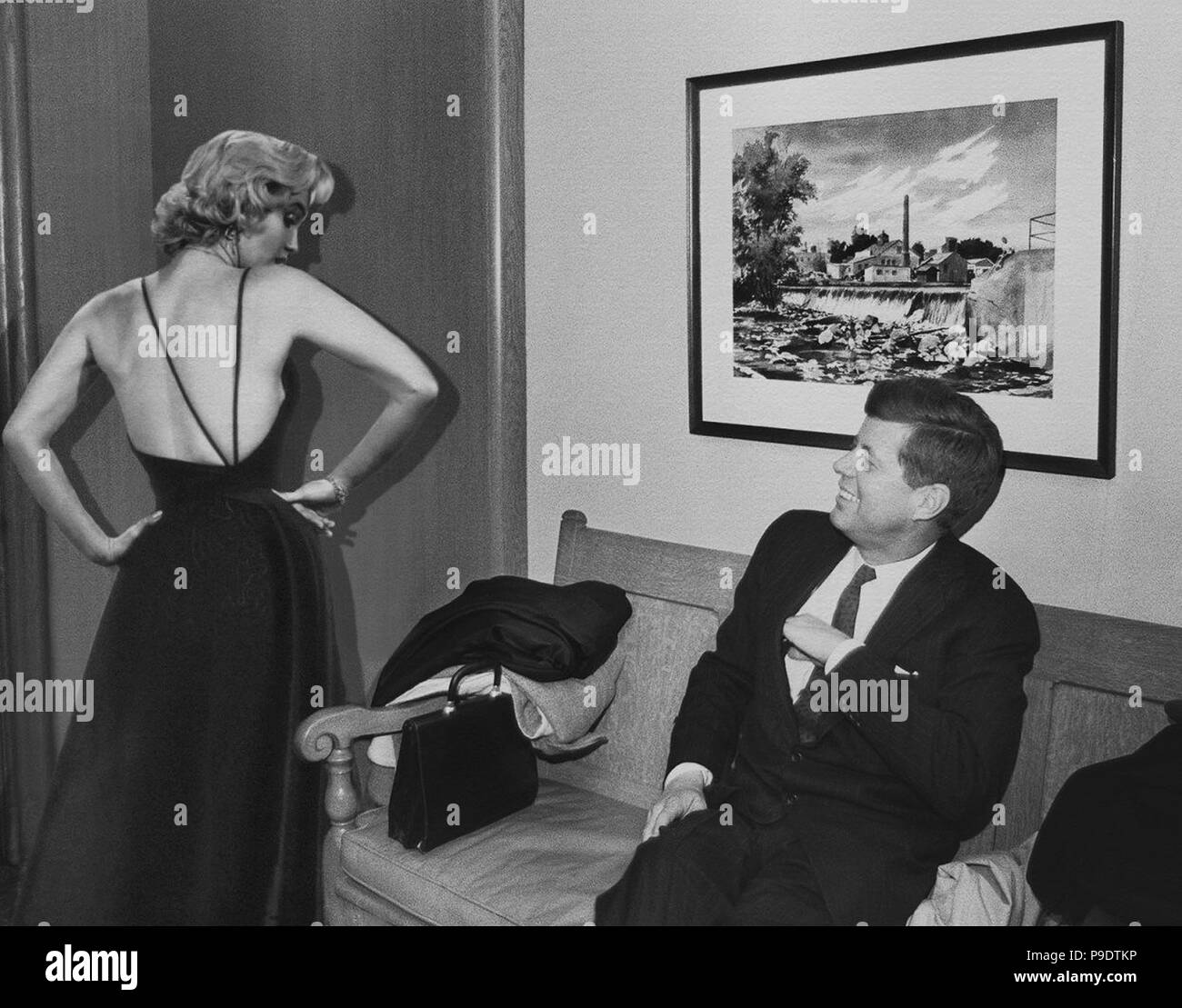
August 5, 1962. It’s a date burned into the collective memory of Hollywood. On that humid Sunday morning, the news broke that Marilyn Monroe—the world’s biggest star, the "Blonde Bombshell," the woman who seemed to have everything—was found dead in her Brentwood home. She was only 36. Since that moment, the question of what killed Marilyn Monroe has morphed from a tragic medical report into a permanent fixture of American folklore.
People want it to be a movie. They want it to be a spy thriller involving the Kennedys, the CIA, or the mob. But when you strip away the decades of tabloid gloss and the sensationalist books written by people who weren't there, the reality is much heavier. It's a story of mental health, a broken medical system, and a woman who was essentially being over-prescribed into a stupor.
The Official Verdict: Acute Barbiturate Poisoning
Let’s look at the hard data first. Dr. Thomas Noguchi, who was the Deputy Medical Examiner at the time (and later became a bit of a celebrity "Coroner to the Stars" himself), performed the autopsy. The findings were stark. He found a lethal amount of Nembutal and chloral hydrate in her system.
Specifically, her blood contained 8 mg percent of chloral hydrate and 4.5 mg percent of pentobarbital (Nembutal). That’s not just a "oops, I took an extra pill" dose. It was several times the lethal limit. This is why the official cause of death was listed as acute barbiturate poisoning resulting from a "probable suicide."
Dr. Theodore Curphey, the Los Angeles County Coroner, oversaw the psychological autopsy—a relatively new concept back then. They looked at her history of depression, her recent mood swings, and her previous overdoses. They concluded she likely took the pills herself.
Why the "Probable" Matters
The word "probable" has done a lot of heavy lifting over the last sixty years. It’s the crack in the door that conspiracy theorists have lived in for decades. If the coroner was 100% sure, why use "probable"? Honestly, back then, unless there was a note (there wasn't) or witnesses, coroners often used that qualifier for self-inflicted drug deaths.
The Kennedy Connection: Fact vs. Fever Dream
You can't talk about what killed Marilyn Monroe without mentioning Robert and John F. Kennedy. It’s basically illegal in the world of pop culture history not to. The theory goes that Marilyn was "discarded" by the brothers, threatened to go public with their secrets (or a "little red diary"), and was silenced.
Is there evidence? Sorta.
We know Marilyn had an association with the Kennedys. She sang that breathless "Happy Birthday" to JFK at Madison Square Garden. We know Bobby Kennedy was in Los Angeles that weekend. But the leap from "having an affair" to "ordered a hit by the CIA" is a massive one that has never been bridged by actual, admissible evidence. Most of the "evidence" for a Kennedy hit comes from writers like Frank Capell and later, Robert Slatzer, whose claims have been largely debunked by serious biographers like Donald Spoto.
Spoto’s 1993 biography changed the game. He argued that it wasn't a hit or a suicide, but a tragic medical accident.
The "Medication Mishap" Theory
This is the theory that feels the most "human." It’s also the one that blames the people who were supposed to be looking after her. Marilyn was seeing two different doctors: Dr. Hyman Engelberg and Dr. Ralph Greenson.
The problem? They weren't always communicating.
According to Spoto’s research, Greenson was trying to get Marilyn off her Nembutal addiction by using chloral hydrate as a sedative. On the night she died, it’s possible she was given a chloral hydrate enema (a common practice then for sedation) without the knowledge that she had already swallowed a massive amount of Nembutal. The interaction of the two drugs would have been fatal, slowing her heart and lungs until they simply stopped.
If this is true, the "suicide" verdict was a cover-up—not for a murder, but for medical malpractice. The doctors and the housekeeper, Eunice Murray, may have moved things around or delayed calling the police to get their stories straight. This explains the weirdness at the scene—the "cleaning" of the room, the changing stories about when the body was found—without needing a secret government hit squad.
The Empty Pill Bottles and the Missing Water
One of the big sticking points for the "murder" crowd is the lack of a water glass. If she swallowed 40 to 50 pills, how did she do it without water?
Actually, the room was a mess. There were pill bottles everywhere. While some early reports mentioned a lack of water, later statements from those on the scene noted a glass nearby. Plus, anyone who has dealt with severe pill addiction knows that people who take large quantities of medication often develop a grim ability to swallow them with very little fluid, or even with just saliva.
Also, Noguchi noted "refusal of the stomach to empty" in the autopsy, but he didn't find the typical yellow dye from Nembutal capsules in her stomach lining. Skeptics say this proves the drugs were injected or given via enema. Noguchi later explained in his own memoir, Coroner, that in chronic users, the stomach can absorb drugs very rapidly, or they can pass into the intestine, especially if the person has been taking them for years.
The Psychological Weight: 1962 was a Brutal Year
To understand what killed Marilyn Monroe, you have to look at her headspace in 1962. It wasn't great.
She had just been fired from Something's Got to Give.
Fox was suing her.
She was being portrayed in the press as a "difficult" aging starlet.
Her marriage to Arthur Miller was over.
She was lonely.
She spent many nights making rambling phone calls to friends. On the night of August 4th, she spoke to several people. Peter Lawford (the Kennedys' brother-in-law) said she sounded drugged and despondent. Joe DiMaggio Jr. also spoke to her; he said she sounded fine, even happy. This is the paradox of Marilyn. She could flip a switch. But deep down, the reliance on barbiturates to sleep and amphetamines to wake up had created a chemical rollercoaster that no one could survive forever.
Why We Can't Let Go
Why are we still talking about this in 2026? Because Marilyn Monroe is the ultimate Rorschach test.
- If you hate the government, she’s a victim of the state.
- If you hate Hollywood, she’s a victim of the studio system.
- If you care about mental health, she’s a victim of a time that didn't understand trauma.
The tragedy of her death is that she was finally starting to take control. She had been rehired for her movie. she was talking about future projects. She was negotiating a new deal.
Breaking Down the Myths
Let's get rid of some of the nonsense that clutters Google searches:
- The "Red Diary": There is no credible proof it ever existed. People claim it contained state secrets. It’s more likely she had a standard appointment book.
- The CIA Assassination: Documents released under the Freedom of Information Act show the CIA was watching her because of her ties to leftist figures, but there is zero evidence they killed her.
- The Murdered Housekeeper: Eunice Murray lived until 1994. She didn't "disappear." She did, however, change her story multiple times, which fueled the fire.
What You Can Actually Take Away From This
When we look at what killed Marilyn Monroe, the "how" (pills) is pretty much settled science, despite the noise. The "why" is more complex. It was a combination of childhood trauma, a lack of a support system, and a medical community that handed out high-grade barbiturates like candy.
If you’re looking for the truth, stay away from the "tell-all" books published in the 70s and 80s that rely on anonymous sources. Stick to the primary documents: the Noguchi autopsy report and the 1982 reinvestigation by the L.A. District Attorney’s office, which concluded that there was no evidence of a conspiracy to murder her.
Actionable Insights for History Buffs
If you want to dive deeper into the reality of the case without the fluff, here is how to spend your time:
- Read the Autopsy Report: It is public record. Look at the toxicology levels yourself. It paints a very different picture than the tabloids.
- Check out "Marilyn Monroe: The Biography" by Donald Spoto: He was the first researcher to actually look at her financial records and call logs rather than relying on hearsay.
- Watch the 1982 Grand Jury transcripts: The L.A. County District Attorney did a massive review of the case. They interviewed everyone still alive. Their conclusion? No murder.
- Understand 1960s Pharmacology: Research what Nembutal does to the body. It’s a respiratory depressant. When you understand the drug, the "mysterious" death looks a lot more like a standard, tragic overdose.
Marilyn Monroe wasn't a pawn in a global game of chess. She was a human being struggling with a very real illness in an era that didn't have the tools to save her. Identifying the cocktail of drugs in her system is easy; identifying the moment the world failed her is the harder task.
Next Steps for Research
To see the official findings for yourself, you can access the digitised files of the 1982 Los Angeles District Attorney Investigation into the death of Marilyn Monroe. These documents provide the most thorough debunking of the various conspiracy theories by examining the original witness statements against the physical evidence found at 12305 Fifth Helena Drive. This remains the definitive legal word on the case.