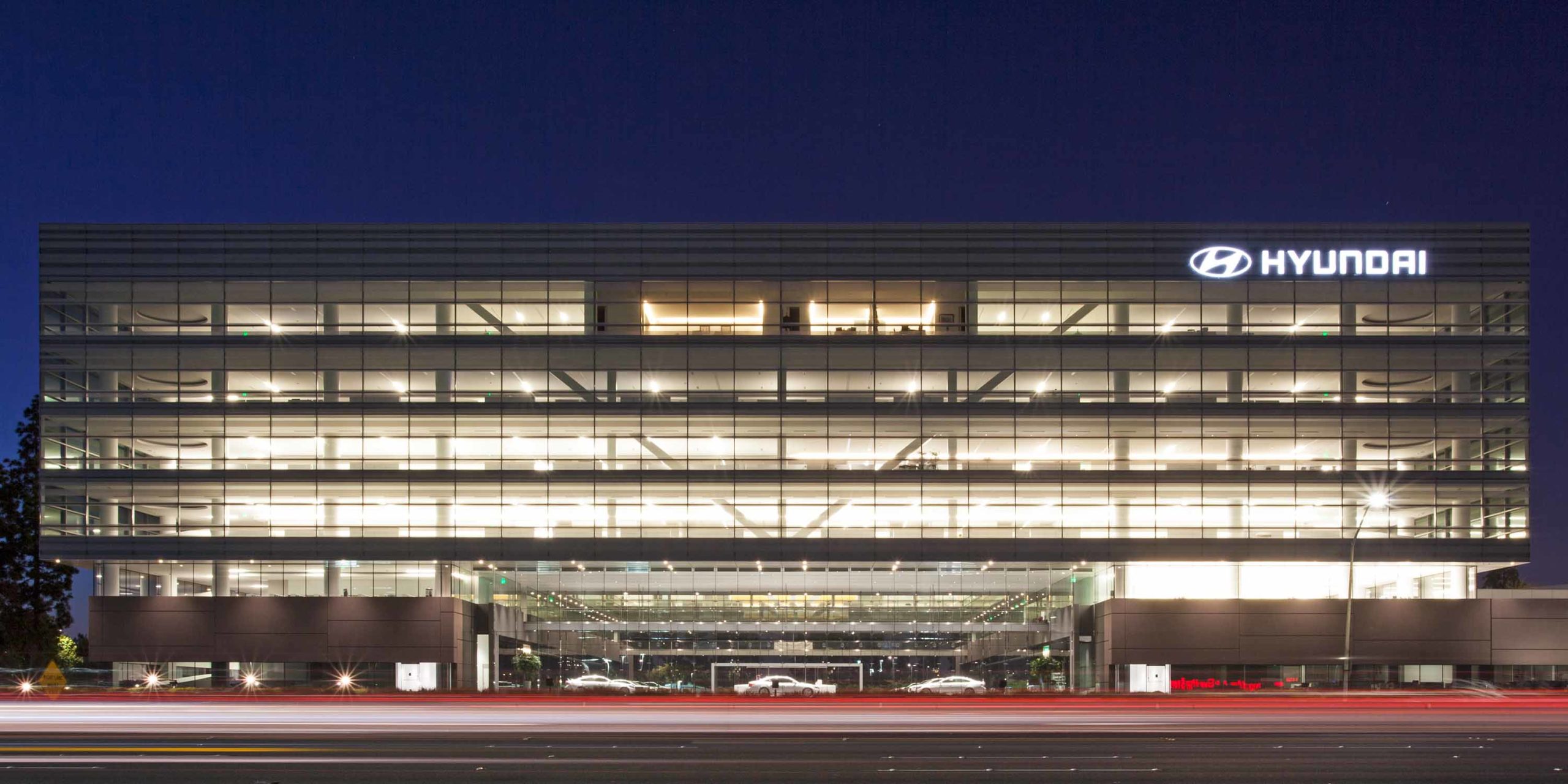
If you’ve spent any time looking at the massive industrial projects popping up across the United States lately—especially in the Sun Belt—you’ve probably seen the name. Maybe on a roadside sign near a massive construction site in Georgia or Alabama. Hyundai Eng America Inc (often referred to in industry circles as Hyundai Engineering America) isn’t just some small subsidiary or a niche contractor. It’s actually the heavy-hitting engine behind the scenes of the "Electric Vehicle Revolution" we keep hearing about.
It’s easy to get confused. Hyundai is a behemoth. Most people think of the cars in their driveway, the Elantras or the Palisades. But Hyundai Eng America Inc is part of the Hyundai Engineering Co., Ltd. (HEC) family, which is a totally different beast from the consumer automotive arm. They don't sell you cars; they build the massive, high-tech cathedrals where those cars—and their batteries—are born.
The Reality of Hyundai Eng America Inc in the U.S. Market
Honestly, the scale is hard to wrap your head around unless you see it from a drone's eye view. We are talking about billions of dollars in "brick and mortar" investment. While many people assume these massive factories just "appear," Hyundai Eng America Inc is the entity responsible for the literal nuts and bolts. They handle the engineering, the procurement, and the construction (EPC).
Take the Metaplant in Bryan County, Georgia. This is a project that basically redefined the local economy overnight. We’re talking about a $7.6 billion investment. Hyundai Eng America Inc has been a central player in ensuring that these facilities aren't just shells, but sophisticated, automated environments capable of pumping out hundreds of thousands of EVs every year.
They aren't just limited to Georgia. Their footprint spans across Texas, Alabama, and beyond. It’s a specialized type of construction. You can't just hire a standard commercial builder to create a cleanroom for battery production or a high-speed robotics assembly line. It requires a specific Korean-born engineering philosophy mixed with American labor and regulatory standards. That's the tightrope this company walks.
Why They Aren't Just Another Construction Firm
Most construction companies are "generalists." Hyundai Eng America Inc is a specialist in industrial plant engineering. There is a huge difference between building an office tower and building a facility that uses volatile chemicals for battery cells or high-pressure stamping presses.
They focus on what the industry calls "turnkey" solutions.
Basically, they take a patch of dirt and turn it into a functioning heart of industry.
It’s worth noting that their work often goes unnoticed because it’s "B2B"—business to business. You won't see their commercials during the Super Bowl. But if you look at the supply chain for companies like Hyundai Motor Group or LG Energy Solution, you’ll find HEC’s fingerprints everywhere. They are the ones solving the logistical nightmares of getting massive equipment from overseas ports to rural American jobsites.
The Cultural and Economic Bridge
There’s a lot of talk about "onshoring" in 2026. Everyone wants manufacturing back in the States. But there’s a massive talent gap. How do you build these things fast enough to compete with global markets?
This is where Hyundai Eng America Inc gets interesting. They act as a bridge. They bring the technical blueprints and the "speed-to-market" culture from South Korea, which is legendary for its efficiency. Then, they have to navigate US labor laws, environmental EPA regulations, and local zoning. It’s not always easy. In fact, it's incredibly stressful. I’ve seen reports of the sheer pressure these project managers are under to meet deadlines that seem impossible.
The economic impact is staggering.
We aren't just talking about the temporary construction jobs.
We're talking about the permanent infrastructure that allows a town to exist for the next fifty years.
Common Misconceptions About the Company
People often think they only work for Hyundai. That’s a mistake. While a huge portion of their portfolio is internal to the Hyundai Motor Group, they are a competitive engineering firm in their own right. They bid on projects. They compete with other giants like Bechtel or Fluor.
Another misconception is that they are just an "office" in California or Atlanta. In reality, Hyundai Eng America Inc is a boots-on-the-ground operation. They have teams living in hotels in rural America for months at a time, managing thousands of subcontractors. It’s a gritty, high-stakes environment.
The Technical Edge: What They Actually Do
Let’s get nerdy for a second. The engineering side of Hyundai Eng America Inc involves complex HVAC systems for moisture-controlled "dry rooms" essential for battery manufacturing. If the humidity in a battery plant spikes even a little bit, you can ruin millions of dollars of product.
They also deal with:
- Modular Construction: Building pieces of a factory elsewhere and "Lego-ing" them together on-site to save time.
- Sustainable Power: Integrating solar and renewable feeds directly into the plant's grid.
- Smart Factory Tech: Setting up the sensors and IoT (Internet of Things) backbones that allow the machines to "talk" to each other.
It’s complex stuff. And they have to do it while keeping workers safe. The safety standards in these mega-projects are usually much stricter than your average home-building site. One major accident can shut down a multi-billion dollar project for weeks, and when you’re dealing with the timelines they are, that’s simply not an option.
Why This Matters for the Future of Energy
If we are serious about moving away from internal combustion engines, we need more companies like Hyundai Eng America Inc. We need the people who know how to build the "machine that builds the machine."
Right now, the US is in a race. We are racing against China and Europe to secure the battery supply chain. Companies like this are the front line. Every time they finish a project ahead of schedule, the cost of an EV potentially drops a few dollars. It’s a direct link.
What to Watch Out For
Watch the expansion in the "Battery Belt." As the US government continues to offer incentives through the Inflation Reduction Act (IRA), Hyundai Eng America Inc is likely to expand into even more diverse sectors. We might see them moving more heavily into hydrogen refueling infrastructure or even modular nuclear reactors (SMRs), which their parent company in Korea is already heavily invested in.
They are also navigating the complexities of the US labor market. Finding enough skilled welders, electricians, and pipefitters is a constant headache. You’ll likely see them investing more in local community colleges and vocational training to build their own pipeline of workers. It’s a smart move—basically a necessity at this point.
Practical Steps for Business Partners and Job Seekers
If you’re looking to work with or for Hyundai Eng America Inc, you need to understand their pace. It’s fast. It’s "Pali-Pali" (the Korean phrase for "hurry, hurry").
For Vendors and Subcontractors:
Don't just show up with a generic pitch. They value precision. If you are a local contractor in Georgia or Alabama, make sure your safety ratings (EMR) are spotless. They won't even look at you if your safety record is spotty. Also, be prepared for rigorous documentation. Everything is tracked.
For Job Seekers:
They aren't just looking for engineers. They need procurement specialists, bilingual project coordinators, and logistics experts. If you can speak both Korean and English and understand American building codes, you are basically a unicorn to them. You can write your own paycheck.
For Investors and Analysts:
Keep an eye on their project completion rates. Their ability to deliver the Georgia Metaplant on time is a huge signal to the market about the viability of the Hyundai Motor Group's entire EV strategy. If the factory isn't built, the cars can't be sold. It's the ultimate bottleneck.
The reality is that Hyundai Eng America Inc is a quiet giant. They don't seek the limelight, but without them, the transition to a new energy economy in the US would be significantly slower. They are the ones doing the heavy lifting—literally—to make sure the future of transportation actually has a place to be built.
Actionable Insights for Navigating the Industrial Sector:
- Audit your supply chain: If you are in the automotive or energy sector, identify if your infrastructure is being built by firms with international EPC experience like HEC.
- Safety First: If you're a contractor, invest in ISO certifications now. Large entities like Hyundai Eng America Inc prioritize compliance over the lowest bid.
- Monitor Policy: Stay updated on IRA (Inflation Reduction Act) tweaks in 2026. These dictate where companies like HEC will break ground next.
- Local Engagement: For community leaders, focus on "Ready-to-Work" programs. Providing a skilled labor force is the best way to attract a project managed by a firm of this caliber.
- Tech Integration: Expect "Digital Twin" technology to become standard. If you can't provide digital, 3D-modeled progress reports, you'll likely be left behind in the bidding process.