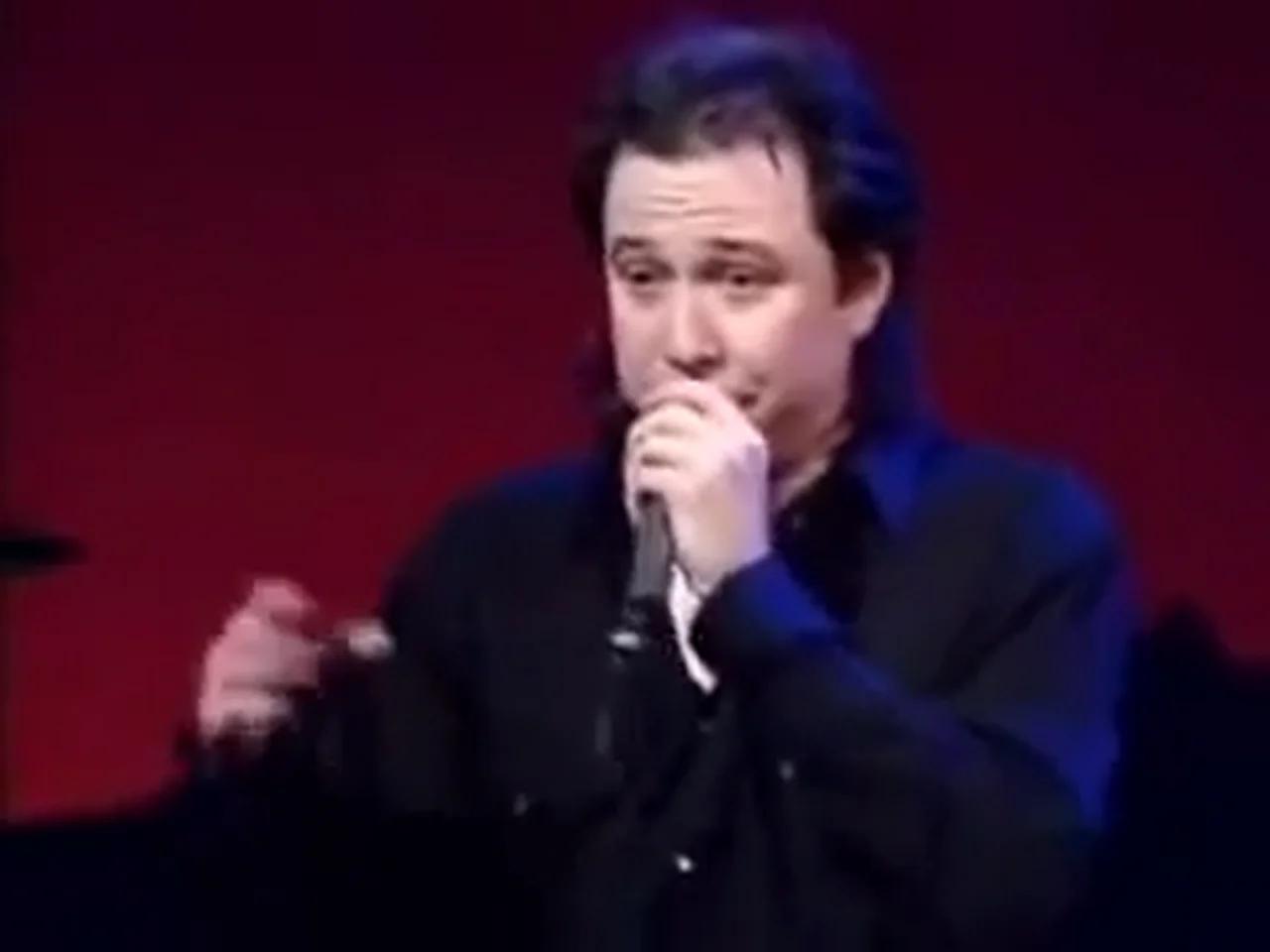
Honestly, it’s still hard to wrap your head around the fact that Bill Hicks was only 32 when he died. Most people at 32 are just figuring out how to not ruin their credit scores, but Hicks had already established himself as a "dark poet" and a comedic prophet.
By the time pancreatic cancer took him on February 26, 1994, he had become something much larger than a guy telling jokes in smokey clubs. He was a force. But the way he went out—and the secrets he kept in those final months—is a story that often gets buried under the weight of his legendary status.
The Secret Diagnosis on June 16, 1993
Everything changed on a Wednesday in mid-June. Hicks sat in a doctor's office and received a death sentence. The diagnosis was pancreatic cancer that had already spread to his liver.
Most people would have canceled their tour, crawled into bed, and rightfully felt sorry for themselves. Bill didn't.
He decided to keep it a total secret. Only his family and a tiny circle of friends, like his producer Kevin Booth, knew the truth. To the rest of the world, he was just the same abrasive, chain-smoking, genius-level cynic they’d always known.
Imagine that for a second.
You're going on stage every night, yelling at audiences about the "war on drugs" and the hypocrisy of the elite, all while you’re privately undergoing weekly chemotherapy. He’d sit there for two hours with an IV drip in his left hand, using the right hand to keep writing his book, New Happiness. Then he’d go do two sets.
No side effects. No complaints. Just a "bolt of lightning," as Booth described him.
The Letterman Incident: A Final Insult
While Bill was literally fighting for his life, he suffered one of the biggest professional blows of his career. In October 1993, he filmed his 12th appearance on Late Show with David Letterman.
He killed. The set was classic Hicks—sharp, provocative, and brilliant.
But when the show aired, Bill wasn't on it. The producers had scrubbed his entire routine from the broadcast. They claimed it was too controversial, particularly a bit about pro-lifers.
The irony is almost too much to bear. Here was a man who knew he was dying, trying to deliver his "truth" to a national audience, and he was silenced by a network executive. It took 16 years for Letterman to finally air the segment and apologize to Bill’s mother, Mary. By then, Bill had been gone for over a decade.
The Last Stand at Caroline’s
The end came faster than anyone wanted. On January 6, 1994, Bill performed what would be his final show at Caroline's in New York.
He was weak. Really weak.
He spent a lot of the set leaning on a stool, his voice sounding thin and hoarse. He even joked to the crowd that this might be his last show ever. The audience laughed, thinking it was just another part of the "dark" Hicks persona.
They had no idea he was being literal.
Shortly after that, he moved back to his parents' house in Little Rock, Arkansas. He spent his final weeks reading The Lord of the Rings and making phone calls to say goodbye. On February 14—Valentine’s Day—he stopped speaking entirely.
Twelve days later, he was gone.
Why Comedian Bill Hicks Death Still Matters in 2026
People still talk about Hicks like he’s alive because his material hasn't aged a day. If anything, it’s gotten more relevant. He wasn't just "anti-establishment" for the sake of being edgy; he was a disappointed optimist.
He really believed we could be better.
The "Just a Ride" Philosophy
If you want to understand why Bill Hicks still matters, you have to look at his final philosophy. He didn't leave behind a manifesto of hate. He left a message of love vs. fear.
"The world is like a ride in an amusement park, and when you choose to go on it you think it's real... It's just a ride. And we can change it any time we want. It's only a choice. No effort, no work, no job, no savings of money. Just a simple choice, right now, between fear and love."
That's the legacy. Not the smoking, not the yelling, but the idea that we’re all one and we’re choosing to be miserable.
Practical Steps to Explore the Hicks Legacy
If you’re just discovering Bill now, or if you want to dive deeper into what he was actually about, here is how you do it:
- Watch 'American: The Bill Hicks Story': This isn't your standard talking-head documentary. It uses a unique animation style with real photos and is arguably the most intimate look at his life.
- Listen to 'Rant in E-Minor': This album was released after he died. It's raw, it's angry, and it's Bill at his most unfiltered.
- Read 'Love All the People': This is a collection of his letters, lyrics, and routines. It shows the evolution of his thought process from a kid in Texas to a global icon.
- Ignore the Myths: You’ll see weird conspiracy theories online about him "faking" his death or being a secret government agent. Honestly? They’re nonsense. The reality—a young man working until his body literally gave out—is much more powerful than any internet rumor.
Bill Hicks didn't want to be a martyr. He just wanted people to think for themselves. He left "in love, in laughter, and in truth," and 30-plus years later, that truth is still ringing pretty loud.