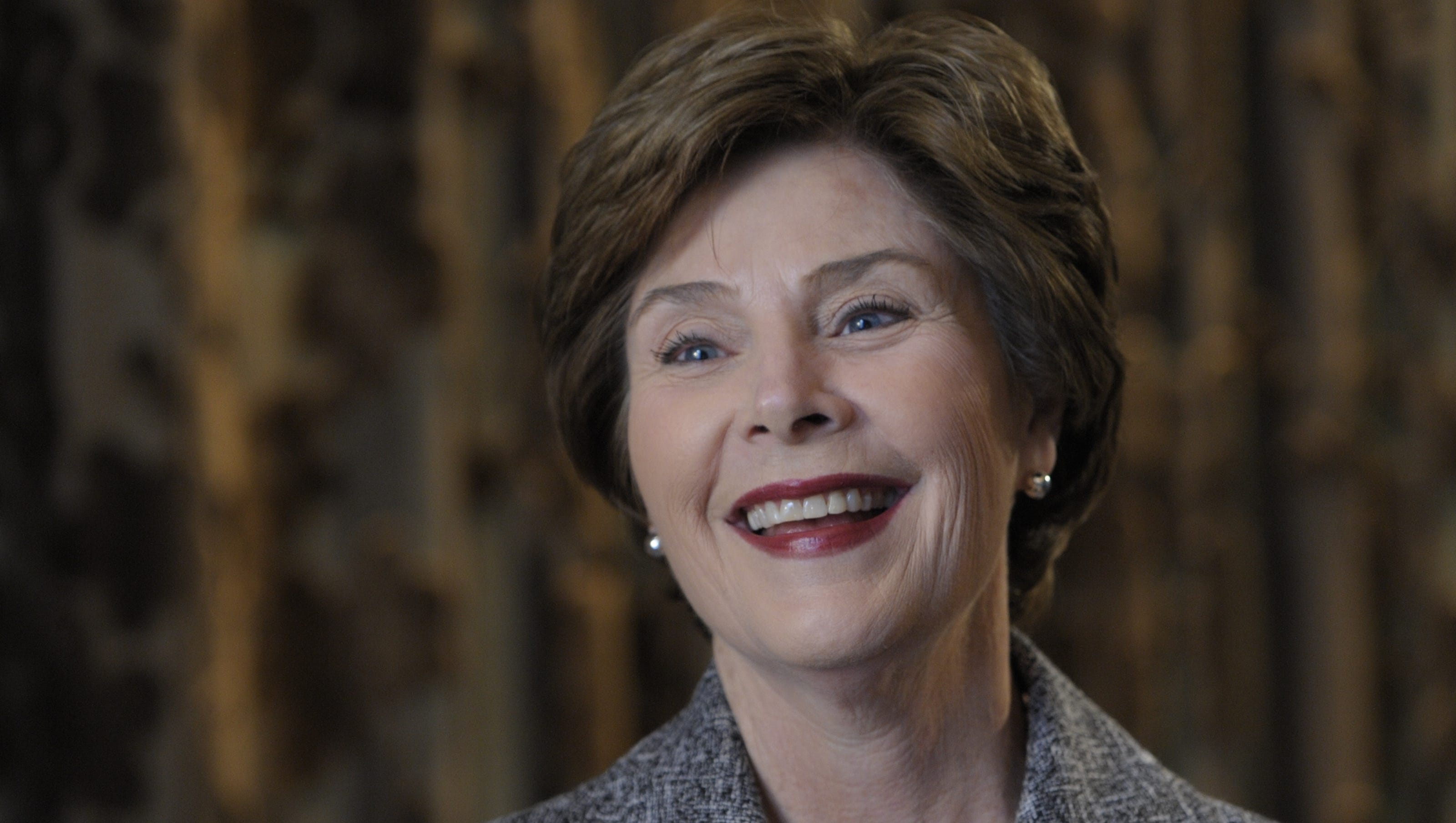
In the early 1960s, Midland, Texas, was exactly what you’d imagine: a dusty, oil-rich town where high school football was king and everyone knew everyone. It was the kind of place where a tragedy doesn’t just happen—it settles into the soil. For decades, a specific story stayed buried in that West Texas dirt, whispered about in local circles but scrubbed from the national consciousness until a presidential campaign brought it screaming back into the light.
The story is simple, though the weight of it is anything but.
On a dark November night in 1963, a 17-year-old girl named Laura Welch—the girl who would eventually become First Lady Laura Bush—ran a stop sign. She slammed her family’s heavy Chevrolet Impala into a smaller car, a Corvair. The impact was violent. The driver of that other car was Michael Dutton Douglas. He was a popular athlete, a classmate, and, by some accounts, a close friend.
He didn't survive.
The Night of November 6, 1963
It was a Wednesday. Laura and her friend Judy Dykes were heading out to the Fiesta Drive-In. They were seventeen. If you’ve ever been seventeen, you know the vibe—windows down, radio probably humming, lost in a conversation about boys or senior year or whatever felt like the center of the universe at 8:00 p.m. in 1963.
According to the police report, which wouldn't see the light of day for nearly 40 years, Laura was driving about 50 miles per hour. That was actually under the limit, but she was distracted. She missed the stop sign at the intersection of Farm Road 868 and State Highway 349.
The crash was catastrophic.
Michael Douglas was thrown from his car. He died almost instantly from a broken neck. Laura and Judy were also ejected from their vehicle, but they walked away with relatively minor injuries. The scene at the hospital was something out of a southern gothic novel. Laura lay on one side of a thin emergency room curtain, nursing her bruises, while on the other side, she could hear Michael’s mother, Mrs. Douglas, sobbing as doctors told her that her son was gone.
The Long Silence
What’s wild is how the town reacted. Or rather, how it didn’t.
In a modern world of 24-hour news cycles and social media pile-ons, it’s hard to wrap your head around the "conspiracy of silence" that followed. There were no charges filed. The police ruled it an accident caused by "driver inattention." Back then, in a town like Midland, if you were from a "good family," the community tended to protect you.
The Welches and the Douglases were both well-known. Instead of a trial or a public reckoning, the town just… stopped talking about it.
Laura didn’t go to the funeral. Her parents thought it would be too hard on everyone, so they kept her away. Imagine that for a second. You’re seventeen, you’ve just caused the death of a friend, and you’re told the best thing to do is stay in your room and never mention it again. Honestly, it sounds like a recipe for a lifetime of trauma.
She became the "quiet one." The popular girl who loved to dance suddenly pivoted. She became a librarian. She sought out the quiet of book stacks and hushed rooms. For 37 years, the general public had no idea this had happened.
The Story Breaks
Fast forward to the year 2000. George W. Bush is running for President. In the heat of a high-stakes campaign, researchers and journalists started digging into the couple’s past in Midland. They found the police report.
When the news broke that Laura Bush killed a guy in high school, it felt like a bombshell, but the reaction was surprisingly muted. Maybe it was because it happened so long ago. Maybe it was because she had spent decades projecting an image of the "perfect" librarian and wife.
It wasn't until her 2010 memoir, Spoken from the Heart, that she finally put her own words to the event. She admitted she was negligent. She admitted she was chatting and simply didn't see the sign. She also talked about how she lost her faith that night. She had prayed for a miracle behind that hospital curtain, and the only answer she got was the sound of a grieving mother.
Myths vs. Reality
Because this stayed a secret for so long, some weird rumors started floating around. You might have heard some of them:
- Was she drunk? The police report didn't mention alcohol. In 1963, DUI tests weren't standard unless someone was visibly stumbling, but there’s no evidence or witness account suggesting booze was involved.
- Was it a "hit job"? This is the stuff of internet fringe theories and dark comedies (there was even a play called Laura Bush Killed a Guy that toyed with this). Factual records show it was a standard, tragic intersection collision.
- The Corvair Factor: Laura later mentioned that the car Michael was driving, the Chevrolet Corvair, was notoriously unsafe—the subject of Ralph Nader’s Unsafe at Any Speed. While true, it doesn't change the fact that she ran the sign.
Moving Forward From Trauma
It’s easy to look at a public figure and see a caricature. But the reality of the 1963 accident is a story about a mistake that lasted five seconds and a shadow that lasted sixty years.
If you are looking for the "actionable" takeaway here, it’s probably a lesson in the complexity of grief and the danger of silence. If you or someone you know is dealing with the aftermath of a traumatic accident:
- Acknowledge the Guilt: Laura Bush wrote that the guilt never really goes away; you just learn to carry it. Trying to bury it usually just makes it heavier.
- Seek Direct Closure: One of Laura's biggest regrets was not facing Michael's parents immediately. If you're in a situation where amends are possible, even decades later, they are usually worth making.
- Check Your Blind Spots: Literally. Most fatal accidents aren't caused by "villains," but by ordinary people who are distracted for one single moment. Put the phone down. Focus on the road.
The intersection in Midland is still there. The stop sign is much bigger now. But the story remains a stark reminder that one Wednesday night can change the trajectory of multiple lives forever.