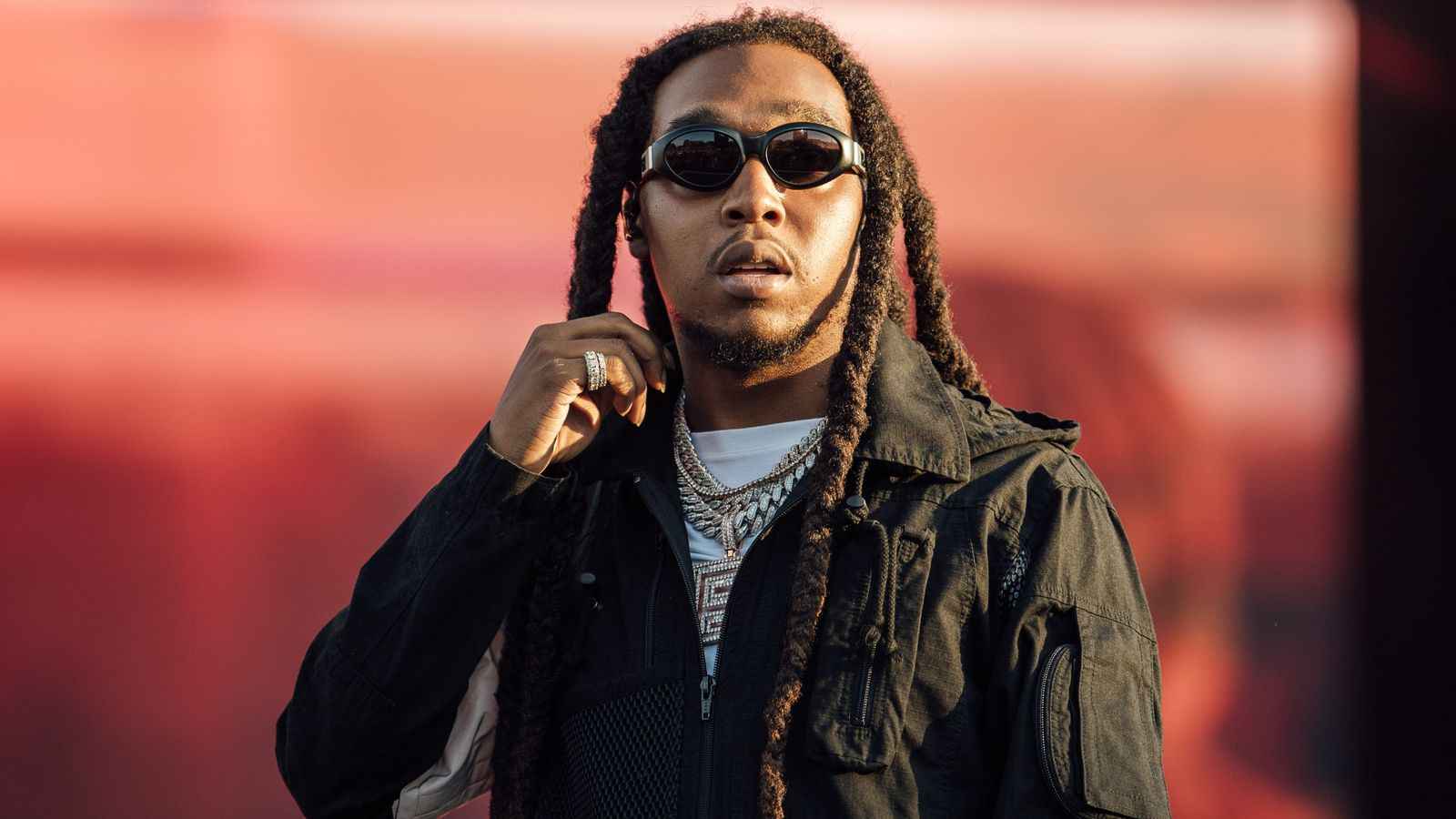
The hip-hop world stopped spinning for a second on November 1, 2022. It was one of those "where were you" moments that nobody actually wanted to have. Kirsnick Khari Ball, the man the world knew as Takeoff, was gone. People are still scouring the internet asking why did Takeoff die, searching for some logic in a situation that remains, quite frankly, senseless. He was only 28. He was the "quiet one" of Migos, the glue that held the group’s staccato rhythm together, and by all accounts, he wasn't even the one the argument was about.
It happened in Houston. 810 Billiards & Bowling.
A private party.
Most people think of celebrity deaths as these grand, cinematic tragedies, but this was just a messy, heat-of-the-moment disaster over a dice game. It’s haunting because of how avoidable it was. Takeoff wasn't a "trouble" guy. He didn't have a reputation for starting beef. He was just there. And then, in a flash of gunfire, he wasn't.
The Houston Incident and the Night of November 1st
The timeline of that night feels like a blur of cell phone footage and chaotic social media leaks. Quavo and Takeoff were in Houston for a private event. They were playing dice. Now, dice games in the rap world aren't just "games"—they often involve staggering amounts of cash and even higher levels of pride.
Reports from the Houston Police Department and various witnesses confirm that an argument broke out. It wasn't Takeoff's argument. He was standing nearby, basically a bystander to a verbal altercation involving Quavo and others. Tempers flared. Words were exchanged that shouldn't have been. Then, the sound every crowd fears: gunshots.
Multiple people fired weapons. In the crossfire, Takeoff was struck in the head and torso. The autopsy report from the Harris County Medical Examiner’s Office later confirmed that these wounds were the direct cause of death. It was instant. The video circulating shortly after—showing Quavo hunched over his nephew, screaming for help—is something most fans wish they could unsee. It captured the raw, ugly reality of how quickly a night of celebration can turn into a crime scene.
Who Was Involved and the Legal Fallout
For a while, the "who" was a massive question mark. The internet, as it always does, started pointing fingers at everyone in the blurry footage. However, the legal system eventually caught up.
Patrick Xavier Clark was arrested and charged with murder in connection to the shooting. Investigators used a combination of ballistics, cell phone video, and even wine bottles left at the scene (to get fingerprints) to build their case. There was also another man, Cameron Joshua, who was charged with felony possession of a weapon, though not directly with the shooting itself.
It’s important to understand the nuance here. When people ask why did Takeoff die, the legal answer is "homicide by firearm," but the cultural answer is much more complex. It's about the proximity of violence to success. Clark was eventually released on a $1 million bond pending trial, a move that sparked significant outrage among fans who felt the justice system was moving too slowly for someone of Takeoff's stature.
The case isn't just a folder in a filing cabinet; it's a living reminder of a night where nobody won. The investigation highlighted just how many guns were present at what was supposed to be a high-end, private gathering.
The "Quiet Genius" of the Migos
Takeoff was always the understated powerhouse. While Offset had the high-profile marriage and Quavo had the leading-man charisma, Takeoff had the bars. He was the one who pioneered that "Migos Flow"—the triplets that literally changed the DNA of trap music in the 2010s.
If you go back and listen to Culture or even their early mixtapes like Y.R.N., Takeoff’s verses were often the most complex. He didn't need the spotlight; he just needed a mic. This makes the question of why did Takeoff die even more bitter for the fans. He was the least likely person to be involved in a violent escalation. He lived for the music, for his family, and seemingly for his own peace.
His solo album, The Last Rocket, showed he could hold his own without his kin. But he preferred the unit. The tragedy happened just as he and Quavo were finding their footing as a duo, "Unc & Phew," following the public tension and rumored split with Offset. They had just released Only Built for Infinity Links. They were supposed to be starting a new chapter. Instead, that chapter ended on a cold floor in Houston.
Misconceptions and Internet Rumors
When a high-profile person dies, the vacuum of information gets filled with garbage. You've probably seen the conspiracies. People claiming it was a "sacrifice" or some orchestrated hit.
Let's be real.
The evidence points to a much more mundane and tragic reality: a bunch of people with guns and bruised egos in a small space. There was no grand conspiracy. There was no "hit." It was a "wrong place, wrong time" scenario fueled by the presence of firearms in a high-stakes environment.
Another misconception is that Takeoff was "active" in the streets. While the Migos rapped about that life, those who knew Takeoff personally—like Quality Control Music’s Pierre "P" Thomas—always described him as chilled out, observant, and non-confrontational. He wasn't the aggressor. He was the casualty.
The Impact on Hip-Hop Culture
The ripple effect of Takeoff’s death changed how a lot of rappers handle security. You started seeing more conversations about "staying out of the way" and the dangers of gambling in certain environments.
The grief felt by the community was massive. Drake, who toured with the Migos, gave a moving speech at the memorial service held at the State Farm Arena in Atlanta. Thousands of people showed up. It wasn't just a funeral; it was a state event for Atlanta.
But beyond the ceremonies, it forced a hard look at the "stop the violence" narrative that seems to be shouted every time a rapper falls, yet never seems to stick. From Nipsey Hussle to PnB Rock to Takeoff, the list of talent lost to gun violence is getting exhausting. It makes you wonder if the industry can ever truly protect its own when the culture of "keeping it real" often puts stars in proximity to the very dangers they worked so hard to escape.
Analyzing the Technicalities: The Investigation
The Houston Police Department didn't have an easy job. If you’ve ever seen the footage from that night, it’s a mess of shadows and screaming.
- They had to reconstruct the scene using digital forensics.
- They relied on "silent" witnesses—the people who were there but were too scared to talk initially.
- Ballistics played a huge role in determining which shots came from where.
The lead investigator, Sgt. Michael Burrow, noted that the shooting was a result of a disagreement that had nothing to do with Takeoff. This is the factual anchor of the entire tragedy. It’s the "why" that hurts the most because it was so secondary to his existence.
What We Can Learn From This
Honestly, looking back at why did Takeoff die, it serves as a grim masterclass in conflict de-escalation—or the lack thereof. When you have high-net-worth individuals in environments where security is lax or where "pride" is the primary currency, the risk is astronomical.
If you’re a fan, the move is to keep the music alive. Don't just focus on the grainy 810 Billiards footage. Listen to "Casper" or his verse on "T-Shirt." That’s where he actually lived.
For the industry, the actionable insight is about the logistics of safety. Since his passing, many artists have moved toward more rigorous, professional security details and private venues that don't allow "hangers-on" to bring weapons. It's a "better late than never" situation, but it doesn't bring back the guy who was arguably the most talented lyricist in his group.
The trial of Patrick Clark remains a focal point for those seeking "justice," but for the family—especially his mother, his brother, and his bandmates—justice is a hollow concept when there's a permanent seat empty at the table.
Moving Forward After the Loss
The best way to honor a legacy is to understand the reality of it. Takeoff didn't die for a cause. He didn't die in a blaze of glory. He died because of a stupid argument he didn't even start.
To prevent this from being your favorite artist’s story, the focus has to shift toward:
- Supporting organizations that work on community violence intervention (like Atlanta’s various youth programs).
- Demanding better security protocols at celebrity events.
- Piling pressure on the legal system to ensure that these cases don't just "go away" because the victim was a rapper.
Takeoff was a son, a brother, and a legend in the making. His death wasn't just a headline; it was a structural failure of safety and a tragic reminder that life is incredibly fragile, even when you're at the top of the world. Keep his verses on repeat, and let the facts of his passing remind everyone that no amount of money or fame makes anyone bulletproof. It’s a hard lesson, but it’s the only one we’ve got left.