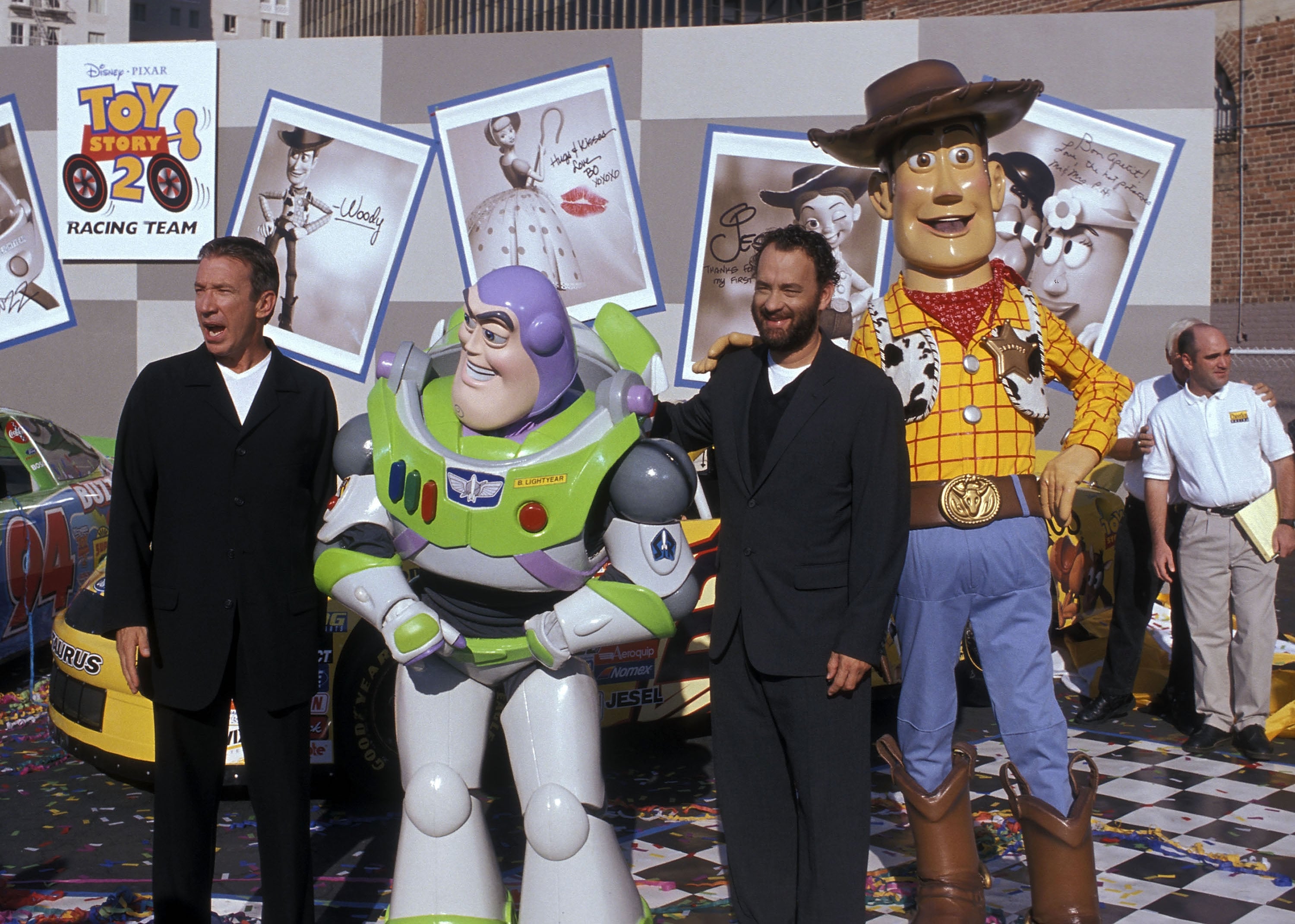
It feels like Woody and Buzz have been around forever. Honestly, if you grew up in the nineties, you probably remember the exact smell of the popcorn in the theater when you first saw that desk lamp hop across the screen. But if you’re trying to settle a bet or just satisfy a sudden itch of nostalgia, let’s get the date out of the way immediately. What year did the movie Toy Story come out? It was 1995. Specifically, it hit theaters in the United States on November 22, 1995, just in time to ruin every parent's bank account for the holiday season.
It wasn't just a movie. It was a complete pivot point for history.
Before 1995, "animation" meant hand-drawn cels. It meant Disney's Renaissance period with The Lion King and Aladdin. Then Pixar—a struggling hardware company that Steve Jobs bought on a whim—decided to try making a full-length feature using nothing but computers. People thought they were crazy. Critics wondered if audiences could even sit through 80 minutes of plastic-looking characters without getting a headache. They were wrong.
The 1995 Shift: More Than Just a Date
So, 1995. That’s the year. But to understand why that year matters, you have to look at what else was happening. The top song was "Gangsta's Paradise." People were using Netscape Navigator to browse a very clunky internet. In the middle of all this, Pixar dropped a film that looked like nothing else on the planet.
John Lasseter, the director, had this vision of bringing "inanimate" objects to life because, frankly, computers back then were really good at rendering hard surfaces like plastic and metal. They weren't great at hair or water yet. That’s why a story about toys was the perfect Trojan horse for the technology.
If you look closely at the original 1995 release, you’ll notice some things. The humans? They look a little creepy. Little Sid and Andy have that weird, shiny "uncanny valley" skin. But the toys? They were perfect. The scuffs on Buzz Lightyear's helmet and the wood grain on Woody’s holster felt more real than anything we'd seen in Beauty and the Beast.
Why the Release Date Almost Never Happened
It’s easy to forget how close Toy Story came to being cancelled. In 1993, there was a day now known in Pixar lore as "Black Friday." They showed an early cut to Disney executives, and it was a total disaster. Woody was a jerk. He was mean, cynical, and basically unwatchable. Disney told them to shut it down.
Pixar begged for two weeks to rewrite the script. They spent those fourteen days working around the clock to turn Woody into the flawed but lovable leader we know today. If they hadn't nailed that rewrite, 1995 would have just been the year of Pocahontas, and Pixar might have gone bankrupt. Instead, they delivered a masterpiece that earned $373 million worldwide.
Behind the Scenes of the 1995 Production
The tech specs for 1995 are hilarious by today's standards. To render the film, Pixar used a "RenderFarm" consisting of 117 Sun Microsystems computers. These machines ran 24 hours a day. Each individual frame—and remember, there are 24 frames per second—took anywhere from 45 minutes to 30 hours to complete.
- Total frames in the movie: 114,240.
- Total animation hours: 800,000.
- The math? If you tried to render Toy Story on one single computer from 1995, it would have taken 92 years to finish.
Think about that for a second. While you were listening to TLC’s "Waterfalls" on the radio, a room full of buzzing servers was sweating through the math of how light reflects off a piggy bank named Hamm.
The Cultural Impact of 1995
When we ask what year did the movie Toy Story come out, we’re usually asking because we want to pinpoint when the "Pixar Style" began. That 1995 release didn't just kill 2D animation (though it certainly pushed it into the background for a few decades); it changed how movies were written.
Pixar didn't make "kids' movies." They made movies for people that kids also happened to like. The "buddy comedy" dynamic between Tom Hanks and Tim Allen was sophisticated. It dealt with obsolescence, the fear of being replaced, and existential dread. Buzz Lightyear literally has a nervous breakdown when he realizes he’s a toy and not a space ranger. That’s heavy stuff for a "cartoon."
The Voices That Made the Year
Tom Hanks was already a massive star in 1995. He had just won back-to-back Oscars for Philadelphia and Forrest Gump. Taking a "voice role" back then was actually considered a bit of a step down for an A-list actor. Pixar changed that perception, too. Now, every big-budget animated film is packed with celebrity voices, but it started with the chemistry between Hanks and Allen.
Interestingly, Billy Crystal was originally offered the role of Buzz Lightyear. He turned it down—a move he later called the biggest mistake of his career. He eventually joined the Pixar family as Mike Wazowski in Monsters, Inc., but the 1995 version of Buzz belongs entirely to Tim Allen’s boisterous, delusional charm.
Beyond 1995: The Legacy
Since that fateful November day in 1995, the franchise has expanded into a multi-billion dollar empire. We got Toy Story 2 in 1999, Toy Story 3 in 2010 (the one that made every grown adult cry in the theater), and Toy Story 4 in 2019.
Each film pushed the technology further. In the first movie, they avoided rain because it was too hard to animate. By the fourth movie, they were showing individual fibers on a plush toy and realistic puddles that looked indistinguishable from high-def photography. But the heart? That stayed exactly where it was in 1995.
Surprising Facts About the 1995 Release
- The Title Wasn't Always Toy Story. Early on, they considered titles like "You Are A Toy." Glad they skipped that one. It sounds a bit aggressive.
- Pizza Planet's Debut. The iconic yellow truck made its first appearance in 1995. It has appeared in almost every Pixar movie since as an "Easter Egg."
- Barbie was missing. Mattel originally refused to let Pixar use Barbie. They didn't think the movie would be a hit and didn't want Barbie to have a set personality. After the 1995 success, they couldn't wait to get her into the sequel.
- The Oscar. John Lasseter won a Special Achievement Academy Award for the film. It was the first time a computer-animated film was recognized like that.
Why We Still Care About 1995
Nostalgia is a hell of a drug. But Toy Story holds up because it isn't reliant on 1995 pop culture references. It’s a story about friendship and growing up. Whether you saw it on a VHS tape in 1996 or are streaming it in 4K today, the emotional beats land the same way.
If you’re looking to revisit the magic, here is how you can actually engage with the history of the film:
- Watch the "Black Friday" reel. You can find snippets of the original, "mean" Woody on YouTube or in the bonus features of the Blu-ray. It’s a fascinating look at how close the movie came to failing.
- Check out the "Tin Toy" short. This was the 1988 short film that served as the proof-of-concept for Toy Story. It’s a bit creepy, but you can see the DNA of the 1995 film right there.
- Look for the 1995 Easter Eggs. In the original movie, look at the books on the shelf behind Woody during the staff meeting. The titles are actually the names of Pixar's early short films, like Luxo Jr. and Red's Dream.
The year 1995 gave us a lot of things, but in the world of cinema, it really only gave us one thing that changed the rules forever. It gave us a cowboy and a space ranger who taught us that even when life changes—even when the "new toy" comes home—friendship is what keeps us from falling with style.
To truly appreciate the 1995 release, watch the original movie side-by-side with Toy Story 4. The jump in technology is staggering, but notice how the character of Woody remains consistent. The animators in 1995 didn't have the tools they have now, but they had the soul of the story figured out from day one. That’s why we’re still talking about it thirty years later.
If you want to dive deeper into the technical side, read The Pixar Touch by David A. Price. It covers the messy, brilliant history of how that 1995 release almost broke the company and eventually made them the kings of Hollywood. You can also explore the archives on the official Disney+ "Pixar in Real Life" series to see how the legacy of the 1995 characters continues to influence theme parks and modern media today.