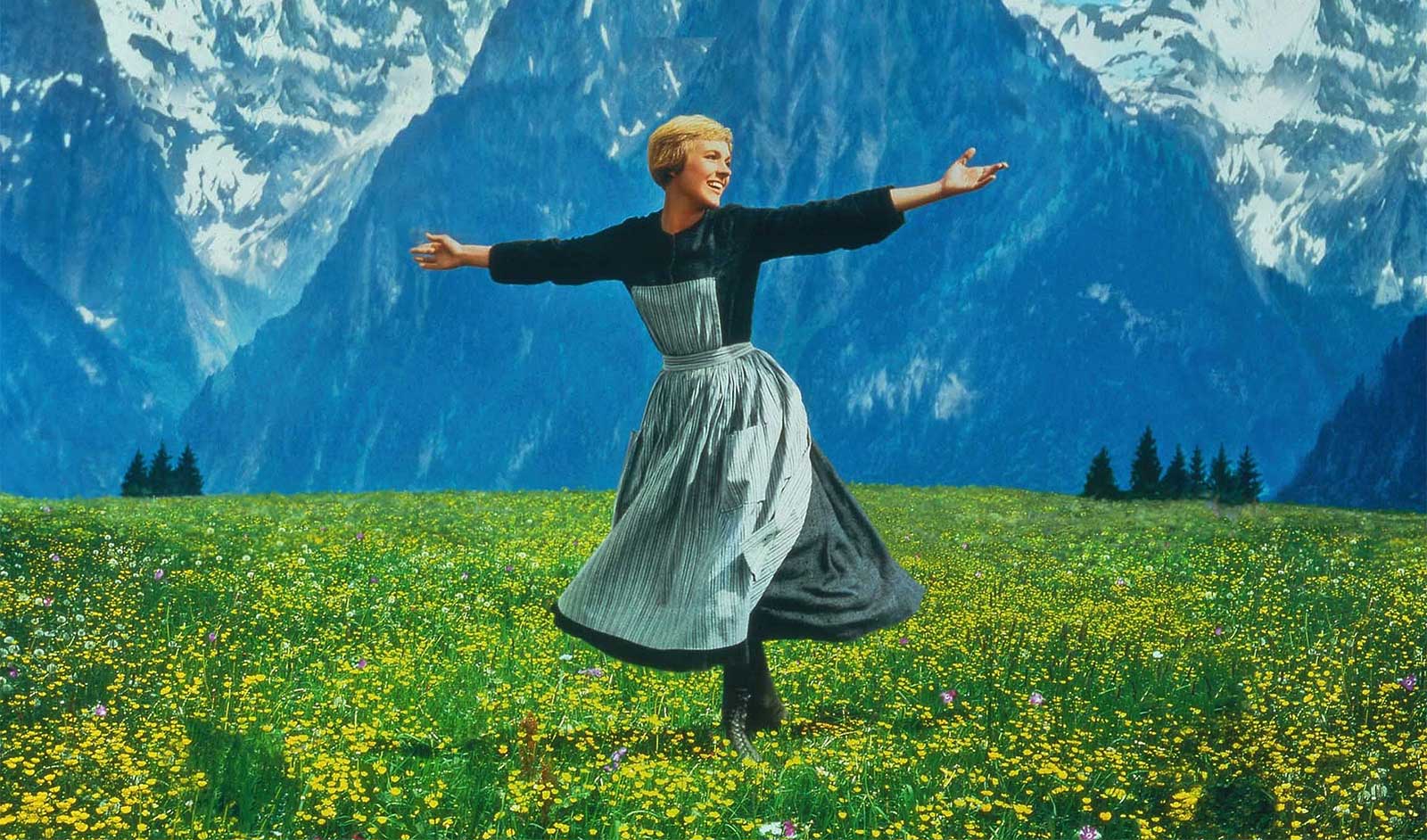
You’ve probably got that "Do-Re-Mi" tune stuck in your head just thinking about it. Honestly, it’s one of those movies that feels like it has always existed, like part of the cultural furniture. But if you're asking when did The Sound of Music come out, the answer isn't just a single date on a calendar. It depends on whether you mean the night Julie Andrews first twirled on a mountain or when the real Maria von Trapp decided to tell her story.
The big one—the movie everyone knows—hit theaters in 1965. Specifically, it had a massive, glittering premiere at the Rivoli Theatre in New York City on March 2, 1965.
It’s weird to think about now, but critics actually kind of hated it at first. Pauline Kael, a famous critic for McCall's, famously called it a "sugar-coated lie." She even got fired over her scathing review because the public loved the movie so much. People didn't care about the "sugar." They wanted the music. They wanted the Alps. They wanted to see a nun fail at being a nun.
The 1965 Cinematic Explosion
When the film finally went into general release across the United States on March 10, 1965, it didn't just "do well." It became a literal phenomenon.
Think about the context of the mid-sixties. The world was messy. The Vietnam War was escalating. The Beatles were changing everything. Then, along comes this three-hour epic about a family escaping Nazis by walking over a mountain in heavy drapery. It shouldn't have worked, but it did. By 1966, it had surpassed Gone with the Wind as the highest-grossing film of all time. It held that title for five years until The Godfather came along.
The rollout was slow. Back then, big movies did "roadshow" releases. You couldn't just stream it or find it at every local multiplex. You had to go to a specific theater, often with reserved seating and a printed program. It felt like an event. Because of this, many people in different parts of the world didn't actually see it until late 1965 or even 1966. In the UK, it premiered at the Dominion Theatre in London on March 29, 1965.
Before the Movie: The Broadway Years
If we’re being technical about when did The Sound of Music come out, we have to talk about Broadway. Before Julie Andrews was Maria, Mary Martin was Maria.
The stage musical, written by the legendary duo Richard Rodgers and Oscar Hammerstein II, opened at the Lunt-Fontanne Theatre on November 16, 1959. This was Hammerstein’s final show; he died of cancer only nine months after the premiere. If you listen to the original Broadway cast recording, it sounds totally different. It’s a bit more theatrical, a bit less "sweeping cinematic landscape."
The Broadway show was a massive hit long before Hollywood touched it. It ran for 1,443 performances. It tied with Fiorello! for the Tony Award for Best Musical. So, by the time the movie was even a thought, the songs were already staples in American living rooms.
The Real History vs. The Script
The movie didn't just spring out of nowhere. It’s based on the 1949 memoir The Story of the Trapp Family Singers by Maria von Trapp.
If you want to get really pedantic—and sometimes that’s the fun part—the "story" came out in 1949. But Maria's book was actually preceded by a West German film called Die Trapp-Familie in 1956. Hollywood basically bought the rights to a remake of a German movie that was based on a Broadway play that was based on a book.
History is messy.
In reality, the timeline was much longer. The von Trapps didn't actually hike over the Alps to Switzerland. If they had, they would have walked straight into Germany. They basically took a train to Italy, then went to London, and eventually hopped a ship to New York. Not quite as dramatic as Julie Andrews silhouetted against a peak, but definitely easier on the feet.
Why 1965 Changed Everything for Fox
20th Century Fox was in deep trouble before 1965. They had just spent an absolute fortune on Cleopatra (1963), which nearly bankrupted the studio. They needed a win. They needed a miracle.
Robert Wise, the director, had just finished West Side Story. He wasn't even sure he wanted to do another musical. He actually turned it down at first. Can you imagine? Someone else directing The Sound of Music? It feels wrong.
When the movie finally debuted, it didn't just save the studio; it defined an era of filmmaking that was about to disappear. Within a few years, the "New Hollywood" of the 70s would take over with gritty, dark films like Easy Rider. The Sound of Music was the last great gasp of the classic Hollywood mega-musical.
The Global Release Dates
It's fascinating to see how the world caught up with the Von Trapps.
- USA: March 2, 1965 (New York Premiere)
- UK: March 29, 1965
- Argentina: August 19, 1965
- Australia: April 15, 1965
- Japan: June 19, 1965
- Sweden: December 9, 1965
The film was a massive hit everywhere except, ironically, in Austria and Germany. In Salzburg, where it was filmed, locals were kind of annoyed by the historical inaccuracies. They didn't really get the hype. For them, it was just a story about their backyard that Hollywood got "sorta" right but mostly wrong.
The Legacy of the Sound
So, the movie came out in 1965. The play in 1959. The book in 1949.
But it "comes out" again every year. For decades, it was a Thanksgiving or Christmas tradition on network television. ABC bought the rights to air it in 1976 for the then-unheard-of price of $15 million. It was a massive ratings draw for over twenty years.
Then came the "Sing-A-Long" phenomenon. In the late 90s, London’s Prince Charles Cinema started showing the movie with subtitles so people could belt out the lyrics. It turned a movie-watching experience into a giant, costumed party. People show up dressed as goats, or nuns, or even "tea with jam and bread."
Was there a sequel?
Sorta. There was a 1958 sequel to the German film called The Trapp Family in America. But as far as the Julie Andrews version goes? No. Hollywood has mostly left it alone, which is probably for the best. Some things are lightning in a bottle. You can't recreate that 1965 magic.
What to Do Now if You’re a Fan
If you've just realized it’s been too long since you've seen the film, or you're curious about the actual history, there are a few things you should actually do to get the full picture.
- Watch the 40th Anniversary Documentaries: Most streaming versions or Blu-rays include "The Real Maria von Trapp" features. The real Maria was actually a lot "tougher" than the movie version. She was a force of nature.
- Listen to the Broadway Cast Recording: Compare Mary Martin’s "My Favorite Things" to Julie Andrews’. It’s a completely different vibe. On stage, the song is sung by Mother Abbess and Maria during a thunderstorm, not just by Maria to the kids.
- Read Maria's 1949 Book: It’s actually a great read. It covers their life in America, which the movie completely skips. They ended up in Stowe, Vermont, where they opened the Trapp Family Lodge. You can still stay there today. It’s run by the descendants of the family.
- Check out the 2013 Live Version: If you want to see a different take, Carrie Underwood starred in a live television production. It’s a bit divisive among purists, but it shows how the 1959 stage script differs from the 1965 movie script.
Understanding when did The Sound of Music come out is really about understanding a transition in history. It arrived right at the moment when the world was losing its innocence, offering a final, beautiful look at a world of hills, harmony, and heroics.
Whether you first saw it in a theater in 1965 or on a tablet yesterday, the impact stays the same. The hills are still alive, and honestly, they probably always will be.