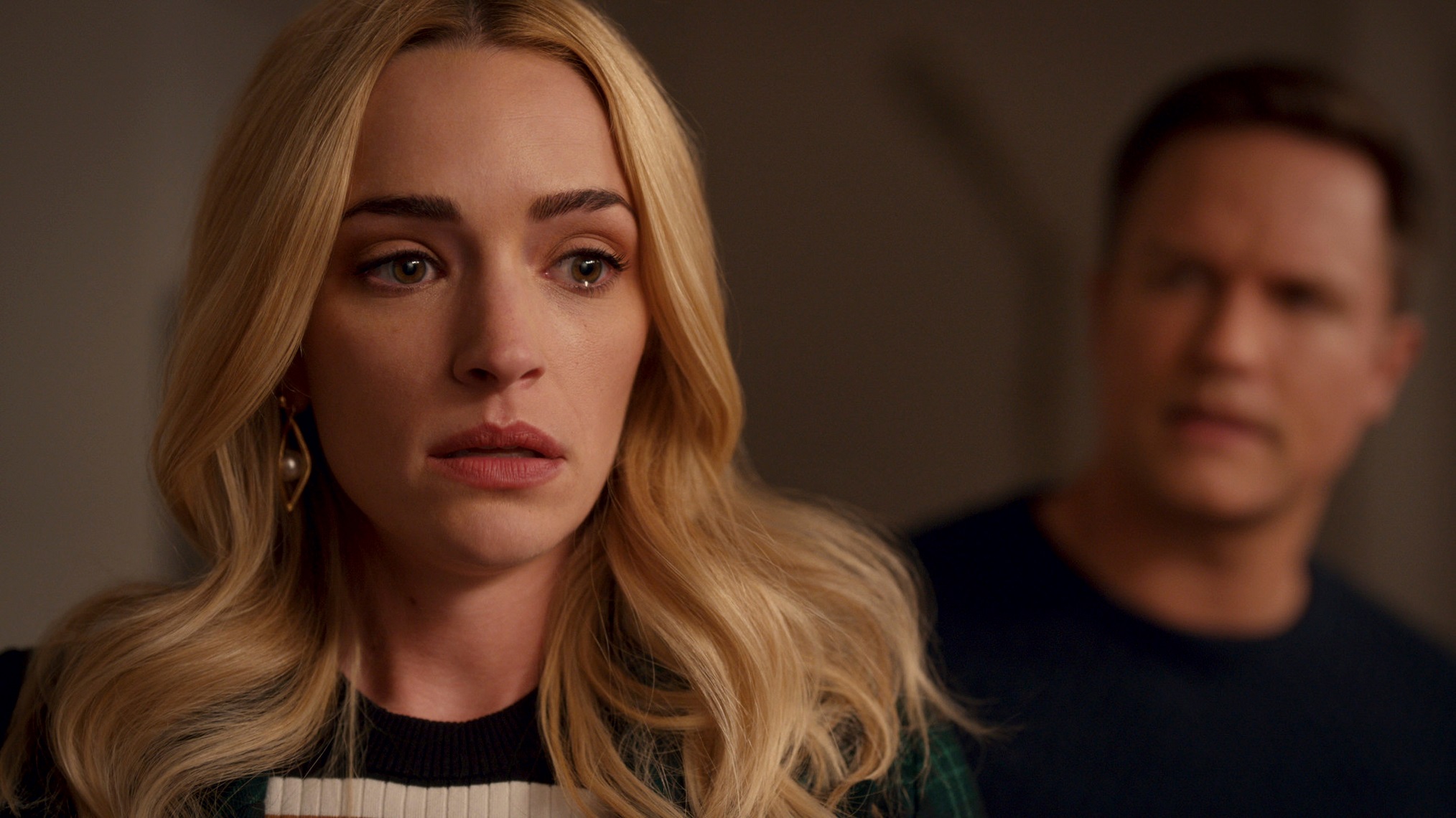
If you’ve been binge-watching Ginny & Georgia on Netflix, you know it isn't just your typical "cool mom" dramedy. It’s heavy. One of the most gut-wrenching storylines involves Ginny’s struggle with self-harm—specifically, the way she uses a lighter to burn herself when the world feels like too much. For over a season, this was Ginny’s darkest secret, hidden from her mother’s prying, protective, and often terrifyingly observant eyes.
So, when does the dam finally break? When does Georgia find out about Ginny burning herself?
The moment happens in Season 2, Episode 6, titled "A Very Merry Ginny & Georgia Christmas." It isn't a Hallmark moment. It’s a messy, loud, and deeply uncomfortable confrontation that changes their relationship forever.
The moment the secret comes out
For a long time, Georgia prided herself on knowing everything. She’s the ultimate protector, the woman who poisons smoothies and frames exes to keep her kids safe. But she completely missed what was happening under her own roof.
In Episode 6, Georgia is already on edge. The return of Gil (Austin’s dad and Georgia’s abusive ex) has her spiraling. She’s looking for something to control, and as usual, she starts digging where she shouldn't. Georgia ends up finding Ginny's therapy journal. Honestly, it’s a classic Georgia move—violating privacy under the guise of "protection."
She reads the entries. She sees the words. The realization hits her like a freight train.
But she doesn't just sit with that information. She storms into Ginny’s room, frantic and hysterical. She doesn't ask gently. She demands to see. She literally tells Ginny to "show me." It’s a raw, physical scene where Georgia forces the issue, and Ginny, cornered and exhausted from the weight of the secret, finally gives in.
Why it took so long
You might wonder how a mother as hyper-vigilant as Georgia missed this for so long.
Ginny was a pro at hiding it. She burned herself in places that stayed covered—her thighs, mostly. In Season 1, Marcus was actually the first one to find out because he happened to climb through her window at the exact wrong (or right) time. He saw the lighter. He saw the marks.
Zion, Ginny’s dad, found out earlier in Season 2. Ginny actually confessed to him during their time in Boston. Unlike Georgia, Zion reacted with a focused, calm kind of concern. He got her into therapy immediately and kept the secret from Georgia because Ginny begged him to. He knew that if Georgia found out, she’d make it about her—and he wasn't wrong.
The fallout of the discovery
When Georgia finds out about Ginny burning herself, her reaction is a mix of pure heartbreak and typical Georgia-style intensity. She screams. She cries. She asks, "Why would you do that to yourself?" which is the one question people struggling with self-harm usually hate hearing.
But then, the show does something surprisingly beautiful.
Once the initial shock wears off, Georgia shifts. She doesn't just stay in that place of judgment or panic. There’s a scene later where she sits on the floor with Ginny, and they actually talk. Georgia realizes that Ginny isn't doing this to be "dramatic" or to hurt her. She’s doing it because she’s carrying the weight of Georgia’s own secrets.
Key takeaways from the confrontation:
- The Journal Trigger: Georgia only found out because she invaded Ginny's privacy by reading her therapy journal.
- The Physical Reality: Ginny finally shows Georgia the burns on her thighs, making the "invisible" pain impossible to ignore.
- The Shift in Parenting: This discovery is a turning point. Georgia starts to realize that she can’t just "fix" everything with a smile or a scheme; some things require professional help and real vulnerability.
The role of therapy
Season 2 spends a lot of time on Ginny’s sessions with Dr. Lily. It’s one of the most realistic portrayals of therapy for teens on TV right now. When Georgia finally knows the truth, she actually ends up sitting in on a session.
It’s awkward. Georgia hates it. She thinks the therapist is judging her (which, to be fair, she probably is). But it’s the first time Georgia has to face the fact that her "warrior" lifestyle has left deep scars on her daughter.
Understanding the "Why"
If you're watching this and trying to make sense of Ginny's actions, the show explains it as a "release valve." For Ginny, the burning is a way to turn emotional noise into physical pain that she can control.
When Georgia finds out, she has to learn that her daughter isn't "broken"—she's coping. It’s a heavy lesson for a mother who spent her whole life trying to make sure her kids never felt a single bit of the pain she went through.
Moving forward after the reveal
After the big reveal in Episode 6, the tension between them doesn't just vanish. It morphs. Georgia becomes over-protective in a different way, and Ginny has to navigate the guilt of "upsetting" her mom while trying to actually get better.
The show handles this with a lot of nuance. It doesn't treat the discovery as a "fix." It treats it as the start of a very long, very difficult conversation about mental health, generational trauma, and what it actually means to keep a family safe.
If you’re looking to watch or re-watch these specific moments, keep your eyes on the mid-point of Season 2. The emotional payoff of Georgia finally knowing the truth is one of the most powerful arcs in the entire series.
Actionable steps for fans and viewers
If you or someone you know is struggling with similar issues as Ginny, watching these scenes can be triggering. It's important to move forward with a plan for your own well-being:
- Prioritize your mental health: If the show feels too heavy, it’s okay to take a break or skip the more intense episodes.
- Seek professional support: Just like Zion helped Ginny find Dr. Lily, reaching out to a therapist or a counselor is a vital step for anyone dealing with self-harm.
- Use available resources: Organizations like the Crisis Text Line (text HOME to 741741) or the National Suicide Prevention Lifeline (988) provide immediate, confidential support.
The story of Ginny and Georgia isn't just about secrets and murders; it's about the messy reality of trying to heal when you've been raised in survival mode.