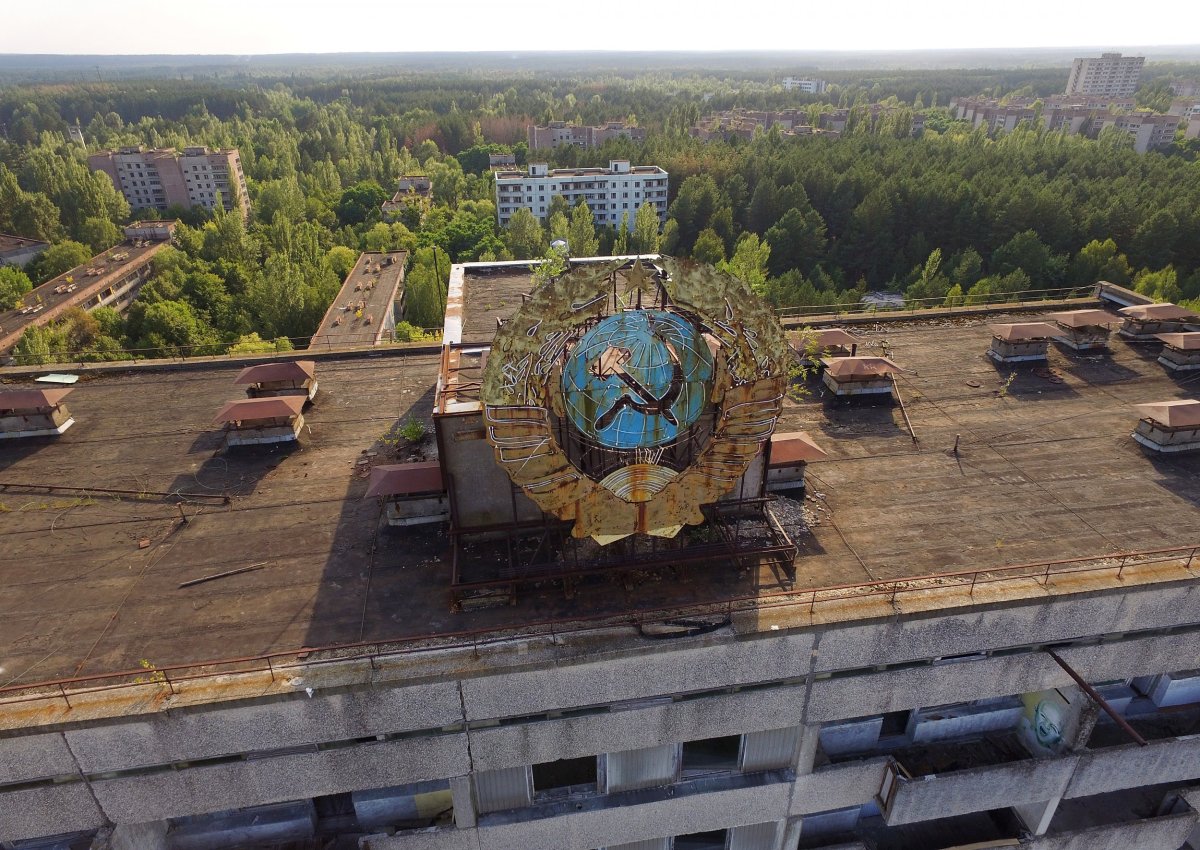
People have this image of Chernobyl as a frozen-in-time wasteland where the clocks stopped in 1986 and everything glows in the dark. It’s spooky. It’s dramatic. It’s also mostly wrong. If you’re asking when will Chernobyl be livable, the answer is actually "it depends on who you ask and which block of dirt you’re standing on." Some people never even left.
The Samosely—the "self-settlers"—have been living inside the Exclusion Zone for decades. They’re elderly, they grow their own potatoes, and they drink the water. To them, the question is irrelevant. But for the rest of us, for the families who want to build a house or the developers looking at land, the timeline stretches from "maybe next week" to "the year 22,000."
Radiation isn't a blanket. It's a patchwork quilt.
The Physics of Staying Away
The 1986 disaster at Reactor 4 spewed a cocktail of isotopes. Some were short-lived, like Iodine-131, which has a half-life of eight days. That’s long gone. The real troublemakers today are Cesium-137 and Strontium-90. They have half-lives of about 30 years.
We’ve already passed one half-life cycle. This means the radioactivity from those specific elements is roughly half of what it was when the USSR collapsed. Sounds good, right? Well, half of "lethal" is still "very dangerous."
Radioecology is messy. Scientists like Sergey Zibtsev have pointed out that wildfires in the zone can loft that settled radiation back into the air. When the trees burn, the smoke carries the isotopes. So, even if the ground feels "safe," the air might not be during a dry summer. It's these variables that make the Ukrainian government extremely hesitant to change the legal status of the zone.
The 20,000-Year Problem
Then there's the big one: Plutonium-239. This stuff is the reason you see those terrifying headlines about the zone being uninhabitable for 20,000 years. Plutonium is heavy. It doesn't move much. It sits in the soil near the reactor complex itself.
If you want to live right next to the New Safe Confinement (the giant silver arch covering the ruins), you're going to be waiting a while. Basically forever in human terms. The decay chain of Plutonium is so long that civilization as we know it might be over before that specific patch of dirt is "clean."
But the Exclusion Zone is huge. It’s about 1,000 square miles. That’s roughly the size of Rhode Island. Treating the entire area like it's equally toxic is a mistake.
Why Some Parts are Already "Livable"
Honestly, parts of the outer 30km zone are arguably safer than the air in some highly polluted industrial cities. Tourism has exploded here over the last decade. Before the 2022 invasion of Ukraine by Russia, thousands of people walked through Pripyat every month. They didn't grow extra limbs.
Radiation levels in the streets of Chernobyl town—where workers stay on shifts—are often lower than the background radiation in high-altitude cities like Denver. You’re getting more "rads" flying on a plane from New York to London than you are standing in the center of Chernobyl town for an hour.
The issue isn't just "being there." It’s "living there."
Living implies ingestion. It means eating the mushrooms that soak up Cesium like sponges. It means your kids playing in the dirt where hot particles might be buried. It’s the cumulative dose over 50 years that scares the health experts.
The Post-War Complication
We have to talk about the elephant in the room. The 2022 Russian occupation of the Chernobyl site changed the map. Russian troops dug trenches in the Red Forest—the most radioactive part of the zone. They kicked up dust that had been settled for 30 years.
Sensors at the time showed spikes in gamma radiation. Not because of a new leak, but because the "crust" of the earth was broken. This set back the "livability" clock in those specific areas. Any progress made in stabilizing the soil was literally shoveled away.
The Economic Argument for Moving Back
Some officials in Ukraine have floated the idea of shrinking the zone. Why? Because the land is valuable. Not for farming, maybe, but for energy.
Chernobyl is already becoming a solar hub. The infrastructure for power lines is already there—it’s a legacy of the old plant. Massive solar farms are being installed. If you can work there, you can technically "live" there in a limited capacity.
We’re likely to see a "rolling opening" over the next century:
- The Outer Zone (30km): Likely to be officially opened for industrial use and limited habitation within 30 to 60 years.
- The Inner Zone (10km): Will remain a restricted industrial park for radioactive waste management for at least several hundred years.
- Pripyat and the Reactor: A permanent museum and graveyard. Never for living.
Nature Doesn't Care About Roentgens
If you ask the wolves, Chernobyl is already livable. It's thriving.
The European brown bears are back. The Przewalski’s horses are running wild. Without humans around to hunt them or pave over their homes, the animals have decided the radiation is a fair trade-off. Biologist Jim Smith has argued that the presence of humans is actually more damaging to wildlife than the radiation levels currently found in the zone.
It’s a strange irony. The site of a nuclear nightmare has become Europe’s largest unintended nature reserve.
Actionable Realities of the Zone
If you are genuinely looking at the timeline of when humans can move back, you have to look at the legal and infrastructure hurdles, not just the Geiger counter.
- Infrastructure Decay: Even if the radiation disappeared tomorrow, Pripyat is a death trap. The buildings are collapsing. The plumbing is gone. The cost of making the zone "livable" in terms of modern housing is billions of dollars.
- Legal Restrictions: Ukraine’s laws regarding the Exclusion Zone are strict. It remains a "zone of unconditional mandatory resettlement." Changing this requires a massive legislative shift that isn't a priority during the current conflict.
- Health Monitoring: Anyone living near the zone needs regular thyroid checks and whole-body radiation counts. It's not a "set it and forget it" lifestyle.
What Happens Next?
The timeline for when will Chernobyl be livable is a sliding scale. For industrial solar workers, it's now. For the elderly Samosely, it's always been. For a young family wanting to raise children, it’s likely a century away for the outer rim and "never" for the core.
If you’re following this topic, watch the reports from the State Agency of Ukraine on Exclusion Zone Management (SAUEZM). They are the ones who actually run the soil tests. Also, keep an eye on the International Atomic Energy Agency (IAEA) reports regarding the stability of the New Safe Confinement.
The zone isn't a dead place. It’s a recovering one. But recovery, in nuclear terms, happens at the speed of an atom—which is to say, very, very slowly.
Next Steps for Information:
- Check the IAEA's latest safety updates on the Chernobyl Power Plant to see current radiation trends.
- Look into the Chornobyl Radiation and Ecological Biosphere Reserve for data on how the ecosystem is handling the long-term contamination.
- Avoid "disaster tourism" sites for factual data; stick to peer-reviewed journals like Scientific Reports for actual soil toxicity levels.