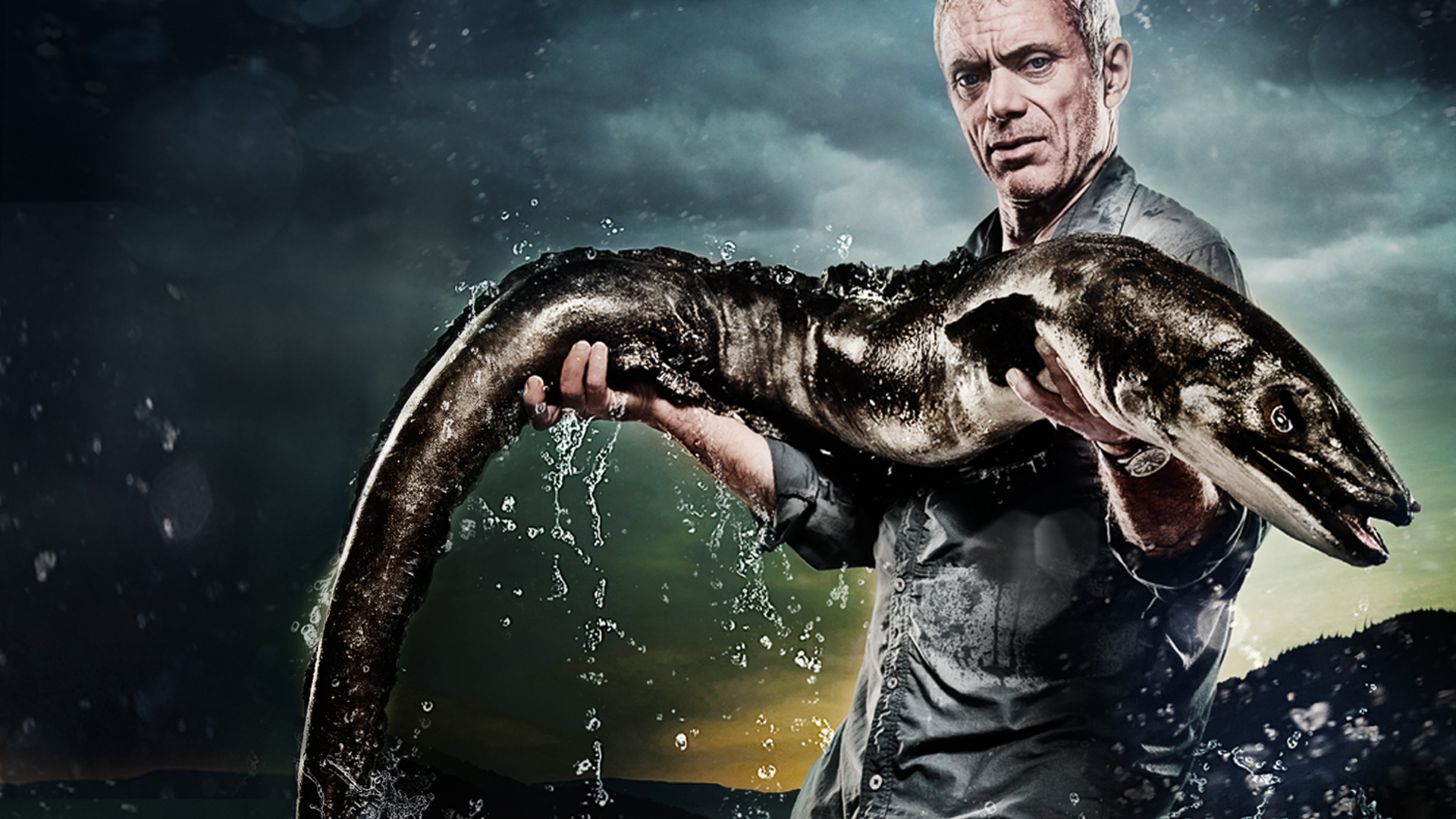
You’ve seen him wrestling 150-pound "river monsters" in the Congo or surviving a plane crash in the Amazon, looking every bit the rugged, sun-scorched adventurer. But where is Jeremy Wade from originally? Honestly, if you only know him from his TV persona, his actual background might surprise you. He isn't from the Amazon or the deep Australian outback.
Jeremy Wade is as British as they come.
Born on March 23, 1956, in Ipswich, Suffolk, he grew up in the quiet, pastoral landscape of Southeast England. It is a far cry from the piranha-infested waters he became famous for navigating. He was raised in a small village called Nayland, where his father served as the local vicar.
The River Stour: Where It All Started
People often ask where is Jeremy Wade from because his comfort in extreme environments suggests he was born in a jungle. The reality is much more "English countryside." His obsession didn't start with a predatory catfish; it started on the banks of the River Stour.
This river flowed right through his childhood village.
He didn't have a family of anglers to show him the ropes. His parents actually bought him a very cheap, basic rod when he was about seven or eight years old, mostly just to give him something to do outside. He’s often described his early attempts as "clueless." He spent months bombarding fish with lumps of bread in about a foot of water before he finally caught a small roach from a collapsing wooden bridge.
That tiny fish changed everything. It sparked a curiosity that eventually outgrew the borders of the United Kingdom.
A Biologist in the Classroom
Before he was a global TV star, Wade followed a pretty academic path. He isn't just a guy who likes to fish; he’s a trained scientist. He earned a degree in zoology from the University of Bristol and later a postgraduate teaching certificate from the University of Kent.
Believe it or not, there was a time when Jeremy Wade was a secondary school biology teacher in Kent.
He’s also worked as a newspaper reporter and a senior copywriter for an advertising agency. This mix of scientific discipline and communication skills is exactly why his shows feel more like investigative documentaries than typical "catch-and-release" fishing programs. He approaches a river like a crime scene, looking for the biological truth behind local myths.
Leaving the UK Behind
By his late 20s, Wade felt like he had "run out of water" in England. The UK is a small place, and for someone with his level of curiosity, the local rivers started to feel a bit too predictable.
In 1982, he took his first real leap into the unknown.
With just £200 in his pocket—which is about $260 today—he caught a flight to India. He spent three months wandering the mountain rivers searching for the Himalayan mahseer. He was sick, he was broke, and he was totally out of his element. But he caught the fish.
When he returned to England, he wrote a few articles about his trip. That became his cycle for the next 20-plus years:
- Work odd jobs to save money.
- Disappear for 3 to 6 months to a remote corner of the world (Congo, Amazon, India).
- Live on almost nothing while tracking elusive species.
- Return and write about it to fund the next trip.
Why He Lives in Somerset Now
When he isn't filming or trekking through a swamp, where is Jeremy Wade from on a daily basis? Today, he lives in rural Somerset, near Bath, in the southwest of England.
It’s a quiet life.
He’s famously private and spends much of his downtime away from the cameras. He's fluent in Portuguese—which he picked up during years of fishing in Brazil—and speaks decent French and Spanish. Even though he lives in a peaceful English cottage, he’s admitted that he often feels like a fish out of water when he’s been home for too long.
He has survived:
- Cerebral malaria in the Congo.
- Being arrested as a suspected spy in Southeast Asia.
- A plane crash in the Amazon (the engine failed, and they hit the canopy in 14 seconds).
- Being threatened at gunpoint.
After all that, a quiet life in Somerset probably feels a bit surreal.
The Evolution of a Local Boy
What most people get wrong is thinking Wade is just a "TV presenter." He spent decades in obscurity before River Monsters ever existed. The show only happened because he was in the Himalayas in 2005 and heard stories of a giant fish dragging people into the water. He realized that this "detective" approach to fishing could be a show.
He’s now nearly 70 years old, and while River Monsters ended years ago, his focus has shifted toward conservation. He’s seen firsthand how the "monsters" he used to catch are disappearing because of damming, pollution, and overfishing.
Practical Insights for Aspiring Explorers
If you're inspired by Wade's journey from a small Suffolk village to the world's most remote rivers, there are a few "Wade-isms" to keep in mind:
- Master the "Brown Water": Wade always says most people want to dive in coral reefs, but the real mysteries are in the "brown fish in brown water." Don't ignore the murky spots.
- Language is a Tool: He didn't just go to Brazil; he learned Portuguese so he could talk to the local fishermen who actually knew the water.
- Patience over Gear: While he uses heavy gear now for safety, he started with the simplest tackle imaginable. Knowing the fish's behavior matters more than the price of your rod.
To understand Jeremy Wade, you have to look past the "extreme" branding. He is a British zoologist who never lost that eight-year-old boy's curiosity for what might be hiding under the surface of the local river. Whether that river is the Stour or the Amazon, the drive is exactly the same.
If you want to follow in his footsteps, start by researching the freshwater ecosystems in your own backyard. Wade proves that you don't need a massive budget to start—you just need a degree of curiosity that most people lose when they grow up. You can check out his books like Somewhere Down the Crazy River for a deeper look at his pre-TV expeditions, which offer a much more raw perspective on his early travels than the polished television episodes.
Next Steps:
- Research Local Waterways: Look into the "indicator species" in your local rivers to understand the health of your immediate environment.
- Study Freshwater Biology: If you're interested in the "why" behind the "what," pick up a basic textbook on limnology (the study of inland waters).
- Support River Conservation: Look into organizations like SHOAL or the World Wildlife Fund (WWF) that focus specifically on freshwater biodiversity, which is currently declining faster than marine or terrestrial wildlife.