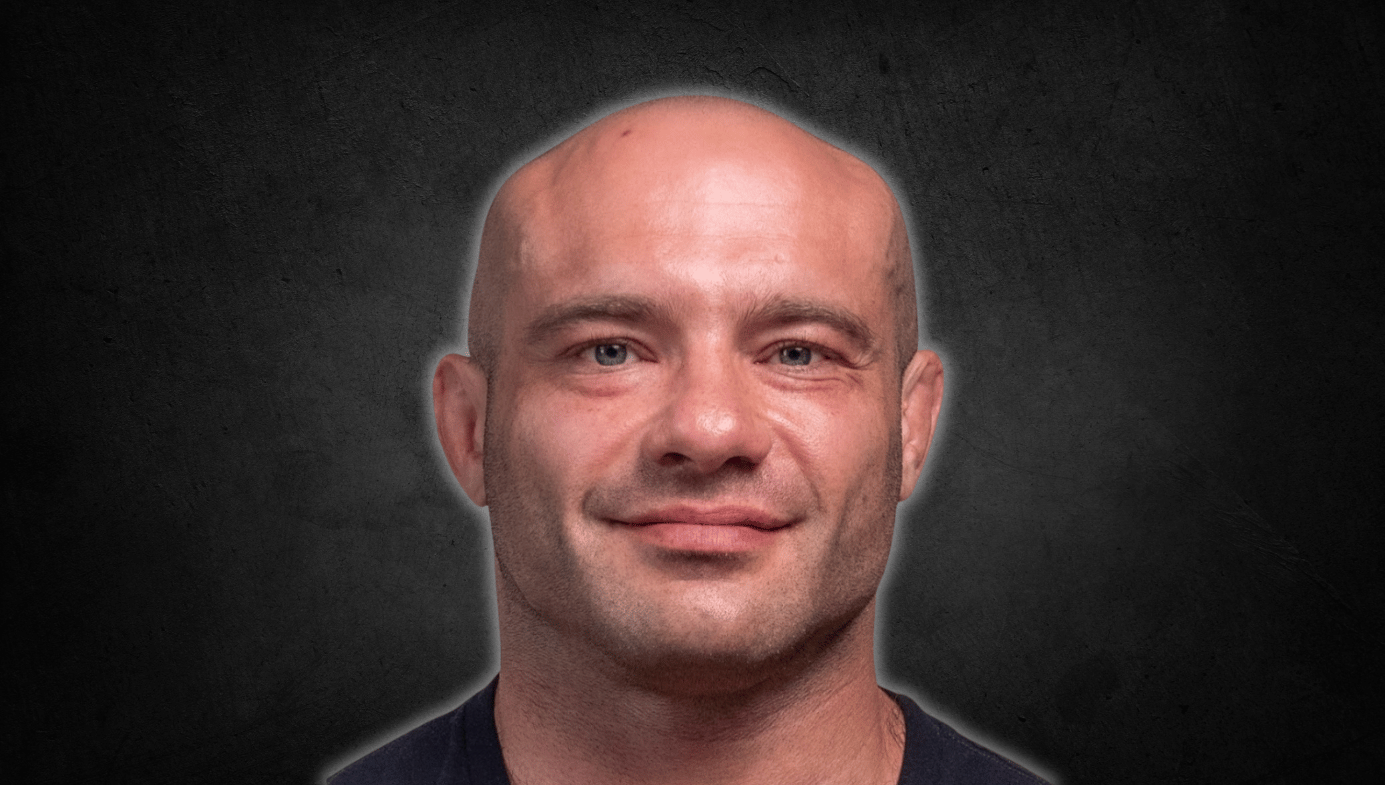
You’ve probably seen the memes. Or maybe you've watched a shirtless, 250-pound scientist with a PhD meticulously critique a celebrity’s lifting form while making jokes that land somewhere between "disturbing" and "absolute genius." Mike Israetel—or Dr. Mike, as the fitness world calls him—is everywhere. But even if you’ve binged his entire hypertrophy series on YouTube, a question often pops up in the comments: where is mike israetel from?
The accent is a giveaway, but it’s subtle. It's that specific blend of Eastern European grit and midwestern "guy at the bar" energy. Honestly, Mike's backstory is a huge part of why he’s so obsessive about the science of getting huge. It isn't just about the weights; it’s about a journey from the Soviet Union to the top of the American fitness industry.
The Short Answer: Born in Moscow, Made in Michigan
Basically, Mike Israetel is originally from Moscow, Russia. He was born there in 1984, back when it was still the USSR. If you know anything about Soviet sports science, you know they didn't mess around. The "Russian method" of training—periodization, high-frequency loading, and brutal discipline—is legendary. Even though Mike didn't stay there forever, that cultural DNA of rigorous, evidence-based physical culture clearly rubbed off on him.
He didn't stay in Russia for long, though. His family moved to the United States when he was just seven years old. They settled in the Detroit metropolitan area, specifically in Oak Park, Michigan.
This move was a massive turning point. Mike has talked openly about how his parents worked incredibly hard to give him a better life. Transitioning from the collapsing Soviet Union to 90s Michigan is a hell of a culture shock. It's also where the "American" side of his personality really took root. You can hear it in his speech—he sounds like a guy who grew up on the outskirts of Detroit, but with a lingering Russian "R" that pops out when he gets excited about eccentric loading or inter-set recovery.
Why the Russian Roots Matter for His Science
You might wonder why "where is mike israetel from" even matters. Is it just trivia? Not really. In the world of exercise physiology, Russia is like the Vatican of strength.
Historically, Soviet scientists like Yuri Verkhoshansky and Vladimir Zatsiorsky pioneered the stuff we take for granted today. When Mike discusses "Minimum Effective Volume" (MEV) or "Maximum Recoverable Volume" (MRV) through his company, Renaissance Periodization (RP), he’s essentially taking those dense, old-school Eastern Bloc concepts and translating them into something a modern lifter can actually use.
- The Discipline: He credits his upbringing for a certain "no-nonsense" approach to work.
- The Education: Russian academic traditions are notoriously tough, a trait he carried into his American schooling.
- The Identity: Mike often references his Jewish-Russian heritage, which shaped his perspective on community and intellectual rigor.
The Academic Path: From Michigan to Tennessee
After high school, Mike didn't just walk into a gym and start coaching. He went the full academic route, which is why he’s one of the few "influencers" who actually has the credentials to back up the talk.
He stayed close to home for his undergraduate degree, attending the University of Michigan. He studied Kinesiology and Movement Science there. This is where he really caught the bug for competitive lifting. He started as a wrestler—competing in the 103lb class as a freshman—but soon realized he liked the weight room more than the mat.
After Michigan, he headed to Appalachian State University for a Master’s in Exercise Science. But the real "heavy lifting" happened at East Tennessee State University (ETSU). That’s where he earned his PhD in Sport Physiology. He studied under Dr. Mike Stone, who is basically a god in the strength and conditioning world.
Think about that for a second. You have a guy who was born in the USSR, grew up in the gritty suburbs of Detroit, and then spent years in the hills of Tennessee learning the deepest secrets of muscle growth. That’s a wild trajectory.
The Professional Shift and Renaissance Periodization
While he was finishing his PhD, Mike and his long-time friend Nick Shaw (who he met at Michigan) started what would become a fitness empire.
Before RP became a household name for lifters, Mike was actually a professor. He taught at Temple University in Philadelphia, the University of Central Missouri, and Lehman College. He wasn't just some guy on the internet; he was literally the guy teaching future trainers how nutrition and hypertrophy work.
Eventually, the "private sector" called his name. Renaissance Periodization exploded because it offered something rare: diet and training templates that weren't based on "bro-science," but on the actual physiological principles Mike had been studying since his days in Moscow and Michigan.
What Most People Get Wrong About His Background
There’s a common misconception that Mike is just a "bodybuilder who reads." Honestly, it’s the other way around. He’s a scientist who happens to be a massive bodybuilder and a Brazilian Jiu-Jitsu black belt.
People often assume he moved to the US as an adult because of the accent, but he’s deeply American in his sensibilities. He loves the freedom of the West, the ability to make "offensive" jokes, and the entrepreneurial spirit that allowed him to build RP.
At the same time, he’s never lost that Russian skepticism toward "magic pills" or shortcuts. If you watch his videos, he’s constantly debunking fads. That "cut through the noise" attitude is very typical of someone who grew up in an environment where you either had the results or you didn't.
Applying the "Dr. Mike" Philosophy to Your Training
Knowing where he’s from helps you understand his "why." He isn't interested in what's trendy; he's interested in what is true. If you want to train like a product of the Moscow-to-Michigan pipeline, you need to focus on three things:
- Stimulus to Fatigue Ratio (SFR): Don't just do an exercise because it's famous. Do it because it actually grows your muscle without destroying your joints.
- Long-Term Consistency: The Russian school of thought is all about the "long game." You don't get huge in six weeks. You get huge over six years.
- Objective Data: Mike is big on tracking. If you aren't logging your sets, reps, and weights, you're just guessing.
If you’re looking to dive deeper into his methods, start by looking at your own training volume. Most people are either doing way too little to see growth or so much that they can’t recover. Finding that "sweet spot" is the core of everything Mike teaches.
Start by picking one body part—say, your delts—and track exactly how many hard sets you do per week. If you aren't seeing progress, increase it by two sets next week. If you feel like you've been hit by a truck, scale it back. That simple, data-driven approach is the hallmark of the Dr. Mike method. No magic, just math and muscle.