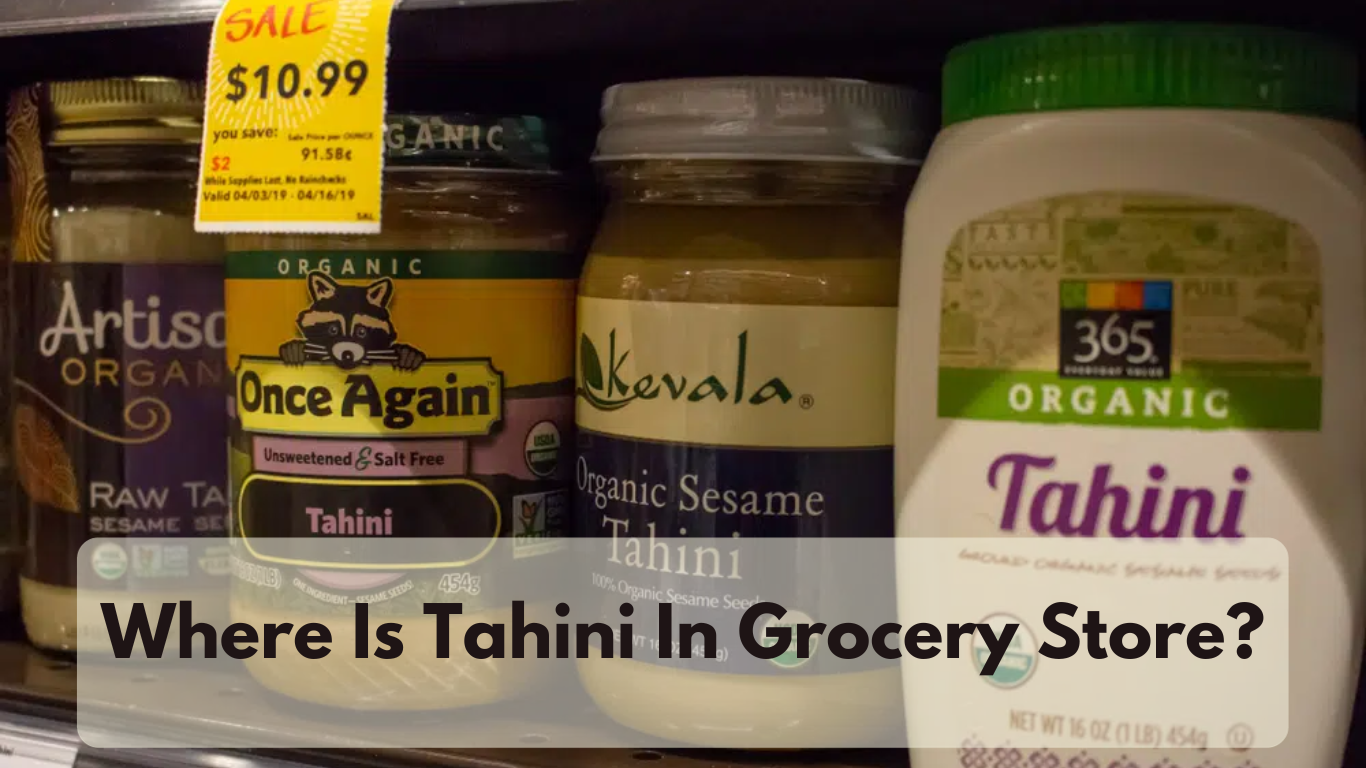
You're standing in the middle of a massive Kroger or a tiny local co-op, staring at the signage. You need that creamy, nutty sesame paste for a recipe—maybe that viral hummus or a salted tahini chocolate chip cookie—but the store layout feels like a labyrinth designed by someone who hates cooks. Honestly, figuring out where to find tahini in grocery store aisles depends entirely on whether your grocer thinks of it as a "health food," an "ethnic specialty," or just a weird nut butter. It’s frustrating. One minute you're in the peanut butter section, and the next you're sprinting toward the international foods aisle because you realized tahini isn't just "Middle Eastern peanut butter."
It's sesame. Pure, ground-up sesame seeds.
The Most Likely Spots for Your Tahini Hunt
If you want to save your steps, head to the International or Middle Eastern aisle first. This is the gold mine. You’ll usually find the heavy hitters here—brands like Joyva (the one in the orange and blue tin that’s been around forever) or Ziyad. These are often located near the chickpeas, couscous, and jarred grape leaves. Why? Because tahini is the backbone of Levantine cuisine. If the store has a "Global Foods" section, look specifically for the Mediterranean or Halal shelf.
But wait. There’s a plot twist.
If you’re in a high-end place like Whole Foods or a health-conscious spot like Sprouts, you might find it in the Nut Butter aisle. It’ll be sitting right there next to the almond butter and the sunflower seed butter. Some stores categorize it by texture and usage rather than origin. It makes a certain kind of sense, right? You spread it, you swirl it, you dip things in it. Just look for the jars that have a thick layer of oil on top; that’s the good stuff.
Don't overlook the Baking Aisle either. It’s rare, but some stores toss it near the molasses and honey. This usually happens in older supermarket layouts where tahini is seen as a specialty condiment or a sweetener supplement.
What About the Refrigerated Section?
Surprisingly, yes. Some brands, like Soom or Baba’s, occasionally land in the refrigerated deli case near the pre-made hummus and pesto. If you see a brand that claims to be "raw" or "fresh-pressed," check the cold cases. Most tahini is shelf-stable until opened, but premium brands often pay for that prime cold-storage real estate to signal "freshness" to shoppers.
Knowing Your Brands: More Than Just a Label
Not all sesame paste is created equal. You’ve got hulled, unhulled, toasted, and raw. If you grab the wrong one, your dressing might end up tasting like a handful of bitter dirt.
Soom Foods is basically the gold standard for many professional chefs right now. Amy Zitelman and her sisters started the company because they realized the stuff we were getting in the States was often bitter and chalky compared to what you find in Israel or Lebanon. They use Ethiopian White Humera sesame seeds. It's silky. It pours like heavy cream. If you see a jar with a minimalist, modern label, grab it.
Then there is Joyva. It’s the classic. It’s been made in Brooklyn since the early 1900s. It’s thicker, a bit more intense, and honestly, it’s what many of us grew up with. It’s great for baking because it has a bit more structure.
- Roland or Ziyad: These are the workhorses. Usually found in the international aisle.
- Baron's: Often sold in squeeze bottles, which is a total game-changer for drizzling over roasted sweet potatoes.
- Store Brands: 365 (Whole Foods) or Trader Joe’s versions are fine in a pinch, but they often require a lot of stirring because the oil separation is aggressive.
Why the Quality Matters for Your Health
People often hunt for tahini because it’s a nutritional powerhouse. We're talking high levels of copper, selenium, and phosphorus. According to various nutritional studies, including data from the USDA, tahini is incredibly dense in healthy monounsaturated and polyunsaturated fats. It’s a staple for vegan diets because it provides a creamy mouthfeel without the dairy.
However, be careful with "unhulled" tahini. While it has more fiber and calcium because the outer shell of the seed is kept intact, it’s significantly more bitter. If you’re making a delicate lemon-tahini dressing for a kale salad, unhulled might overpower everything. Stick to hulled for smoothness.
The Separation Struggle
You found it. You bought it. You got home and opened it. There is two inches of oil on top and a brick of concrete at the bottom. This is normal.
Do not pour the oil out! That oil is what makes the tahini creamy. If you toss it, you’re left with a dry, unusable paste. Use a butter knife or a small whisk to incorporate it. Some people even store their jars upside down in the pantry so the oil has to travel through the solids when they flip it over to open it. It's a pro move.
Real-World Availability by Store
Different chains have different philosophies on where to find tahini in grocery store layouts. Here’s a quick breakdown based on common layouts:
- Walmart: Usually in the "International" aisle, specifically the Hispanic or Middle Eastern section. They often carry Ziyad or Joyva.
- Kroger/Ralphs: Usually the "Natural Foods" section (often called Nature's Market) near the almond butter. Sometimes in the "Global Flavors" aisle.
- Target: Check the "Condiments" aisle near the peanut butter. Target’s selection is usually smaller, often just their Good & Gather brand.
- Publix: Almost always in the "International" aisle.
- Costco: If they have it, it's in the "Spreads/Jams" aisle, usually in a massive twin-pack.
The Confusion with Halva
Don't accidentally buy halva. It happens more than you'd think. Halva is a dense, crumbly confection made from tahini and sugar (and often pistachios or cocoa). It usually sits right next to the jars of plain tahini. If the label says "Marble" or "Vanilla," you're looking at candy, not a cooking ingredient. Delicious? Yes. Good for your garlic-tahini sauce? Absolutely not.
What to Do if the Store is Out
If you’ve scoured every inch of the store and come up empty, you can make it. Seriously. All you need is sesame seeds and a neutral oil (like grapeseed or even a light olive oil). Toast the seeds lightly in a pan until they smell fragrant but haven't turned dark brown. Throw them in a high-powered blender or food processor with a splash of oil and a pinch of salt. Blitz until smooth. It’s often fresher and more vibrant than the jarred stuff that’s been sitting on a shelf for six months.
Practical Steps for Your Next Shopping Trip
Instead of wandering aimlessly, follow this sequence:
- Check the International Aisle first. Look for blue tins or glass jars near the dried beans and rice.
- Scan the Nut Butter section. If the store caters to the "wellness" crowd, it'll be next to the almond butter.
- Look for the "Hummus" sign. Even if it’s not in the fridge, sometimes stores shelf-stable tahini right above the refrigerated dips.
- Ask a clerk specifically for "Sesame Paste." Sometimes the word "tahini" confuses newer employees, but "sesame paste" is a universal descriptor.
When you finally get that jar home, remember that it doesn't necessarily need to be refrigerated unless the label explicitly says so. Keeping it in a cool, dark pantry is usually fine and keeps the texture much more "drizzlable." If you do refrigerate it, it'll thicken up significantly, so you'll need to let it sit on the counter for ten minutes or whisk in a teaspoon of warm water before using it in a recipe.
The search is usually the hardest part. Once you have a reliable brand in your pantry, you'll find yourself putting it on everything from roasted carrots to vanilla ice cream.
Actionable Insights
- Temperature Check: If your tahini is rock hard, whisking in a little warm water or lemon juice will actually make it fluffier and lighter through a process called emulsification.
- Storage: Store the jar upside down to minimize the "concrete block" at the bottom of the jar.
- Taste Test: Always taste a tiny bit before adding it to your recipe. If it's excessively bitter, it might be rancid (check the expiration date) or just a low-quality brand. Good tahini should be nutty and savory, not like aspirin.