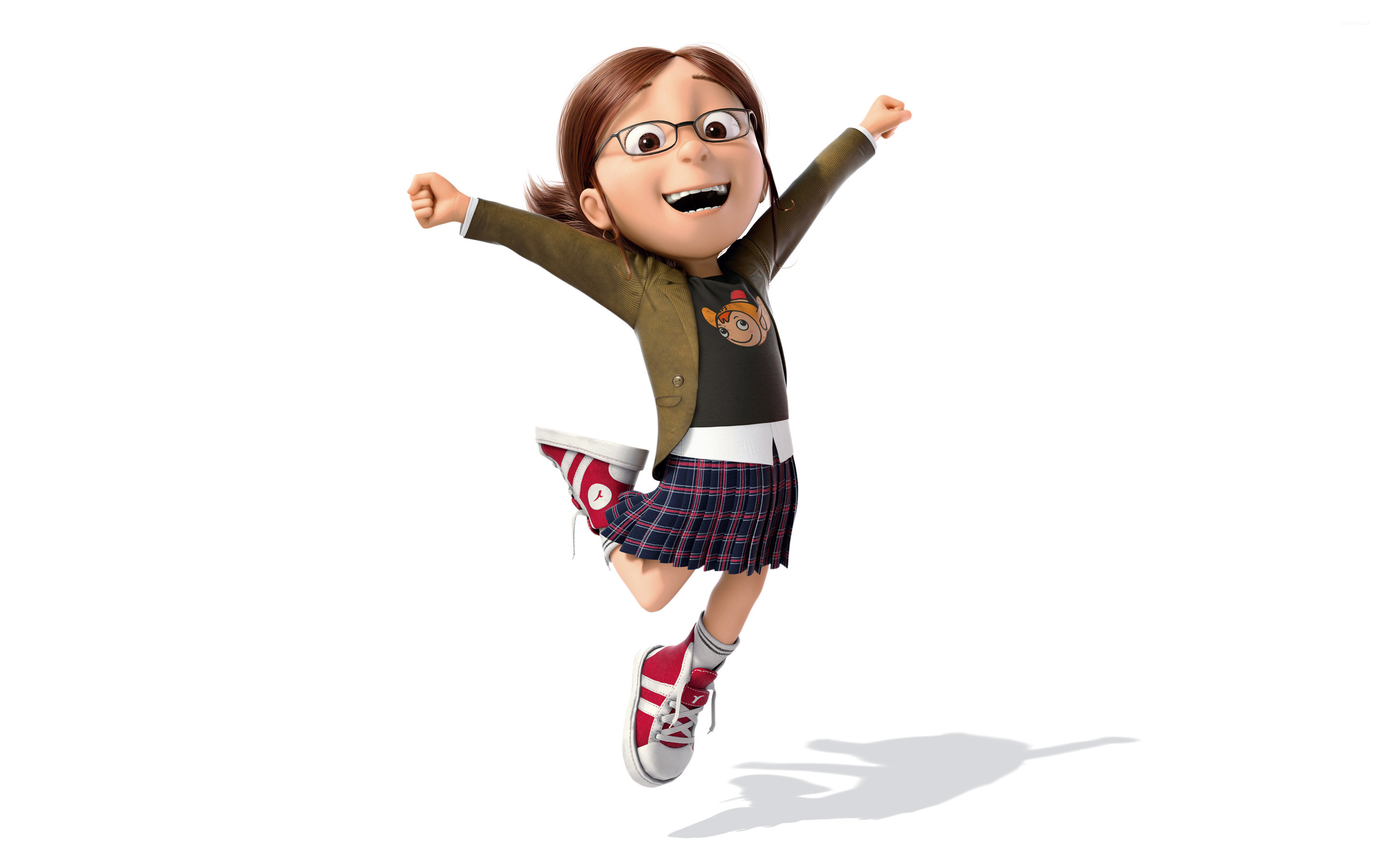
You know the one. She’s got that rigid, high-collared purple dress, a beehive hairdo that defies gravity, and those sharp, narrow spectacles that seem to judge your entire existence. If you’ve been scouring the internet for the despicable me lady with glasses, you’re almost certainly thinking of Miss Hattie. She is the formidable, somewhat terrifying owner of Miss Hattie’s Home for Girls.
She isn't a villain in the "I'm going to steal the moon" sense. No, she’s much more grounded than that. She represents that specific brand of bureaucratic cruelty that feels way too real.
While Gru is out there playing with freeze rays, Miss Hattie is busy running a "home" that feels more like a cookie-selling sweatshop. It’s a classic trope, honestly. Think Miss Hannigan from Annie but with a southern accent and a weirdly intense obsession with "The Box of Shame."
Why Everyone Searches for the Despicable Me Lady With Glasses
Character design in the Illumination universe is pretty specific. Most characters have exaggerated, soft features, but Miss Hattie is all sharp angles and stiff posture. Her glasses aren't just an accessory; they are a barrier. They magnify her eyes when she’s intimidating Margo, Edith, and Agnes, making her feel larger than life.
People remember her because she’s the primary obstacle in the first act of the 2010 film. Without her being such a nightmare, the girls probably wouldn’t have been so eager to be adopted by a suspicious guy with a spiked car.
Kinda funny how we remember the side characters more than the main plot sometimes. She only has a few scenes, but the "Box of Shame" line? That stuck. It’s became a meme for a reason.
The Voice and Personality Behind the Specs
The voice is what really sells it. That’s Kristen Wiig.
Before she was Lucy Wilde in the later movies, Wiig voiced the despicable me lady with glasses. It’s a testament to her range. She gives Miss Hattie this polite, southern-belle veneer that masks a total lack of empathy.
- She calls the girls "my little angels."
- She immediately follows it up by checking their cookie sales quotas.
- If they don’t meet the goals, it’s the Box.
It’s a dark bit of humor for a kids' movie. Miss Hattie doesn't care about the girls' well-being; she cares about her "Good Housekeeping" reputation and the revenue generated by Minty Munchies and Coconut Krumpeets.
What People Get Wrong About Miss Hattie
A lot of fans confuse her with other characters in the franchise. Some people think she’s related to Gru’s mom (Marlena), mostly because they both have that "disappointed parent" energy. They aren't related. Marlena Gru is voiced by Julie Andrews and is more about emotional neglect than Miss Hattie’s active, profit-driven discipline.
Others mix her up with the Orphanage Matron from other animated films. But Miss Hattie is unique because of her specific 1960s-inspired aesthetic. That purple dress and the cat-eye glasses are very "Space Age housewife," which contrasts hilariously with the high-tech lair Gru lives in.
Honestly, her character is a satire of the "perfect" mid-century woman. She looks polished, but she's rotten.
The Role of the Orphanage in Gru's Transformation
Miss Hattie’s Home for Girls serves a vital narrative purpose. In any "grumpy guy adopts kids" story, the place the kids come from has to be worse than the guy’s house.
Gru has a dungeon full of weapons and a literal shark in the floor. Yet, compared to Miss Hattie’s rules and the looming threat of the Box of Shame, Gru’s house looks like Disneyland. Miss Hattie makes Gru the "lesser of two evils" initially, which allows the audience to root for a literal supervillain.
When Gru finally stands up to her—or rather, when he adopts the girls and leaves her in the dust—it’s the first sign that he’s actually capable of caring for someone other than himself.
Miss Hattie’s Legacy in the Despicable Me Franchise
She doesn't really come back. Unlike many characters who get cameos in the sequels or the Minions spin-offs, Miss Hattie is a one-and-done character.
Wait, that’s not entirely true. Kristen Wiig liked the franchise so much (or the directors liked her) that they brought her back as a completely different lead character, Lucy Wilde. This is pretty rare in big-budget animation. Usually, if a voice actor returns, they play a similar bit-part. But Wiig went from the "mean lady with glasses" to the female lead and Gru’s eventual wife.
Talk about a glow-up for the actress, if not the character.
Real-World Inspiration for Miss Hattie’s Design
The animators at Illumination, led by directors Chris Renaud and Pierre Coffin, went for a "storybook villain" look. If you look at the concept art, she was always meant to look like a giant thumb in a dress.
The glasses are the focal point. In animation, glasses are often used to hide a character's "soul" or their eyes, which are the windows to their emotions. Because you can rarely see her eyes clearly through the glare of her lenses, she feels colder.
How to Identify the Lady With Glasses (Quick Reference)
If you're trying to win a trivia night or just settle an argument, here is the breakdown of the despicable me lady with glasses:
The name is Miss Hattie. She runs the orphanage. The voice is Kristen Wiig. Her primary motivation is selling cookies. Her primary punishment is the Box of Shame.
Don't confuse her with:
- Marlena Gru: Gru’s mom. She wears a tracksuit or a pearl necklace, has short hair, and is voiced by Julie Andrews.
- Lucy Wilde: Redhead, wears a blue trench coat, also voiced by Kristen Wiig, but she’s the "good guy."
- Madge Nelson: The mom from the first Minions movie. She wears glasses too, but she’s a bank robber and way nicer to her kids.
The Cultural Impact of the "Cookie" Scenes
The scene where the girls have to sell cookies to Vector (Gru's rival) is one of the most famous in the movie. "Hi! We're orphans and we're selling cookies!"
Miss Hattie’s pressure on the girls to sell those cookies is what drives the middle-act plot. If she wasn't such a stickler for the "Coconut Krumpeets," Gru never would have used the girls to infiltrate Vector's fortress. Her greed is literally the catalyst for the entire heist.
It’s a clever way to tie a mundane struggle (selling cookies for a mean boss) into a high-stakes spy plot.
Actionable Takeaways for Fans and Researchers
If you’re looking into the character of Miss Hattie or the animation style of Despicable Me, here are the next steps to deepen your knowledge:
- Watch the Credits: Check out the voice cast list. Seeing Kristen Wiig’s name twice (in different movies) helps you appreciate how much she changed her vocal fry and pitch for Miss Hattie versus Lucy.
- Compare the Villain Archetypes: Look at Miss Hattie alongside characters like Trunchbull from Matilda. You’ll notice a pattern in how "cruel caretakers" are designed with rigid, non-flowing clothing to represent their lack of flexibility.
- Explore the Concept Art: Search for the Art of Despicable Me books. You can see early sketches of the despicable me lady with glasses where she looked even more like a bird of prey.
- Meme History: If you’re looking for the "Box of Shame" meme, search specifically for the clip on YouTube titled "Miss Hattie's Rules." It’s the best example of her character's "polite cruelty."
The character serves as a reminder that sometimes the scariest villains aren't the ones with the shrink rays—they’re the ones with the clipboard and a set of impossible rules.