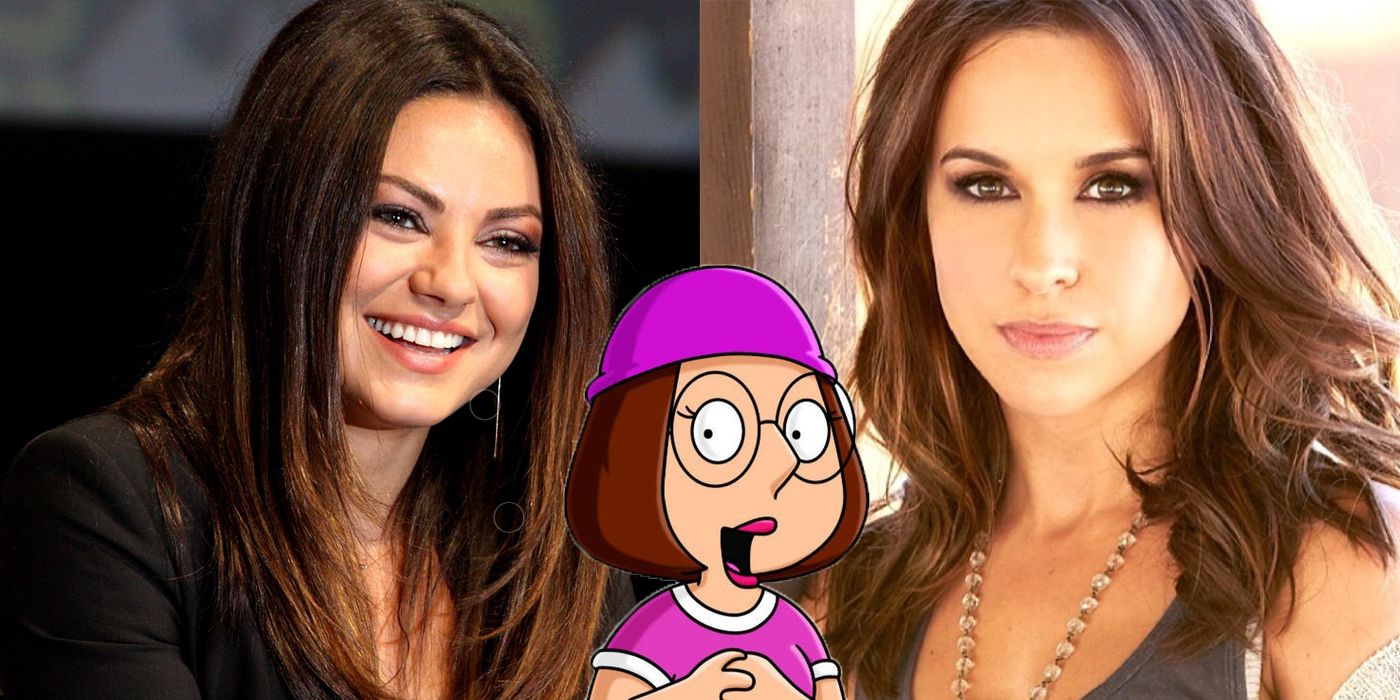
You know the joke. Meg Griffin walks into a room, says two words, and Peter immediately tells her to shut up. It's the longest-running gag in Family Guy history. But if you go back and watch the very first season, something feels... off. Meg sounds different. Her voice is higher, maybe a bit more earnest, and lacks that specific, gravelly teenage angst we’ve associated with the character for over two decades. Most people just assume Mila Kunis has been there since day one. She hasn't.
The story of the voice of Meg on Family Guy is actually a weirdly complicated bit of TV trivia involving contract disputes, a future indie film darling, and a temporary fill-in that most fans never even noticed.
The original Meg: Lacey Chabert
Before Meg was the show's punching bag, she was voiced by Lacey Chabert. You probably know her as Gretchen Wieners from Mean Girls ("That's so fetch!"), but in 1999, she was the first person to bring Meg to life. At that point, the show wasn't the cynical, meta-humor powerhouse it is today. Meg was just a somewhat normal, slightly annoying teenage girl.
Chabert voiced Meg for the entire first season and a chunk of the second. So, why did she leave?
For years, rumors swirled that she was fired or that there was beef between her and Seth MacFarlane. Honestly? It was way more boring than that. Chabert was juggling school and her role on Party of Five. Between her busy schedule and the fact that Family Guy wasn't even a guaranteed hit yet—it actually got canceled twice in its early years—she decided to bow out.
Seth MacFarlane has confirmed this in several interviews, noting there was no drama. She just had a contract that allowed her to leave, and she took it. In fact, Chabert has even returned to the show for a few cameos, proving there’s no bad blood. She’s essentially the "lost" Griffin.
Enter Mila Kunis: Changing the character forever
When Mila Kunis auditioned, she was still a teenager herself, famously starring in That '70s Show. But she didn't get the part immediately. MacFarlane originally thought her voice was too high. He told her to come back and speak lower, to find that specific "teenager who is over everything" register.
She nailed it.
The shift from Chabert to Kunis actually changed how the writers wrote for Meg. With Kunis, the character became more sardonic. She wasn't just a victim of her family; she became a vessel for a specific kind of deadpan delivery that allowed the "Shut up, Meg" jokes to land harder. It's a rare case where a voice actor change actually improved the longevity of a character.
There's a funny bit of irony here: Mila Kunis is a global superstar and a fashion icon, yet she spends a few hours a month in a recording booth playing a character who is constantly told she's ugly and worthless.
The Megs you didn't know about
Wait, there’s more.
If you’re a real die-hard fan, you might remember the pilot episode. Not the first episode that aired on FOX, but the original pitch pilot Seth MacFarlane made to get the show greenlit. In that version, Meg wasn’t voiced by Chabert or Kunis. She was voiced by Rachael MacFarlane, Seth’s sister.
Rachael eventually went on to voice Hayley Smith in American Dad!, but for a brief moment in the late 90s, she was the blueprint for Meg Griffin.
Then there is the singing. Whenever Meg has a big musical number that requires some serious vocal chops, the show often brings in Tara Strong. Strong is a legend in the voice acting world (Timmy Turner, Bubbles, Harley Quinn), and she’s the one hitting those high notes while Mila handles the dialogue.
Why the voice of Meg on Family Guy matters for the show's legacy
The revolving door of actors in the early seasons is a microcosm of how Family Guy found its footing. It started as a Simpsons clone and evolved into a surrealist pop-culture blender. Meg’s voice transition happened right as the show was finding its "mean" streak, which defined the 2000s era of animation.
It's also a testament to the power of voice acting. If Chabert had stayed, would Meg have become the punching bag? Maybe not. Kunis brought a "take it on the chin" energy that made the abuse funny rather than just sad.
Real-world takeaways and trivia
If you’re looking to win your next pub quiz or just want to appreciate the show’s history, keep these facts in your back pocket:
- Check the Credits: In the first season DVD sets, you can clearly see Lacey Chabert credited. By season two, the transition happens almost seamlessly mid-way through.
- The Payday: Despite the character being hated on screen, Mila Kunis reportedly makes between $175,000 and $225,000 per episode. Not bad for being told to shut up.
- The Cameo: In the episode "Business Guy," Peter mentions he's replacing Meg's voice with the "girl from Party of Five," a direct meta-nod to the switch.
To truly see the difference, go back to Season 1, Episode 1 ("Death Has a Shadow") and compare it to anything from Season 3 onwards. The pitch, the cadence, and the attitude are night and day. It’s one of the few times a major TV show swapped a lead actor and actually saw its ratings—and its humor—improve as a result.
Next time you hear that iconic, "Shut up, Meg," take a second to realize you’re listening to one of the most successful voice-over transitions in television history.