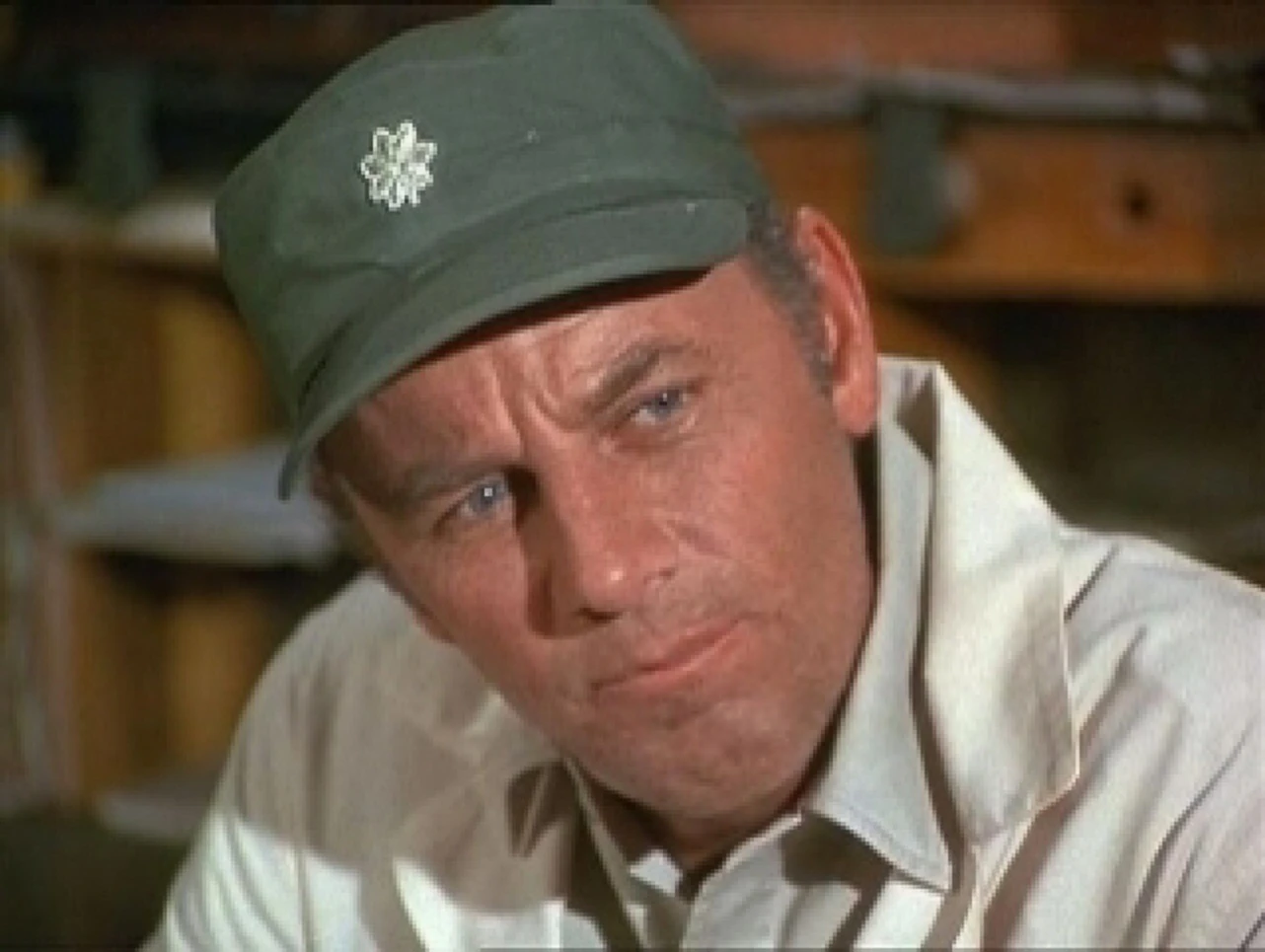
If you close your eyes and think of the 4077th, you probably see that bucket hat. You see the fishing lures stuck in the brim and a man who looked like he’d rather be anywhere else than in a war zone. That man was Lt. Colonel Henry Blake.
But who was the guy behind the desk?
Honestly, it depends on which version of MASH* you’re watching. While most of us instantly picture the lanky, bumbling, and deeply lovable commander from the TV show, the role actually belonged to two different men across the franchise's history.
The Man We All Remember: McLean Stevenson
For the vast majority of fans, the answer to who played colonel blake on mash is McLean Stevenson.
He didn't just play the part; he inhabited it for the first three seasons of the television series. Stevenson brought a specific kind of Midwestern "average Joe" energy to the role. His Henry Blake wasn't a career military man. He was a surgeon from Bloomington, Illinois, who had been drafted and tossed into a leadership position he clearly wasn't prepared for.
He was the "anti-commander."
Instead of barking orders, he spent his time trying to hide his scotch from Major Houlihan or relying on Radar O'Reilly to actually run the camp. Stevenson’s chemistry with Gary Burghoff (Radar) was the secret sauce of those early years. Without Henry’s incompetence, Radar’s "radar" abilities wouldn't have been nearly as funny.
The Movie Version: Roger Bowen
Before the TV show became a cultural juggernaut, there was the 1970 film directed by Robert Altman. In that version, Henry Blake was played by Roger Bowen.
Bowen’s take was a bit different. While still somewhat ineffectual, the movie's Blake felt more like a traditional military officer who just happened to be overwhelmed. He lacked the "dad energy" that Stevenson eventually perfected.
Interesting bit of trivia: Roger Bowen actually passed away just one day after McLean Stevenson died in 1996. It was a bizarre, tragic coincidence that linked the two "Colonels" forever.
Why did McLean Stevenson leave?
This is the part that still stings for long-time viewers. By the end of Season 3, MASH* was one of the biggest shows on television. Stevenson was a star. So, why walk away?
Basically, it came down to ego and a bit of frustration.
Stevenson felt like he was playing second fiddle to Alan Alda’s Hawkeye Pierce. He wanted to be the "number one" guy on the call sheet. In interviews later in his life, he was surprisingly candid about it. He admitted that he mistook the audience's love for Henry Blake as love for McLean Stevenson the actor.
He thought he could take that popularity and carry his own show.
He told the producers he wanted out. They didn't just let him go; they gave him the most shocking exit in the history of the medium.
The Ending No One Saw Coming
On March 18, 1975, the episode "Abyssinia, Henry" aired. It was supposed to be a happy send-off. Henry gets his points, he gets his discharge, and he heads home to Illinois.
Then came the final scene.
Radar walks into the operating room, dazed, without his mask. He announces that Henry’s plane was shot down over the Sea of Japan.
"There were no survivors."
The silence in that OR was real. The actors—except for Gary Burghoff—didn't know that specific line was coming until right before they filmed it. The producers wanted genuine shock. They got it. And so did the millions of people watching at home.
It was the first time a major sitcom character had been killed off like that. It changed TV forever.
Life After the 4077th
Things didn't go exactly as planned for Stevenson.
He signed a massive deal with NBC, but the "number one" status he craved proved elusive. He starred in a string of shows like The McLean Stevenson Show, In the Beginning, and the infamous Hello, Larry.
None of them stuck.
Meanwhile, MASH* continued for another eight seasons. They replaced him with Harry Morgan as Colonel Sherman Potter—a career soldier who was the polar opposite of Henry Blake. While Potter was a great character, the show's tone shifted from a chaotic romp to a more serious "dramedy."
The Regret
Stevenson was eventually very open about the fact that leaving was a mistake. He once famously said:
"The mistake was that I thought everybody in America loved McLean Stevenson. That was not the case. Everybody loved Henry Blake."
It’s a powerful lesson in Hollywood humility. He remained friends with the cast, but he never quite recaptured the magic he had in that olive-drab tent.
Key Takeaways for Fans
If you're looking into the history of the show or the actors, here are the "need to know" facts about the transition:
- Roger Bowen played Henry Blake in the 1970 film.
- McLean Stevenson played him in the TV series from 1972 to 1975 (Seasons 1–3).
- Stevenson won a Golden Globe for the role in 1974.
- The decision to kill the character was made by producers Larry Gelbart and Gene Reynolds to show that not everyone goes home from war.
- The episode "Abyssinia, Henry" remains one of the highest-rated and most controversial episodes in television history.
If you're diving back into the series today, keep an eye on the way Stevenson uses his hands and his facial expressions. He was a master of the "slow burn" reaction. Even though he only stayed for three years, he's the reason why the show survived its rocky first season. He provided the heart that allowed Hawkeye and Trapper to be as wild as they were.
To truly appreciate the performance, watch the Season 2 episode "The Trial of Henry Blake." Stevenson actually wrote that one himself. It showcases exactly why he was the perfect choice for the role, balancing the absurdity of military life with a genuine, quiet dignity that made his final exit so heartbreaking.
Start by revisiting those first three seasons on streaming services like Hulu or Disney+. Pay attention to the subtle shifts in his performance in Season 3; you can almost see the actor's restlessness bleeding into the character's desire to get back to Bloomington. After that, compare it to Harry Morgan's arrival in Season 4 to see how the entire DNA of the show changed when the leadership switched from a "friend" to a "father figure."