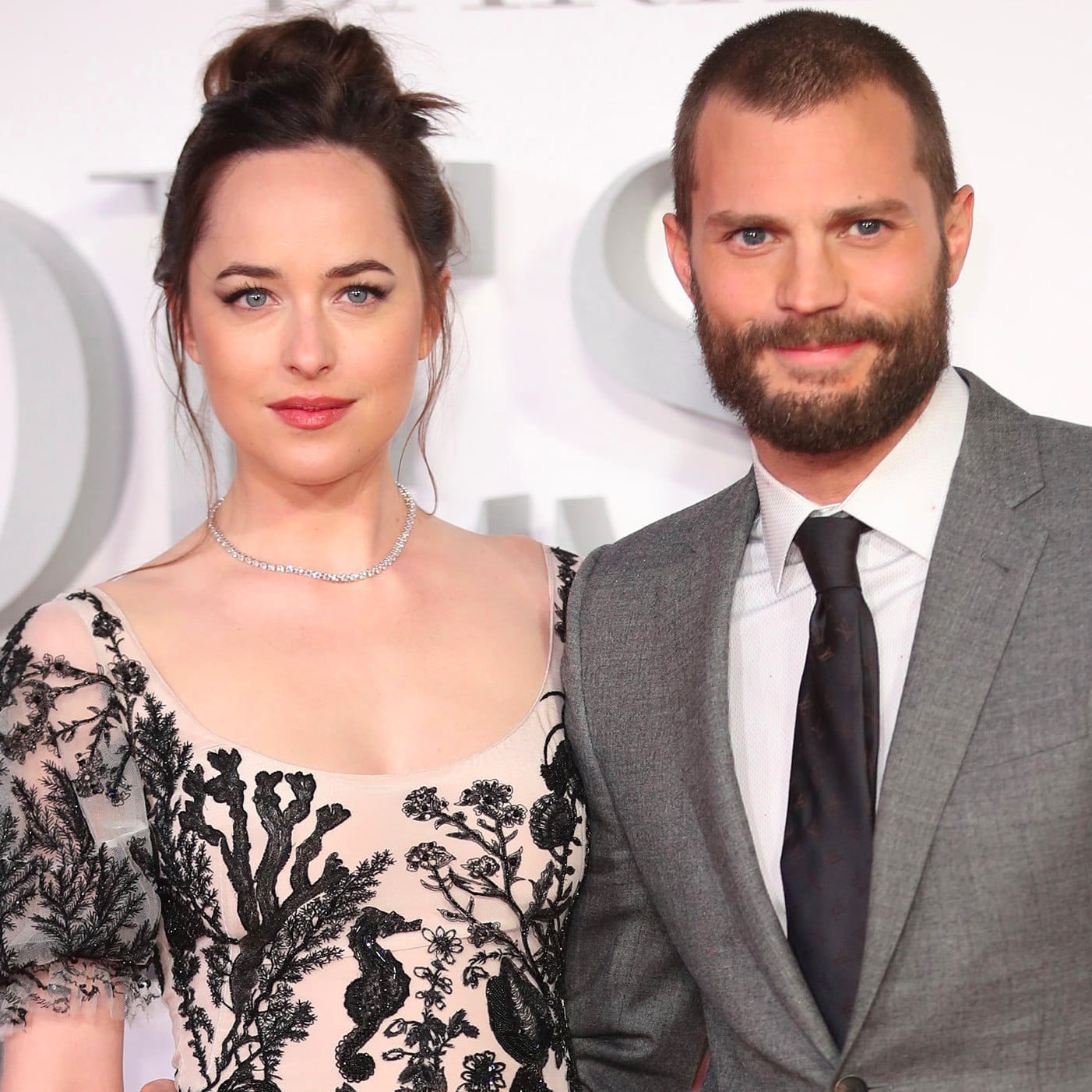
It was the casting call that basically broke the internet before "breaking the internet" was even a tired cliché. If you were online around 2012 or 2013, you remember the absolute chaos. Fans were fancasting everyone from Ian Somerhalder to Matt Bomer, convinced that only their specific favorite actor could embody the "inner goddess" madness of E.L. James’s billion-dollar book franchise. But when the dust settled, the list of who played in 50 shades of grey looked a lot different than the Tumblr blogs predicted.
It wasn't just a movie. It was a cultural flashpoint.
The production was notoriously messy. Directors clashed with authors. Actors were swapped out weeks before filming. Yet, the final ensemble managed to turn a controversial piece of fan fiction into a box office juggernaut that pulled in over $570 million for the first installment alone.
The Leads: Dakota Johnson and the Christian Grey Shuffle
Let's talk about the elephant in the room: Charlie Hunnam. Most people forget that the Sons of Anarchy star was actually the original Christian Grey. He was cast, he did the press, and then—bam—he dropped out. Officially, it was "scheduling conflicts" with his show, but Hunnam later admitted in interviews with Vogue and Elle that he had a bit of a nervous breakdown trying to juggle too many commitments. He called it the "worst professional experience" of his life.
Enter Jamie Dornan.
Dornan was a former Calvin Klein model who had done some chilling work in the BBC series The Fall. He brought a certain stillness to Christian. He wasn't the hulking, aggressive figure some expected; he was more of a polished, slightly awkward billionaire with a very dark basement.
Then there’s Dakota Johnson. Honestly, she’s the reason the movies work at all. As Anastasia Steele, she had the impossible task of making "mumbling English major" seem like a coherent character. Johnson, the daughter of Melanie Griffith and Don Johnson, had Hollywood royalty in her blood, but this was her breakout. She brought a dry, biting wit to Ana that wasn't really on the page. She made the character feel like a person who was actually in on the joke, which was vital for a movie about, well, that.
The Supporting Cast: More Than Just Background Noise
While the leads got the headlines, the supporting players were surprisingly high-caliber. You had Marcia Gay Harden playing Grace Trevelyan Grey. Think about that for a second. An Academy Award winner playing the adoptive mother of a man who buys custom gliders and red rooms. She brought a much-needed gravity to the family scenes, making the Greys feel like a legitimate high-society clan rather than a soap opera set.
The family was rounded out by:
- Rita Ora as Mia Grey, Christian’s sister. Her casting was a huge deal at the time because of her music career, though her actual screen time in the first film was... blink and you'll miss it.
- Luke Grimes as Elliot Grey. Before he was a massive star on Yellowstone, he was playing the outgoing, blonde brother who hooks up with Ana’s best friend.
- Eloise Mumford played Kate Kavanagh. She’s the one who actually starts the plot by getting sick and sending Ana to interview Christian.
It’s a weirdly stacked cast for a movie that many critics dismissed as "mommy porn." You also had Victor Rasuk playing José Rodriguez, the photographer friend who is perpetually stuck in the friend zone. Rasuk had been a darling of the indie film scene (Raising Victor Vargas), so seeing him in a massive studio tentpole was a bit of a pivot.
The Directorial Vision of Sam Taylor-Johnson
We can't talk about who played in 50 shades of grey without mentioning the person behind the camera. Sam Taylor-Johnson directed the first film, and she fought hard to give it an artistic, aesthetic veneer. She’s a fine art photographer by trade, and it shows. The movie looks expensive. It looks cold. It looks like a high-end perfume commercial.
But the tension on set was legendary. Taylor-Johnson and E.L. James reportedly fought over every single line of dialogue. James wanted a literal translation of her book; Taylor-Johnson wanted to make a "real" movie. This tension is why Taylor-Johnson didn't return for the sequels, Fifty Shades Darker and Fifty Shades Freed. Those were handed off to James Foley.
The shift in tone is jarring. If you watch the first one, it feels like a moody drama. The sequels feel much more like traditional romance-thrillers.
The Characters You Might Have Forgotten
Beyond the Grey family, there were several actors who filled out the world of Seattle's elite and Ana's college life. Jennifer Ehle—another powerhouse actress—played Carla, Ana’s mother. Max Martini played Taylor, Christian’s bodyguard and the man who arguably has the hardest job in the entire franchise.
And then there’s the "villains" or the obstacles. In the first film, it’s mostly Christian’s own trauma. But the foundation was laid for the arrival of Elena Lincoln (Mrs. Robinson), eventually played by Kim Basinger in the sequels, and Jack Hyde, played by Eric Johnson.
Why the Casting Still Matters
There’s a reason we still talk about this cast. Usually, movies based on viral sensations fizzle out because the acting is wooden. But Dornan and Johnson had a weird, specific chemistry. It wasn't always "steamy" in the traditional sense; it was often uncomfortable and tense, which, if you read the books, is actually pretty accurate to the power dynamics at play.
Dakota Johnson used this franchise as a springboard to become one of the most interesting actresses in indie cinema, starring in things like Suspiria and The Lost Daughter. She didn't let the role define her; she used it to buy her freedom.
Final Takeaways on the 50 Shades Ensemble
The success of the film didn't just happen because of the source material. It happened because the production stayed surprisingly grounded with its casting choices.
- The lead swap worked: Moving from Charlie Hunnam to Jamie Dornan changed the energy from "rough" to "refined," which suited the cinematic aesthetic better.
- Pedigree counts: Bringing in actors like Marcia Gay Harden and Jennifer Ehle gave the project a legitimacy it wouldn't have had with a cast of unknowns.
- Breakout potential: The film proved to be a masterclass in how to leverage a franchise role into a long-term, respected career, specifically for Johnson.
If you’re looking to revisit the series, pay attention to the silence. The first movie, specifically, relies heavily on the actors' faces rather than the dialogue. That was a deliberate choice by Taylor-Johnson to elevate the material.
To really understand the impact, look at the career trajectories of the secondary cast. Many moved on to major prestige TV roles, proving that the casting directors had a keen eye for talent that was about to blow up. Whether you love or hate the story, the assembly of talent was undeniably top-tier for the genre.
The best way to see the contrast in performances is to watch the first film followed immediately by the third. You’ll see the evolution of Dornan and Johnson’s comfort levels with the characters—they go from guarded and stiff to much more fluid and, frankly, much more bored, which is a common trend in three-film contracts.
Check the credits of your favorite recent dramas. You'll likely see a "50 Shades" alum popping up in a role you'd never expect. That's the real legacy of this casting call.