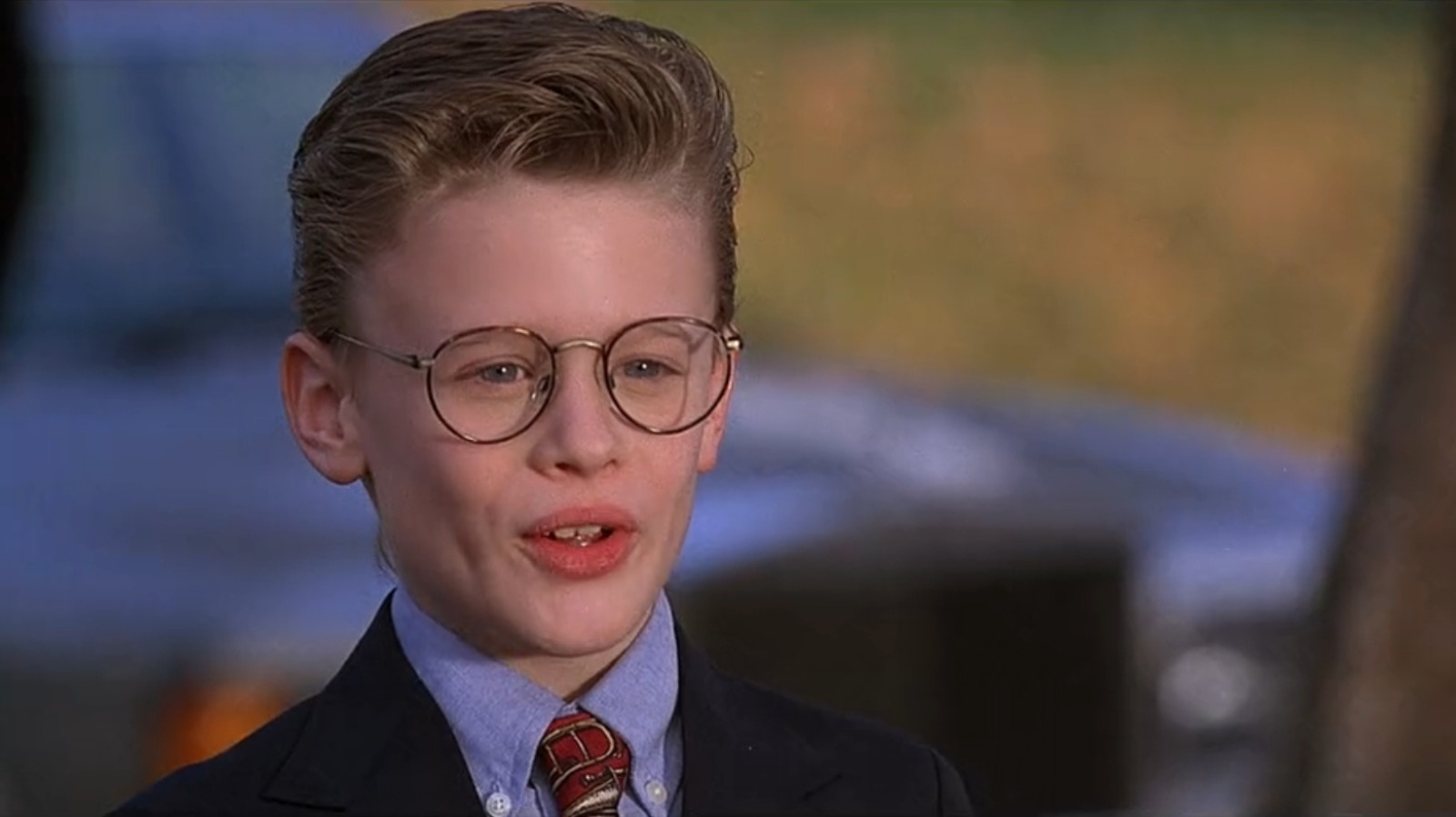
You remember Waldo. He was the kid in the 1994 The Little Rascals movie who had the slicked-back hair, the private tutor, and that weirdly fast toy car. He was the ultimate antagonist for Alfalfa. But for a lot of people rewatching the movie decades later, the biggest "wait, what?" moment isn't Waldo’s singing voice—it’s the guy playing his father.
Yes, it was Donald Trump.
Long before he was the 45th President of the United States or a constant fixture on the nightly news, Trump was just a New York real estate mogul who loved a good cameo. In the mid-90s, he was everywhere. Home Alone 2, The Fresh Prince of Bel-Air, and, somehow, the big-screen adaptation of the Hal Roach classics. Seeing The Little Rascals Waldo dad on screen today feels like a fever dream, but at the time, it was just a bit of stunt casting meant to emphasize that Waldo came from "old money" (or at least very loud money).
The 1994 Cameo That Nobody Saw Coming
The scene is short. It happens during the big go-kart race—the "Paddy Murphy" derby. Waldo is leading the pack in his high-tech, silver bullet of a car. Suddenly, the camera cuts to the stands. There sits Donald Trump, decked out in a suit, holding a cellular phone that looks like a literal brick.
"Waldo, you're the best son money can buy," he says into the phone.
It’s a bizarre line. It’s peak 90s. It’s also incredibly on-brand for the persona Trump was cultivating at the time. He wasn't playing a character named "John Doe." He was essentially playing "Donald Trump as Waldo’s Father." The joke, of course, was that Waldo was so rich and so spoiled that his father was the most famous rich guy in America.
Director Penelope Spheeris, who also directed Wayne’s World, was known for these types of quirky casting choices. She wanted the movie to feel like a timeless piece of Americana but peppered it with 90s celebrities like Reba McEntire, Whoopi Goldberg, and Daryl Hannah. But the The Little Rascals Waldo dad appearance remains the one that aged the most... interestingly.
Why Was Donald Trump in a Kids' Movie?
Honestly? Because the 90s were a different world.
Back then, Trump was viewed largely as a tabloid figure and a symbol of luxury. To a kid in 1994, he was just "the rich guy." Casting him as the father of the richest, snobbiest kid in the neighborhood made perfect sense to a casting director. It gave the adults in the audience a "hey, I know that guy" moment while reinforcing that Waldo was the ultimate silver-spoon antagonist.
Blake McIver Ewing, the actor who played Waldo, has talked about this in several interviews over the years. He’s mentioned that Trump was actually quite professional on set, though obviously, he was only there for a very brief window to film his few lines. It’s a tiny bit of film history that stayed buried for years until Trump’s political rise made everyone go back and scrub through 90s cinema to see where else he had popped up.
Interestingly, Waldo himself was a character created specifically for the 1994 film to serve as a foil to Alfalfa. In the original Our Gang shorts from the 1920s and 30s, there were other "rich kid" rivals, but Waldo Aloysius Johnston III was a modern invention. Giving him a famous real-life billionaire father was the icing on the cake for his character's "love to hate him" vibe.
The Legacy of Waldo and His Wealthy Father
The movie itself was a massive hit, grossing over $67 million at the box office. It’s become a staple for Millennial and Gen Z nostalgia. But the The Little Rascals Waldo dad scene has taken on a life of its own in the era of streaming and social media.
If you watch the movie on Netflix or digital platforms today, that scene still hits like a ton of bricks. It’s a time capsule. It reminds us of a period when high-profile business moguls were treated like cartoon characters in popular culture.
There’s also the technical aspect of the scene. The "car phone" he uses is a classic Motorola-style brick phone. To a kid watching today, that phone looks like a prop from a sci-fi movie. To anyone who lived through 1994, it was the ultimate status symbol. It signaled that Waldo’s dad was too busy making deals to even watch his son race without being "plugged in."
Common Misconceptions About the Cameo
- Did he have more scenes? No. Some people swear they remember him at the end of the race or at a trophy ceremony. Nope. It’s just that one quick cut to the stands and the "best son money can buy" line.
- Was it a deep-fake or edited in later? Definitely not. It’s 100% authentic 1994 celluloid.
- Did it win any awards? Not exactly. While the movie won a Young Artist Award for Best Performance by a Youth Ensemble, the adult cameos were mostly just for flavor.
How the Cast Felt About the "Big" Name on Set
Most of the kids in the cast didn't really know who he was. Think about it: if you’re seven years old in 1994, you care about Power Rangers and Pogs. You don't care about New York real estate. Ross Bagley (Buckwheat) and Bug Hall (Alfalfa) were the stars; the adults were just background noise to the chaotic energy of the He-Man Woman Haters Club.
Blake McIver Ewing has noted in retrospectives that the atmosphere on the set of The Little Rascals was incredibly fun and collaborative. The inclusion of The Little Rascals Waldo dad was just another day at the office for a production that felt like a giant playground.
Actionable Takeaways for Movie Buffs and Nostalgia Hunters
If you're looking to dive deeper into this specific era of 90s cameos or just want to win your next trivia night, here is the breakdown of what to look for.
- Check the Credits: Trump is credited simply as "Waldo's Dad." He doesn't get a "himself" credit, which is interesting because he is clearly playing the public's perception of himself.
- Compare Cameos: If you want to see the "Trump Cameo Trilogy" of the early 90s, watch Home Alone 2: Lost in New York (1992), The Fresh Prince of Bel-Air (Season 4, Episode 25, 1994), and The Little Rascals (1994). You can see the exact same persona in all three.
- Watch for Waldo's Arc: Pay attention to how Waldo’s behavior mirrors the "business" mindset his father displays. The movie uses the father-son dynamic to show that Waldo isn't necessarily a "bad" kid, he’s just a product of an environment where everything—including winning—is bought rather than earned.
- Look at the Tech: The 1994 film is a masterclass in "modernizing" the 1930s. While the Rascals use junk and wood to build their car, Waldo uses carbon fiber and electronics. The cameo of The Little Rascals Waldo dad using a cell phone is the final piece of that "New vs. Old" imagery.
The movie ends with the Rascals winning, proving that heart and teamwork beat a "silver bullet" car any day. Waldo loses the race, and his dad’s "investment" doesn't pay off the way he hoped. It’s a classic trope, but seeing it through the lens of modern history makes it one of the most fascinating 30 seconds in 90s cinema.
Next time you’re flipping through channels or browsing a streaming library, stop on the 1994 Little Rascals. Fast forward to the race scene. It’s a weird, brief, and incredibly specific moment in time that perfectly captures the intersection of Hollywood, childhood nostalgia, and the bizarre nature of celebrity culture.
The film remains a classic because of the kids, the dog with the circle around his eye, and the "Dear Darla" letters. But the cameo of The Little Rascals Waldo dad is the ultimate trivia "Easter egg" that keeps the movie relevant in political and pop-culture discussions today.
Keep an eye out for other 90s cameos that feel out of place today. You’d be surprised how many famous figures popped up in kids' movies before they became household names for entirely different reasons.