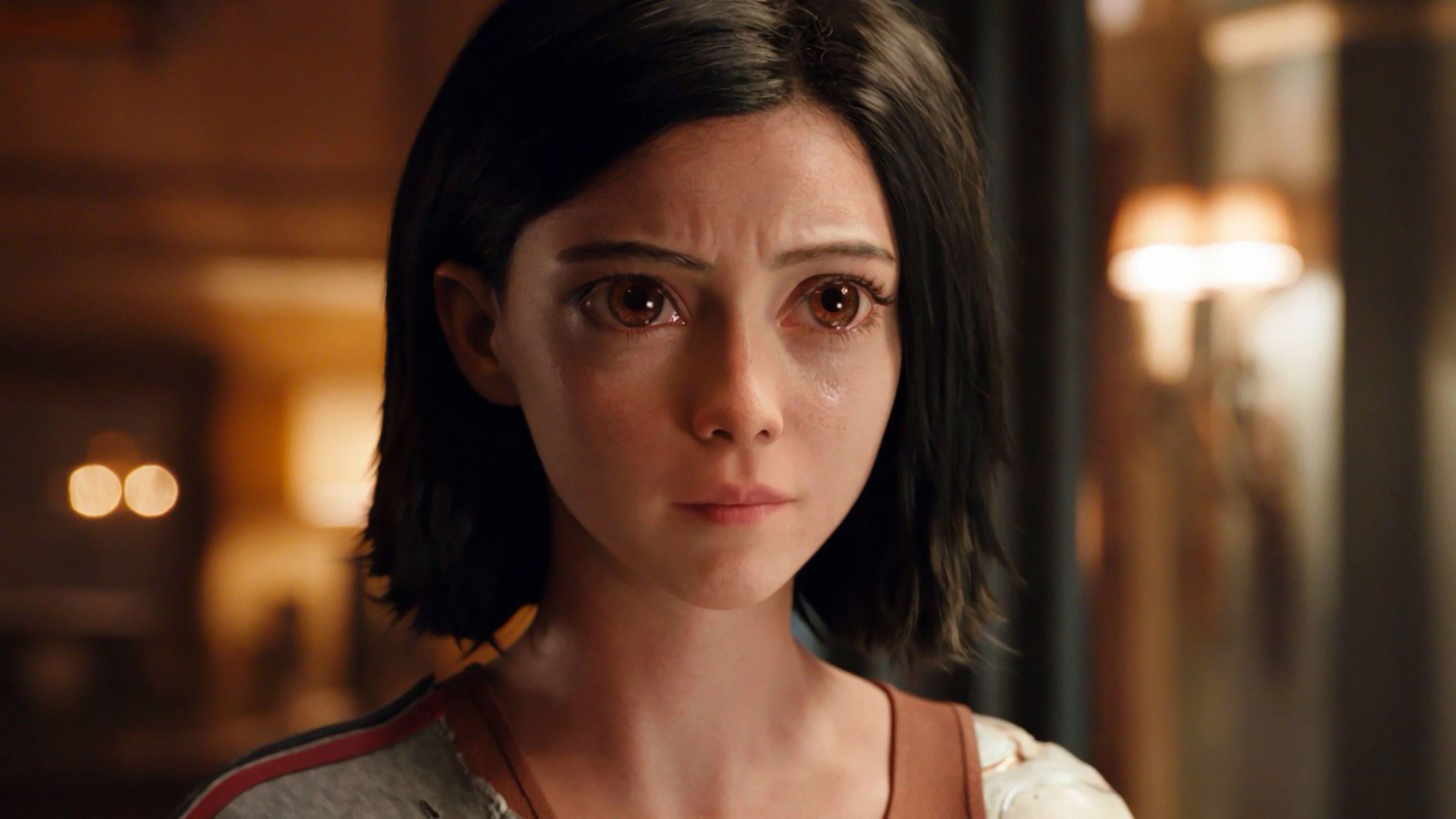
You’ve seen the eyes. Those massive, soul-piercing manga eyes that launched a thousand memes before the movie even hit theaters. But behind the digital mask and the razor-sharp Motorball blades, there is a real person. Rosa Salazar is the actress who plays Alita Battle Angel, and honestly, calling what she did "voice acting" or "just motion capture" is a total insult to the work she put in.
She didn't just stand in a booth. She lived in a gray spandex suit covered in dots for months.
The film, directed by Robert Rodriguez and produced by the legendary James Cameron, was a massive bet on a relatively unknown lead. At the time, Rosa Salazar was mostly known for her roles in The Maze Runner series and a brief but memorable stint in Netflix’s Bird Box. But Alita changed everything. It wasn't just a role; it was a grueling physical and emotional marathon that required her to act through layers of CGI.
Who is Rosa Salazar?
Rosa Salazar wasn't exactly a household name when she landed the role of a 300-year-old amnesiac cyborg. Born in Washington, D.C., and raised in Maryland, she’s got this incredible energy that’s both quirky and intensely focused. Before she was fighting Grewishka in the underworld of Iron City, she was doing sketches for CollegeHumor. Talk about a career pivot.
She’s got this expressive, jagged way of moving and talking that made her perfect for Alita. The producers weren't looking for a "model" type. They needed someone who could convey a "warrior’s spirit" in a teenage girl’s body. Rosa brought a specific brand of vulnerability that balanced out the high-octane violence of the 26th century.
How Rosa Salazar became Alita (The Tech)
So, how does a human woman become a photo-realistic CGI character? It’s not just "filters." Weta Digital, the same geniuses behind Gollum and Avatar, used something called Performance Capture.
Basically, Rosa wore a helmet with two high-definition cameras pointed directly at her face. These cameras tracked every tiny twitch of her muscles, every eyelid flutter, and every quiver of her lip. When Alita cries on screen, those are Rosa's actual tears, just re-rendered with digital pixels.
Why the eyes are so weird (but also cool)
The biggest talking point was the eyes. James Cameron insisted on keeping the manga-accurate scale. In the original Gunnm manga by Yukito Kishiro, Alita has huge eyes to signify her "otherness."
Interestingly, the VFX team actually had to make the eyes bigger after the first trailer because people thought they looked uncanny. By making them even larger and more stylized, they crossed the "uncanny valley" and made her feel like a deliberate artistic choice rather than a failed attempt at a human. Rosa’s own eyes were scanned in 3D to ensure the light hit the digital iris exactly the way it does in real life.
The cast surrounding the Angel
While Rosa is the heart of the film, she’s backed up by some serious heavy hitters. You’ve got Christoph Waltz playing Dr. Dyson Ido, the father figure who finds Alita in a scrap heap. Waltz is usually playing a charming villain, so seeing him as a gentle, protective cyborg-doctor was a nice change of pace.
Then there’s the supporting cast that basically feels like an Oscar ceremony:
- Mahershala Ali as Vector, the smooth-talking villain who runs the Motorball games.
- Jennifer Connelly as Chiren, Ido’s estranged wife with some serious moral ambiguity.
- Ed Skrein as Zapan, the arrogant hunter-warrior who is obsessed with his own "beautiful" face.
- Jackie Earle Haley as Grewishka, the massive underground assassin.
And let's not forget the "secret" cameo. If you watched until the very end, you saw Edward Norton as the mysterious Nova, watching from the floating city of Zalem. It was a massive tease for a sequel that fans are still screaming for years later.
Why her performance actually matters
Most people think CGI characters are easy to play. You just do some hand-waving and the computer does the rest, right? Wrong.
Rosa had to perform every scene twice, sometimes three times. Once in the mocap suit with the other actors, and sometimes again on a "blank" set so the cameras could capture her movements without obstructions. She also trained extensively in martial arts to ensure that Alita’s combat style—the "Panzer Kunst"—felt grounded and weight-bearing.
If the acting had been stiff, the movie would have flopped. Hard. But because Rosa Salazar is so incredibly expressive, you forget she’s a digital creation within ten minutes. You start seeing the character, not the effect.
What’s next for the Alita franchise?
Since the movie came out in 2019, the "Alita Army" (the hardcore fan base) has been relentless. They even paid for a plane to fly a banner over the Oscars to demand a sequel.
The good news? James Cameron and producer Jon Landau have been dropping hints for a while now that they are working on it. Now that Disney owns the rights (via the Fox merger), the red tape is a bit thicker, but the appetite is definitely there. Rosa has gone on record saying she would play Alita "until her last breath."
Actionable insights for fans
If you're looking to dive deeper into the world Rosa Salazar helped build, here is what you should do next:
- Read the Manga: The movie only covers the first few volumes of Battle Angel Alita. The story gets much darker and weirder in the later books.
- Watch the "Behind the Scenes": Look up the Weta Digital breakdowns on YouTube. Seeing Rosa in her "mo-cap" suit alongside the finished film is mind-blowing.
- Check out Rosa’s other work: If you liked her intensity, watch Brand New Cherry Flavor on Netflix. It’s wild, gross, and shows off her range in a completely different way.
Rosa Salazar didn't just "play" Alita; she breathed life into a bunch of code. Whether we get Alita 2 or not, her performance stands as one of the best examples of how technology and human emotion can actually work together without losing the soul of the story.