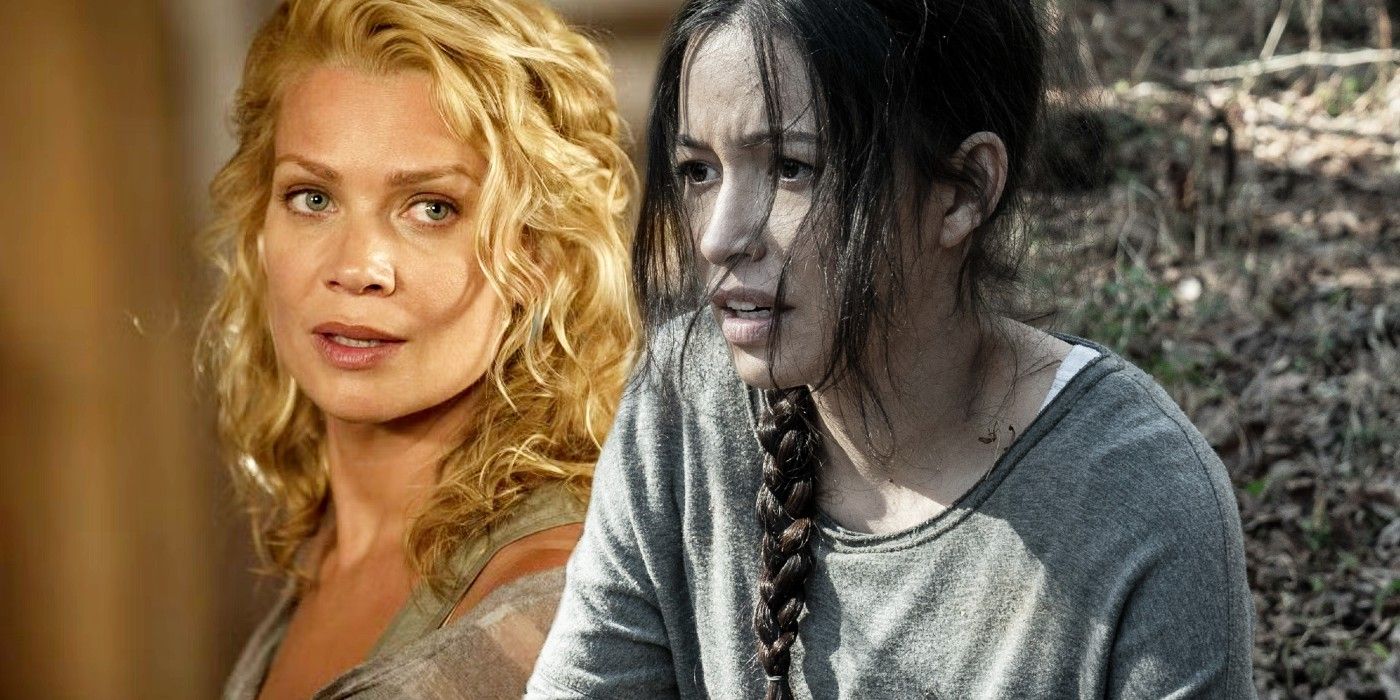
If you were watching TV in 2010, you remember the scream. It was high-pitched, desperate, and trapped inside a department store in Atlanta. That was our introduction to Andrea. But for those wondering who plays Andrea on The Walking Dead, the face behind the character is the veteran actor Laurie Holden. She didn't just play the role; she inhabited one of the most controversial, debated, and ultimately tragic arcs in the history of basic cable.
Holden brought a specific kind of intensity to the screen. It wasn't just "action hero" intensity. It was the frantic, jagged energy of a civil rights attorney who suddenly found herself holding a gun in a world where the laws she spent her life defending no longer existed.
Most fans have a love-hate relationship with Andrea. That’s a testament to the performance. Holden took a character that was beloved in Robert Kirkman’s comic books and navigated a television adaptation that veered wildly off the rails compared to the source material. She wasn't playing a hero. She was playing a survivor who made mistakes. Big ones.
The Woman Behind the Scope: Laurie Holden’s Journey
Laurie Holden wasn't a newcomer when she joined the cast of the AMC juggernaut. Far from it. Before she ever stepped foot into the zombie apocalypse, she was already a fixture in genre storytelling.
You might recognize her from The X-Files. She played Marita Covarrubias, the mysterious UN informant who spent years whispering secrets to Fox Mulder in dark hallways. That role required a cold, calculating stillness. It was the polar opposite of Andrea. She also worked with Frank Darabont—the man who originally brought The Walking Dead to life—in the 2001 film The Majestic and the 2007 Stephen King adaptation The Mist.
Darabont had a "stable" of actors he trusted. Holden was at the top of that list.
When you look at who plays Andrea on The Walking Dead, you have to look at Holden's pedigree. She’s an actor who specializes in "competent women under pressure." In The Mist, she played a teacher trying to keep children safe while Lovecraftian horrors lurked in the fog. That experience was basically a dress rehearsal for the carnage of the walker outbreak.
Why Andrea Felt So Different from the Comics
This is where things get messy. If you talk to hardcore comic book readers, they’ll tell you Andrea was supposed to be the "Sniper Queen." She was meant to be Rick Grimes’ ultimate partner and a badass who lived until the very end.
The show went a different way.
Holden was handed a script that turned Andrea into a bit of a pariah. She shot Daryl Dixon by accident. She fell for the Governor, the show's first true "big bad." Fans hated her for it. But Holden defended the character’s choices with a fierce loyalty. She argued that Andrea was just trying to find a way to create peace in a world that only knew war. She wasn't being "dumb"; she was being hopeful. In a show as bleak as this one, hope usually gets you killed.
The Governor, Woodbury, and the Season 3 Backlash
Season 3 was the turning point. While Rick and the gang were rotting in a prison, Andrea was sipping lemonade in the manicured streets of Woodbury.
This era defines the public perception of who plays Andrea on The Walking Dead. Holden had to play the "blinded lover," a trope that is notoriously difficult to make sympathetic. She portrayed Andrea as someone desperately craving a return to civilization. If a man offers you a hot shower and a bed after you've spent months sleeping in the dirt, you might ignore his collection of severed heads in fish tanks too.
Maybe.
Honestly, the chemistry between Laurie Holden and David Morrissey (who played the Governor) was electric, even if it was toxic. Holden played the nuance of a woman who realized too late that she had traded her soul for a sense of security. The tragedy wasn't that she was fooled; it was that she stayed long enough to think she could fix him.
The Shocking Exit That Nobody Expected
The death of Andrea in the Season 3 finale, "Welcome to the Tombs," remains one of the most debated moments in the series.
Holden herself has been vocal about the fact that her character’s death was a last-minute decision. Originally, Andrea was supposed to survive. She was supposed to save the day. Instead, she ended up tied to a chair with a dying Milton.
It was brutal.
The scene where Michonne stays with her as she ends her own life is one of the few times the show allowed Andrea a moment of pure, unadulterated grace. Holden’s performance in those final minutes—sweaty, pale, and terrified—reminded everyone why she was cast in the first place. She made the stakes feel real. When she died, a huge chunk of the show's original DNA went with her.
Life After the Apocalypse: What Laurie Holden is Doing Now
If you think Holden's career ended when she left the Georgia heat, you haven't been paying attention. She didn't just fade away. She leaned harder into roles that challenged her.
She joined the cast of The Boys in Season 3 as Crimson Countess. It was a total 180. If Andrea was a flawed hero, Crimson Countess was a washed-up, cynical, fire-throwing supe who sang lounge songs about chimpanzees. It was weird. It was wild. And Holden looked like she was having the time of her life.
She also had a significant run on Chicago Fire and The Americans. She’s become a go-to for showrunners who need an actor who can handle complex, often unlikable, but always human characters.
The Human Rights Work You Didn't Know About
What’s truly fascinating about Laurie Holden isn't just her IMDb page. It’s what she does when the cameras aren't rolling. She isn't just an actor; she's a legit activist.
She has spent years working with organizations like Operation Underground Railroad, a non-profit that works to stop child sex trafficking. She’s gone on undercover missions. She’s been on the front lines in ways that make the "survival" of The Walking Dead look like child's play. When you ask who plays Andrea on The Walking Dead, you're talking about a woman who actually walks the walk when it comes to social justice.
The Legacy of Andrea
Looking back, Andrea was ahead of her time. In the early 2010s, audiences weren't always kind to female characters who made mistakes. We wanted them to be perfect or be victims. Andrea refused to be either.
Laurie Holden gave us a character who was messy. She was annoying, she was brave, she was short-sighted, and she was loyal. She was, in short, a human being.
The show missed her presence in the later seasons. While characters like Carol and Michonne eventually filled the "powerhouse" void, Andrea was the one who proved that the transition from the old world to the new one was going to be ugly.
If you're revisiting the series on Netflix or catching clips on YouTube, pay attention to the small stuff. Watch the way Holden handles the gun. Watch her eyes when she realizes the Governor isn't the man she thought he was. It’s a masterclass in internal conflict.
Moving Forward with the TWD Universe
The Walking Dead universe has expanded into a dozen different spin-offs. We have Dead City, Daryl Dixon, and The Ones Who Live. But none of those shows exist without the foundation laid by the original Atlanta camp.
Laurie Holden was a pillar of that foundation.
Whether you loved Andrea or spent three seasons yelling at your TV screen, there’s no denying the impact. Holden remains a fan-favorite at conventions, often speaking candidly about her time on the show and the "what ifs" regarding her character’s premature exit.
To truly understand the show's history, you have to appreciate the actors who took the heat for their characters' choices. Holden took a lot of heat. And she did it with a level of professionalism that helped define the early "Golden Age" of AMC.
Next Steps for Fans
If you want to see more of Laurie Holden's range beyond the world of walkers, start with her work in The Americans (Season 5 and 6) where she plays Renee. It’s a subtle, paranoid performance that will leave you questioning her motives just as much as you did in Woodbury. Alternatively, check out her episode of The Boys for a completely different, darker comedic side of her acting ability. For those interested in the comic version of the character, pick up The Walking Dead: Compendium One to see the stark contrast between the page and Holden’s screen portrayal.